Essential Oil Cleaning Sprays: Complete Non-Toxic Recipes for the Home
JenniferDawn
Why Your Cleaning Cabinet Might Be Harming You More Than Helping
Most conventional cleaning products contain a cocktail of synthetic fragrances, ammonia, bleach, and chemical surfactants that linger in the air long after the surfaces dry. If you have been trying to create a cleaner, more intentional home environment — one that supports your health rather than quietly undermining it — the cleaning cabinet is one of the best places to start.
Essential oil cleaning sprays are one of the simplest and most satisfying swaps you can make. They work. They smell like something you actually want in your home. And once you learn a few basic formulas, you will never go back to fluorescent-labeled bottles under the sink.
This guide covers everything you need to know: the science behind why essential oils clean effectively, the safest base ingredients to use, surface-specific recipes for every room in your home, and tips for making your DIY cleaning routine as streamlined as possible.
This post contains affiliate links, which means I may earn a small commission if you purchase through my links — at no extra cost to you. I only recommend products I genuinely use and trust. Thank you for supporting my content.
Do Essential Oil Cleaning Sprays Actually Work?
This is the question worth addressing before anything else, because there is a lot of romanticized wellness content that skips over the evidence.
The short answer: yes, when formulated correctly.
Several essential oils have been extensively studied for their antimicrobial, antifungal, and antiviral properties. Tea tree oil (Melaleuca alternifolia), for example, has well-documented activity against bacteria including E. coli and Staph aureus. Thyme essential oil, particularly the thymol constituent, is potent enough that it serves as the active ingredient in some EPA-registered disinfectants. Lavender, eucalyptus, lemon, clove, and oregano oils all demonstrate varying degrees of antimicrobial effectiveness in the literature.
The key is understanding that essential oils alone in water are not a complete cleaner. Water and oil do not mix without an emulsifier, and a spray that separates in the bottle is not distributing the essential oil evenly across the surface. This is why every recipe in this guide includes either a small amount of castile soap, rubbing alcohol, or witch hazel to bridge that gap — and why the base ingredients matter as much as the oils themselves.
For heavy-duty disinfection (cutting boards after raw meat, sick rooms, etc.), nothing replaces a proper EPA-registered disinfectant. But for the routine cleaning that makes up the vast majority of your household cleaning needs — countertops, mirrors, light switches, cabinet fronts, appliances, bathroom surfaces — essential oil sprays perform beautifully and without the toxic burden.
.
The Base Ingredients You Need
Before getting to the recipes, here is a breakdown of the core ingredients that form the foundation of effective essential oil cleaning sprays.
Distilled White Vinegar The workhorse of natural cleaning. Vinegar is mildly acidic (around pH 2.5), which makes it effective at dissolving mineral deposits, soap scum, grease, and many common bacteria. It is cheap, widely available, and incredibly versatile. The smell dissipates quickly as it dries. Important note: do not use undiluted vinegar on natural stone surfaces like marble or granite, as the acid can etch the finish over time.
Distilled Water Tap water contains chlorine, minerals, and other compounds that can interfere with your essential oils and reduce shelf life. Using distilled water keeps your sprays cleaner and extends their usability.
Rubbing Alcohol (70% Isopropyl Alcohol) Alcohol is a legitimate disinfectant at the right concentration (70% is more effective than higher concentrations for surface use). It evaporates quickly, leaves no residue, and does a superb job on glass, mirrors, and tech surfaces. It also acts as a natural emulsifier for your essential oils.
Castile Soap A plant-based liquid soap that cuts grease and acts as a mild surfactant to help distribute essential oils in water. A little goes a long way — too much creates excessive suds that leave residue. Unscented versions work best so they do not compete with your chosen essential oils.
Witch Hazel A gentler alternative to alcohol that still acts as a mild antiseptic and emulsifier. Great for formulas used around children or in spaces where you want to avoid the smell of alcohol.
Hydrogen Peroxide (3%) An effective oxidizing disinfectant that is safe, breaks down into water and oxygen, and is particularly good in bathrooms and for mold prevention. Do not mix it with vinegar in the same bottle (it creates peracetic acid, which is irritating to mucous membranes). Use them separately or in different recipes.
Essential Oils with the Best Cleaning Properties
Tea Tree (Melaleuca alternifolia) — broad-spectrum antimicrobial, antifungal, excellent for bathrooms and mold-prone areas
Lemon — antibacterial, cuts grease beautifully, uplifting scent that reads as “clean” to most people
Lavender — mild antibacterial, antifungal, calming scent, great for bedrooms and fabric sprays
Eucalyptus — strong antimicrobial, particularly good for respiratory-support spaces and sick rooms
Adhesive labels or a label maker to mark contents and dates
A permanent marker to note the batch date on the bottom of each bottle
Avoid plastic spray bottles for long-term use. Certain essential oils (especially citrus oils) can degrade plastic over time, and the oils absorb into plastic rather than staying in suspension.
Room-by-Room Essential Oil Cleaning Spray Recipes
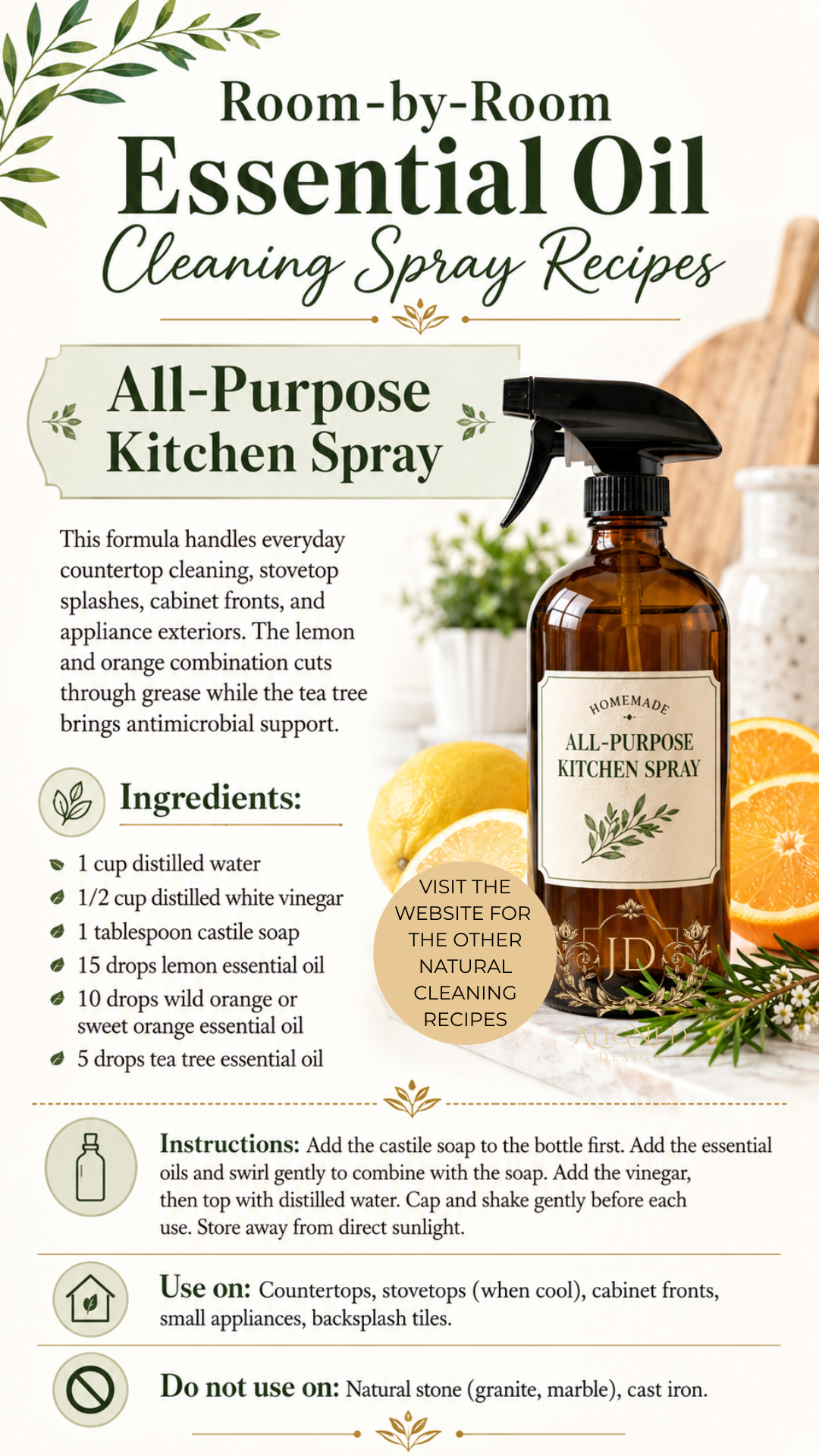
All-Purpose Kitchen Spray
This formula handles everyday countertop cleaning, stovetop splashes, cabinet fronts, and appliance exteriors. The lemon and orange combination cuts through grease while the tea tree brings antimicrobial support.
Ingredients:
1 cup distilled water
1/2 cup distilled white vinegar
1 tablespoon castile soap
15 drops lemon essential oil
10 drops wild orange or sweet orange essential oil
5 drops tea tree essential oil
Instructions: Add the castile soap to the bottle first. Add the essential oils and swirl gently to combine with the soap. Add the vinegar, then top with distilled water. Cap and shake gently before each use. Store away from direct sunlight.
Use on: Countertops, stovetops (when cool), cabinet fronts, small appliances, backsplash tiles.
Do not use on: Natural stone (granite, marble), cast iron.
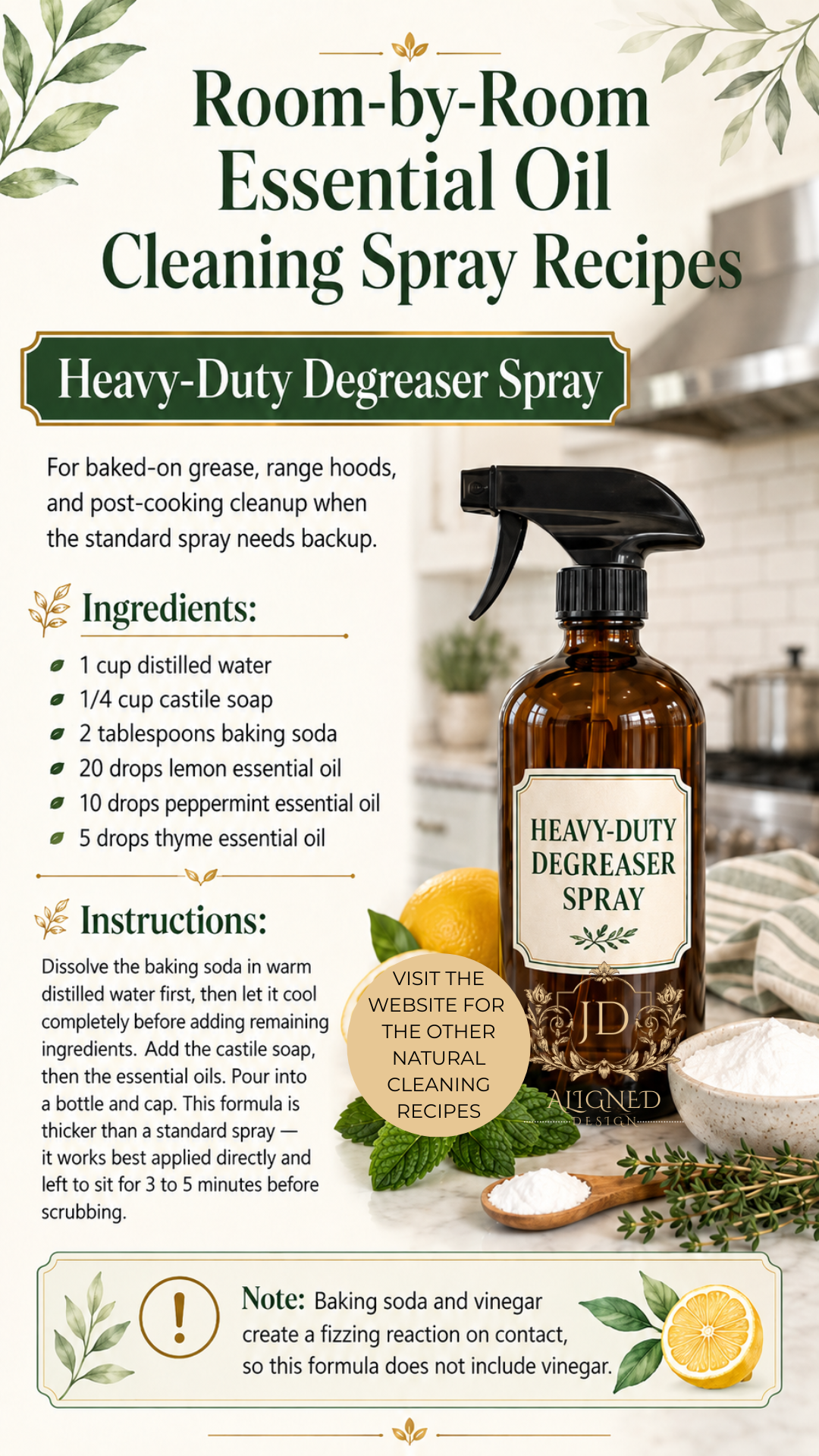
Heavy-Duty Degreaser Spray
For baked-on grease, range hoods, and post-cooking cleanup when the standard spray needs backup.
Ingredients:
1 cup distilled water
1/4 cup castile soap
2 tablespoons baking soda
20 drops lemon essential oil
10 drops peppermint essential oil
5 drops thyme essential oil
Instructions: Dissolve the baking soda in warm distilled water first, then let it cool completely before adding remaining ingredients. Add the castile soap, then the essential oils. Pour into a bottle and cap. This formula is thicker than a standard spray — it works best applied directly and left to sit for 3 to 5 minutes before scrubbing.
Note: Baking soda and vinegar neutralize each other, so do not add vinegar to this formula.
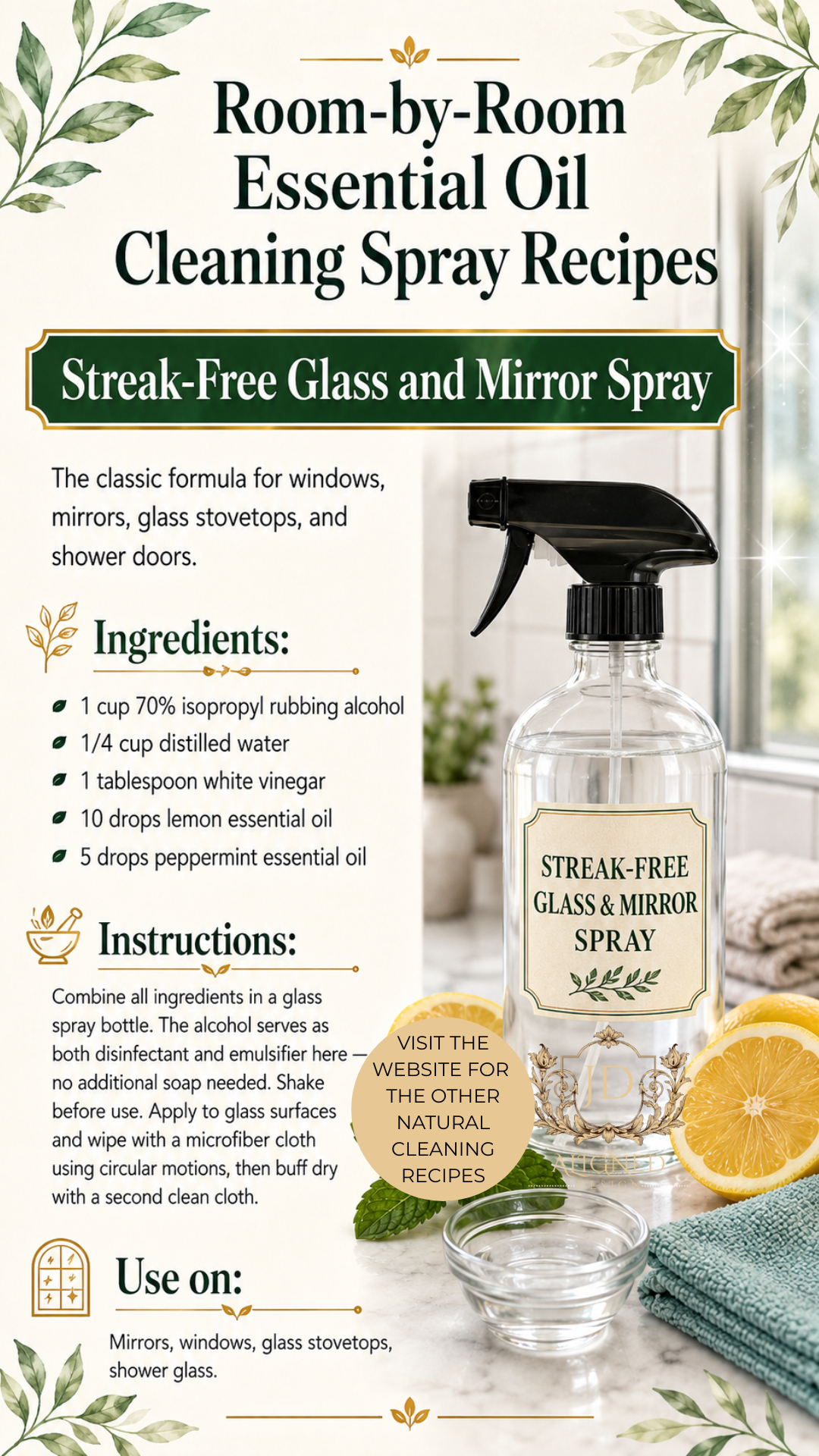
Streak-Free Glass and Mirror Spray
The classic formula for windows, mirrors, glass stovetops, and shower doors.
Ingredients:
1 cup 70% isopropyl rubbing alcohol
1/4 cup distilled water
1 tablespoon white vinegar
10 drops lemon essential oil
5 drops peppermint essential oil
Instructions: Combine all ingredients in a glass spray bottle. The alcohol serves as both disinfectant and emulsifier here — no additional soap needed. Shake before use. Apply to glass surfaces and wipe with a microfiber cloth using circular motions, then buff dry with a second clean cloth.
Use on: Mirrors, windows, glass stovetops, shower glass.
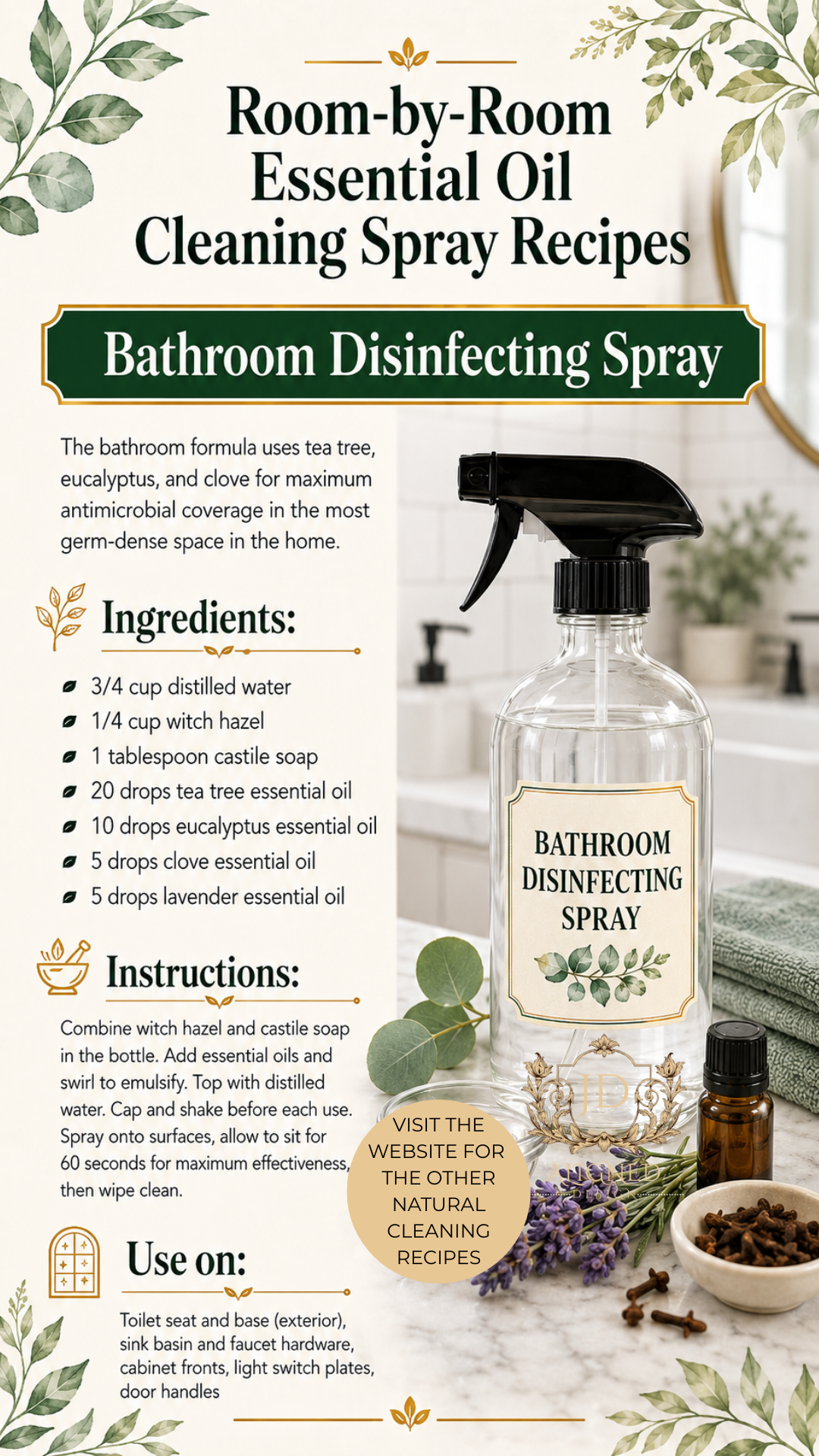
Bathroom Disinfecting Spray
The bathroom formula uses tea tree, eucalyptus, and clove for maximum antimicrobial coverage in the most germ-dense space in the home.
Ingredients:
3/4 cup distilled water
1/4 cup witch hazel
1 tablespoon castile soap
20 drops tea tree essential oil
10 drops eucalyptus essential oil
5 drops clove essential oil
5 drops lavender essential oil
Instructions: Combine witch hazel and castile soap in the bottle. Add essential oils and swirl to emulsify. Top with distilled water. Cap and shake before each use. Spray onto surfaces, allow to sit for 60 seconds for maximum effectiveness, then wipe clean.
Use on: Toilet seat and base (exterior), sink basin and faucet hardware, cabinet fronts, light switch plates, door handles
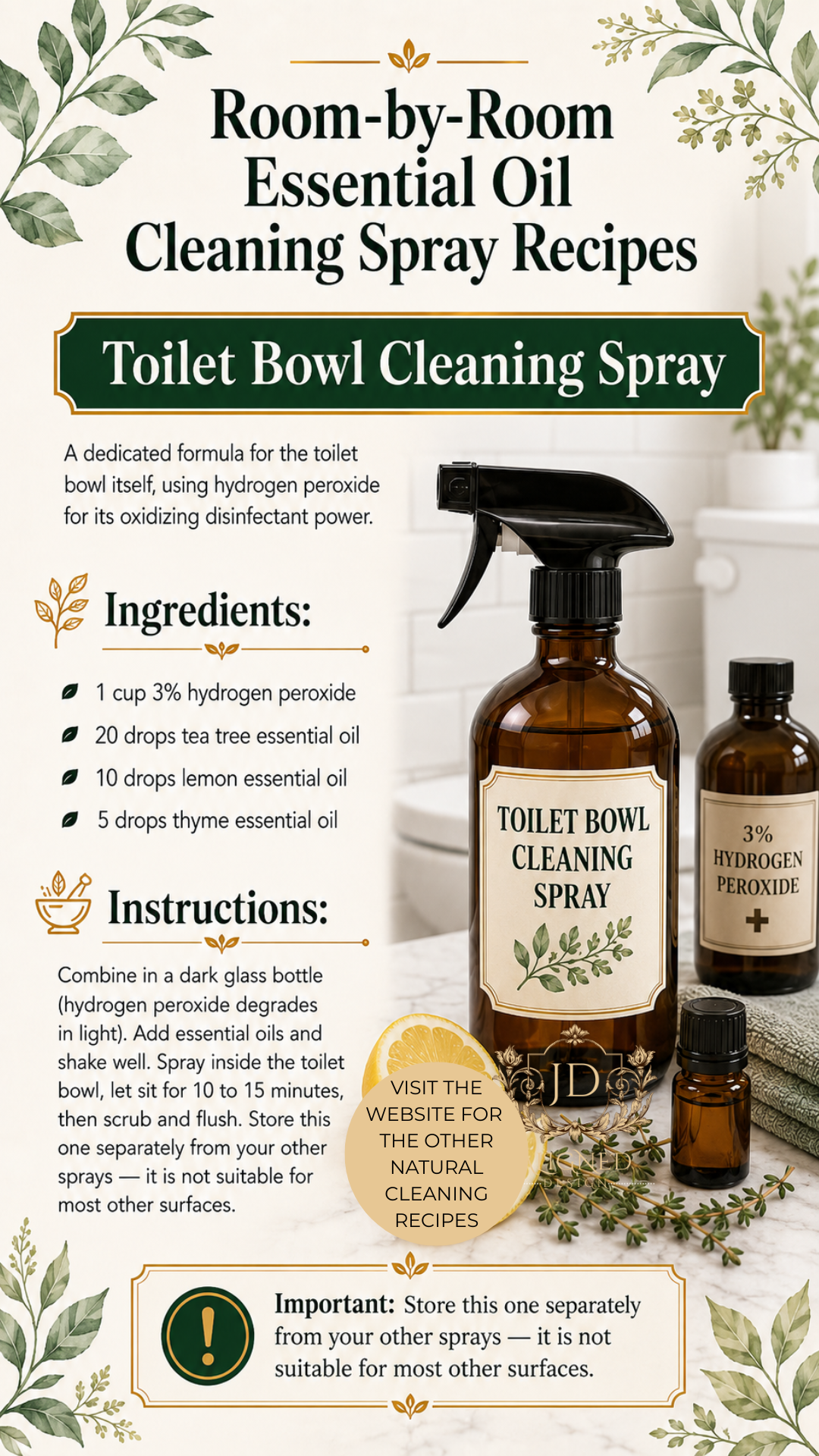
Toilet Bowl Cleaning Spray
A dedicated formula for the toilet bowl itself, using hydrogen peroxide for its oxidizing disinfectant power.
Ingredients:
1 cup 3% hydrogen peroxide
20 drops tea tree essential oil
10 drops lemon essential oil
5 drops thyme essential oil
Instructions: Combine in a dark glass bottle (hydrogen peroxide degrades in light). Add essential oils and shake well. Spray inside the toilet bowl, let sit for 10 to 15 minutes, then scrub and flush. Store this one separately from your other sprays — it is not suitable for most other surfaces.
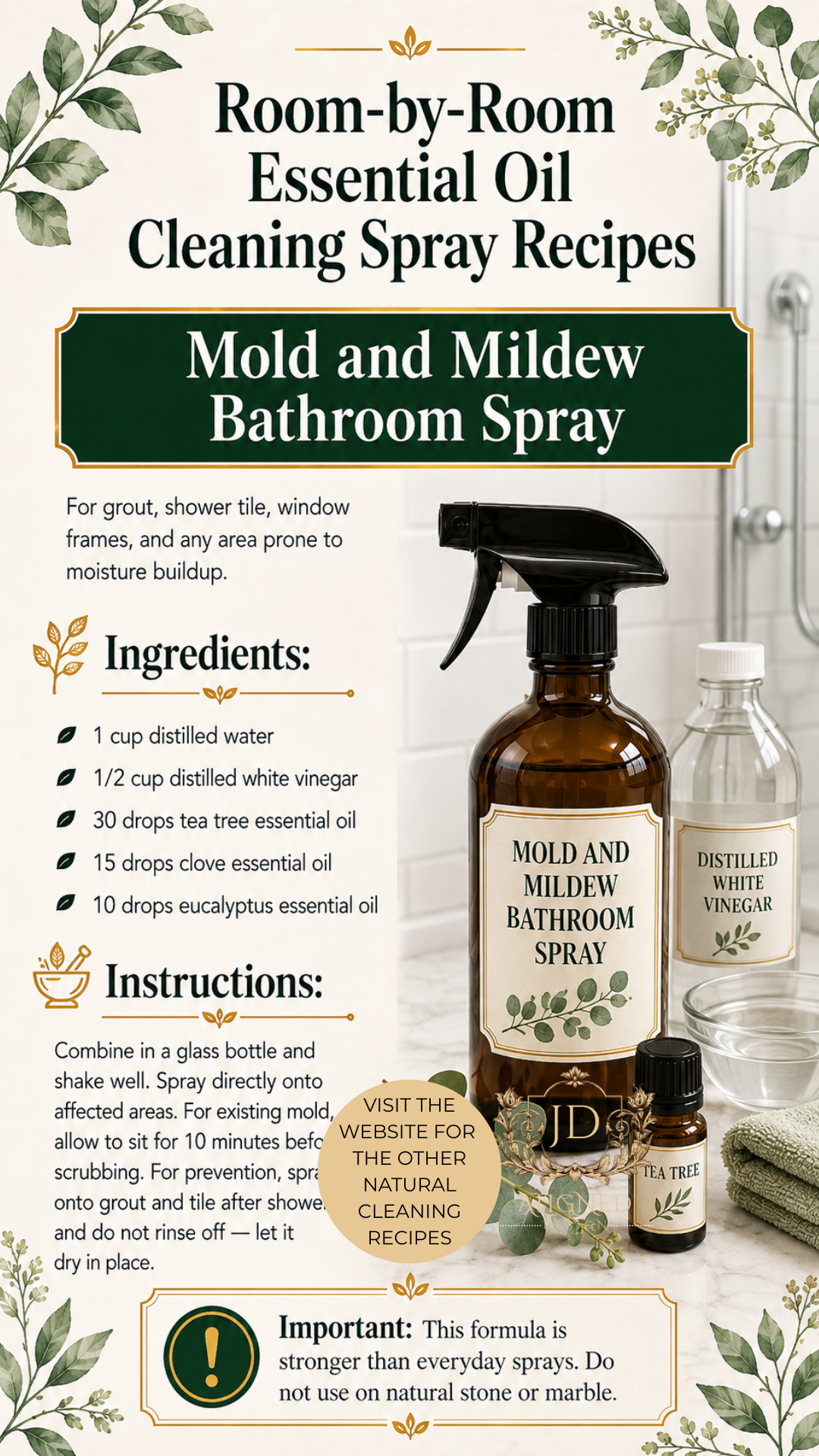
Mold and Mildew Bathroom Spray
For grout, shower tile, window frames, and any area prone to moisture buildup.
Ingredients:
1 cup distilled water
1/2 cup distilled white vinegar
30 drops tea tree essential oil
15 drops clove essential oil
10 drops eucalyptus essential oil
Instructions: Combine in a glass bottle and shake well. Spray directly onto affected areas. For existing mold, allow to sit for 10 minutes before scrubbing. For prevention, spray onto grout and tile after showering and do not rinse off — let it dry in place.
Important: This formula is stronger than everyday sprays. Do not use on natural stone or marble.
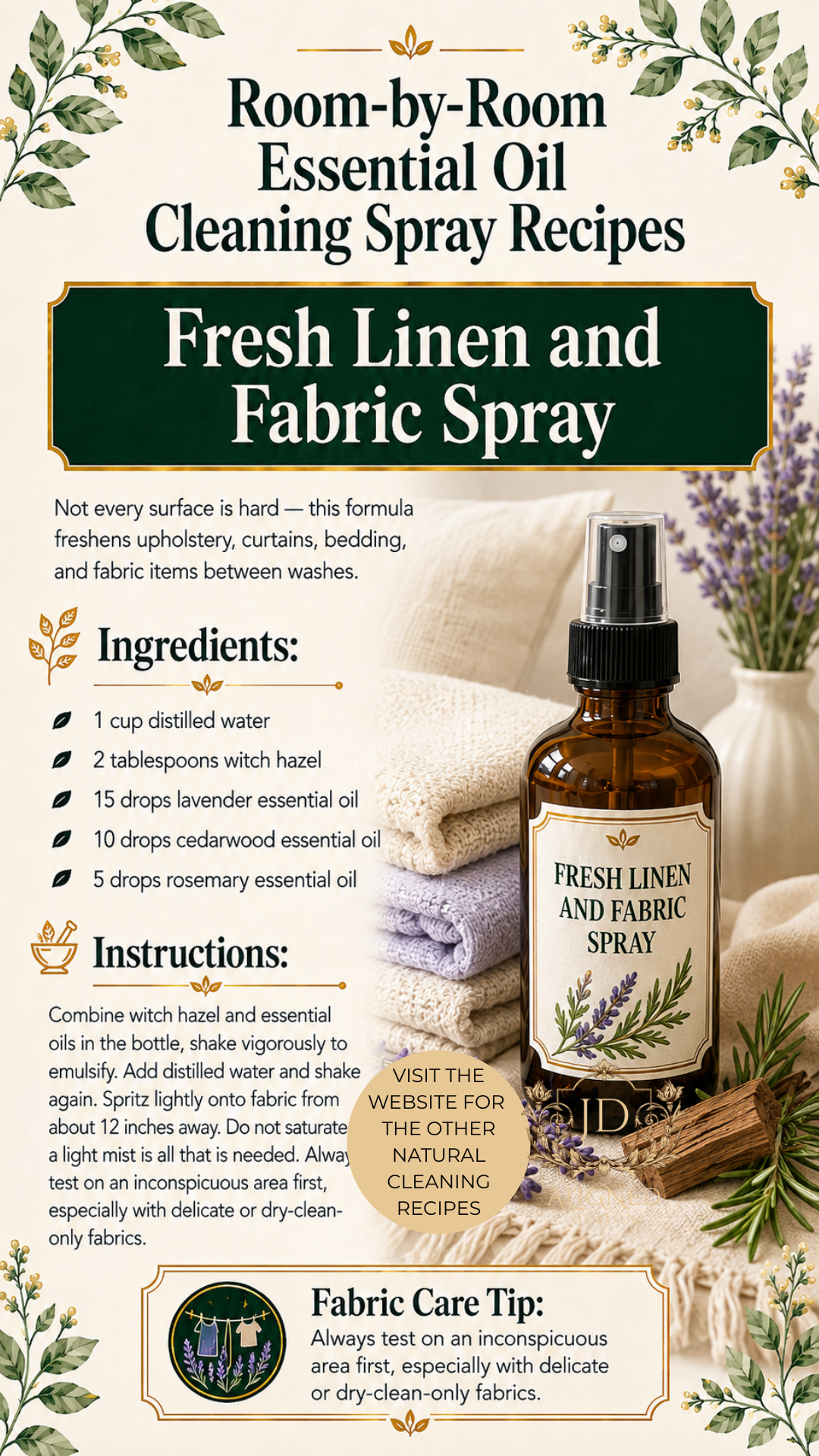
Fresh Linen and Fabric Spray
Not every surface is hard — this formula freshens upholstery, curtains, bedding, and fabric items between washes.
Ingredients:
1 cup distilled water
2 tablespoons witch hazel
15 drops lavender essential oil
10 drops cedarwood essential oil
5 drops rosemary essential oil
Instructions: Combine witch hazel and essential oils in the bottle, shake vigorously to emulsify. Add distilled water and shake again. Spritz lightly onto fabric from about 12 inches away. Do not saturate — a light mist is all that is needed. Always test on an inconspicuous area first, especially with delicate or dry-clean-only fabrics.
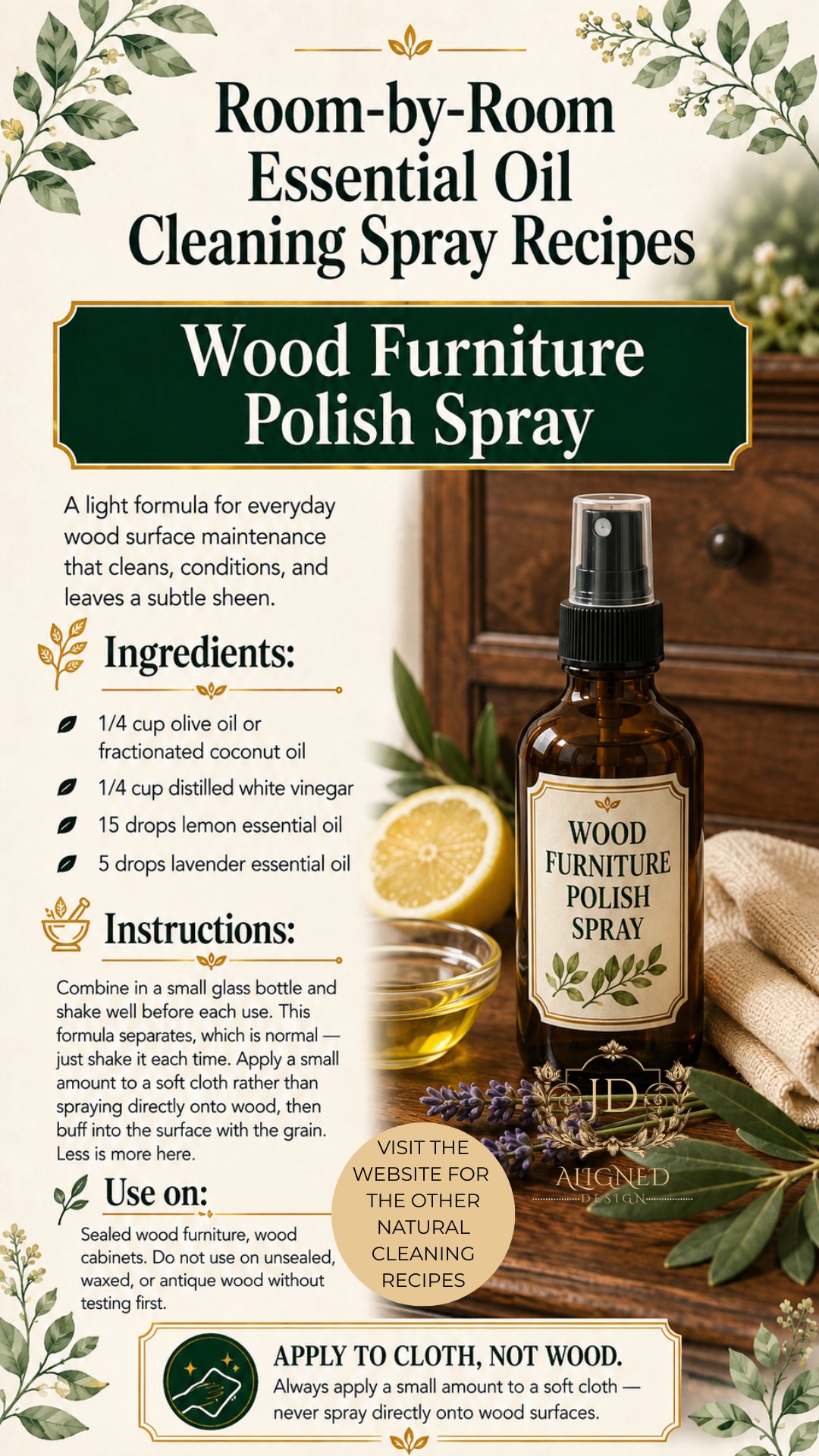
Wood Furniture Polish Spray
A light formula for everyday wood surface maintenance that cleans, conditions, and leaves a subtle sheen.
Ingredients:
1/4 cup olive oil or fractionated coconut oil
1/4 cup distilled white vinegar
15 drops lemon essential oil
5 drops lavender essential oil
Instructions: Combine in a small glass bottle and shake well before each use. This formula separates, which is normal — just shake it each time. Apply a small amount to a soft cloth rather than spraying directly onto wood, then buff into the surface with the grain. Less is more here.
Use on: Sealed wood furniture, wood cabinets. Do not use on unsealed, waxed, or antique wood without testing first.
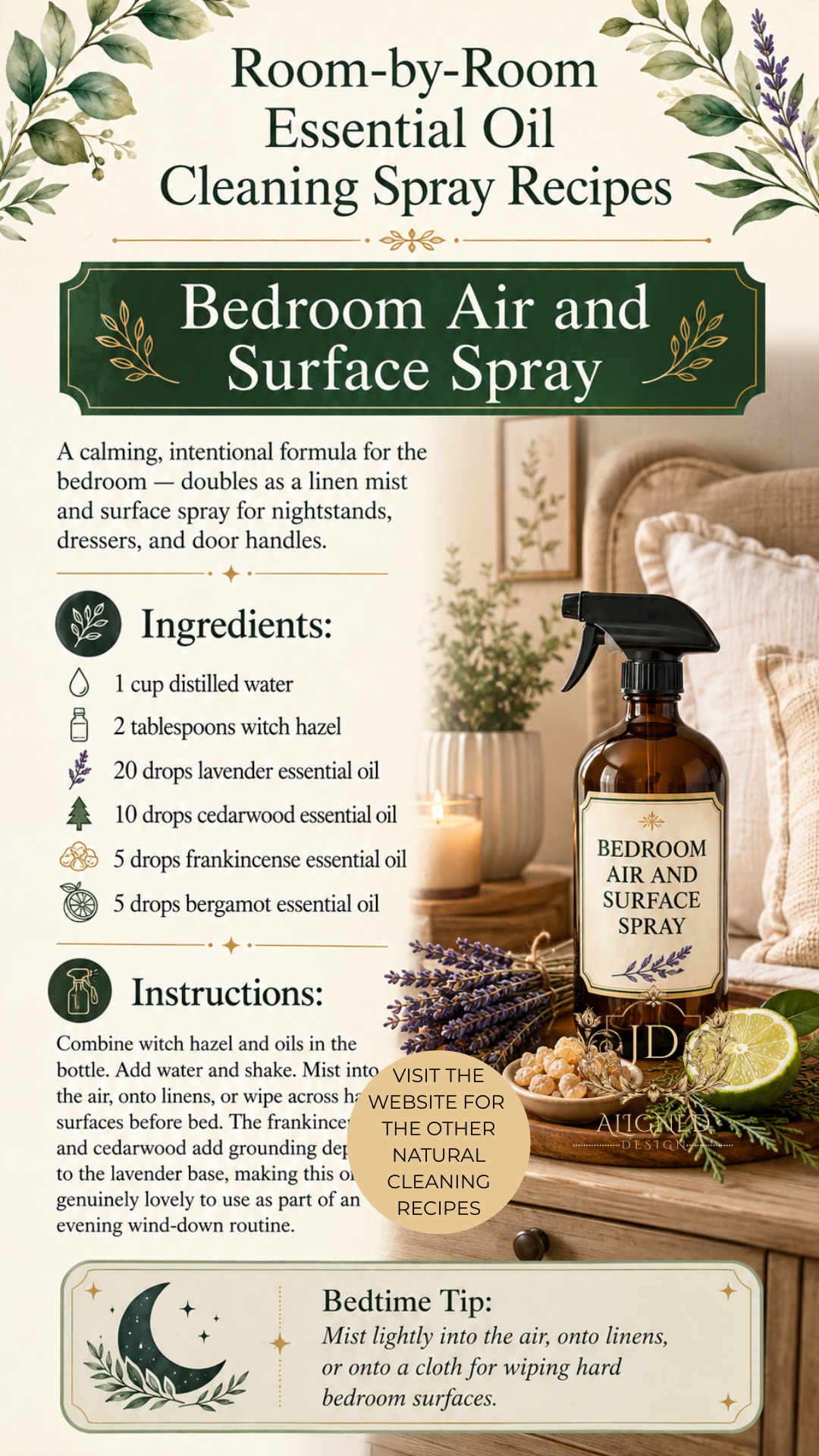
Bedroom Air and Surface Spray
A calming, intentional formula for the bedroom — doubles as a linen mist and surface spray for nightstands, dressers, and door handles.
Ingredients:
1 cup distilled water
2 tablespoons witch hazel
20 drops lavender essential oil
10 drops cedarwood essential oil
5 drops frankincense essential oil
5 drops bergamot essential oil
Instructions: Combine witch hazel and oils in the bottle. Add water and shake. Mist into the air, onto linens, or wipe across hard surfaces before bed. The frankincense and cedarwood add grounding depth to the lavender base, making this one genuinely lovely to use as part of an evening wind-down routine.
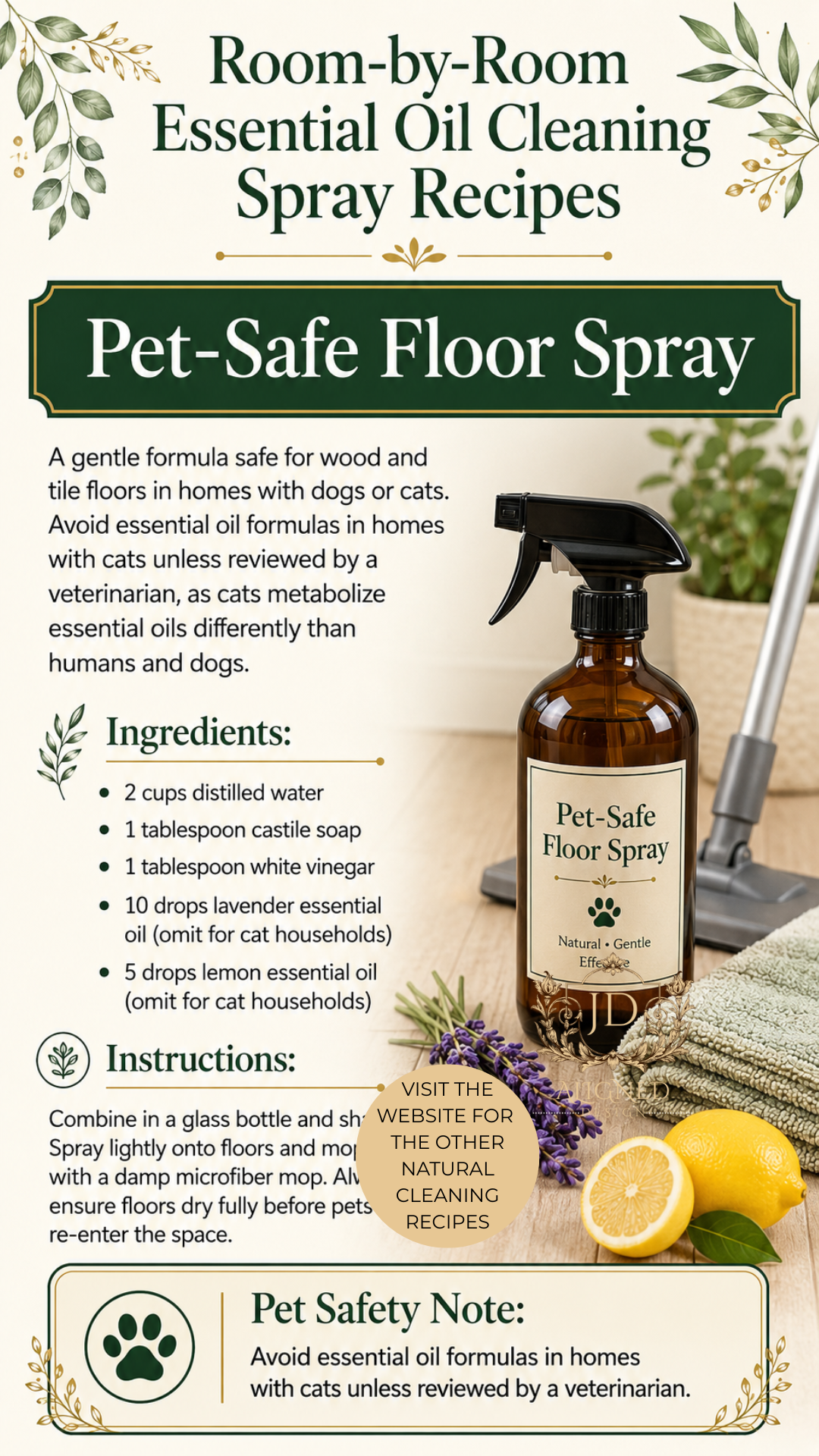
Pet-Safe Floor Spray
A gentle formula safe for wood and tile floors in homes with dogs or cats. Avoid essential oil formulas in homes with cats unless reviewed by a veterinarian, as cats metabolize essential oils differently than humans and dogs.
Ingredients:
2 cups distilled water
1 tablespoon castile soap
1 tablespoon white vinegar
10 drops lavender essential oil (omit for cat households)
5 drops lemon essential oil (omit for cat households)
Instructions: Combine in a glass bottle and shake. Spray lightly onto floors and mop with a damp microfiber mop. Always ensure floors dry fully before pets re-enter the space.
Seasonal and Intentional Blending Ideas
One of the most enjoyable aspects of making your own cleaning sprays is the ability to change your blends with the seasons. Here are four seasonal frameworks to inspire your combinations.
Spring Refresh — lemon, peppermint, rosemary. Bright, clean, energizing. Perfect for opening up the home after winter.
Summer Citrus — orange, grapefruit, lemon, a hint of basil. Light and uplifting for warm-weather cleaning sessions.
Autumn Hearth — clove, cinnamon (use sparingly, as it can irritate skin), orange, cedarwood. Warm and grounding for the shift into the colder months.
Winter Evergreen — pine (or fir needle), eucalyptus, peppermint. Crisp and clarifying for the depth of winter, and particularly useful during cold and flu season.
Tips for Shelf Life and Safe Storage
Homemade essential oil sprays do not contain the synthetic preservatives found in commercial cleaners, which means storage and batch size matter.
Most formulas are best used within 4 to 6 weeks for optimal potency. Water-based formulas without alcohol can develop bacterial growth over time, so when in doubt, make smaller batches more frequently rather than large batches that sit for months.
Always store your sprays away from direct sunlight and heat sources. A dedicated basket under a bathroom or kitchen cabinet works well. Amber or cobalt glass bottles will protect your oils from UV degradation and are worth the small investment.
Label each bottle with the name of the formula and the batch date. This takes thirty seconds and will save you from guessing games later.
If you notice any cloudiness, off-smells, or separation that does not resolve with shaking, discard the batch and make a fresh one.
A Note on Essential Oil Quality
Not all essential oils are created equal, and this matters for cleaning just as it does for aromatherapy. You want 100% pure, therapeutic-grade oils with no synthetic additions, carrier oils, or dilutants mixed in.
Reliable brands include Rocky Mountain Oils, Plant Therapy, Edens Garden, and Florihana — all of which offer GC/MS (gas chromatography/mass spectrometry) testing results that verify purity. Avoid grocery store essential oils without quality verification, as these are frequently adulterated.
You do not need to spend a fortune. For cleaning applications, mid-range quality from a reputable supplier is perfectly appropriate.
Frequently Asked Questions
Can I mix essential oils with bleach? No. Never mix essential oils — or any organic material — with bleach. This creates unpredictable chemical reactions and can produce toxic byproducts.
Can I use these sprays around children? Many of these formulas are safer than conventional cleaners for families with children. That said, certain essential oils — including eucalyptus, peppermint, and thyme — should be used with extra caution around children under five. Lavender, chamomile, and lemon are generally considered the gentlest options for family use. Always keep sprays stored out of reach.
Why does my spray separate? Oil and water separate naturally without a proper emulsifier. Make sure your formula includes castile soap, alcohol, or witch hazel, and always shake the bottle before each use.
Can I substitute apple cider vinegar for white vinegar? Distilled white vinegar is recommended because it is colorless and less likely to stain surfaces or fabrics. Apple cider vinegar has the same pH and would technically work in most formulas, but the amber color and stronger smell are less desirable for cleaning applications.
Will vinegar damage my surfaces? Vinegar is safe for most hard surfaces including tile, glass, most sealed countertops, stainless steel, and laminate. Avoid vinegar on natural stone (marble, granite, travertine), cast iron, waxed surfaces, and unsealed grout.
Building a Non-Toxic Home One Swap at a Time
Switching to essential oil cleaning sprays is one of those changes that feels small on the surface but compounds meaningfully over time. Every bottle you replace reduces the synthetic chemical load in your home — in the air you breathe, on the surfaces your children touch, in the water that runs off your countertops and into the drain.
There is also something genuinely nourishing about cleaning with ingredients you understand and scents you have chosen intentionally. Lemon and peppermint in the kitchen on a Monday morning hits differently than whatever artificial fragrance is in a commercial product. Your home gets cleaner in a way that you can actually feel.
Start with one or two of these recipes — the all-purpose kitchen spray and the bathroom disinfecting spray are the highest-impact swaps to make first. Once those feel effortless, add the glass cleaner and the linen spray. Build the system at your own pace, and let it evolve as you learn which blends you love and which rooms need the most attention.
The non-toxic home is not an aesthetic — it is a practice. And this is one of the most accessible places to begin.