Low Glycemic Meals for Real Life: Easy Ideas for Breakfast, Lunch, Dinner, and Snacks
Eating low glycemic does not have to mean living on sad salads, plain chicken, or a handful of almonds while everyone else eats real food. For most of us, real life includes busy mornings, family meals, cravings, limited energy, and days when cooking from scratch feels like climbing a mountain in slippers. The good news is that low glycemic meals can still be comforting, satisfying, simple, and full of flavor.
If you are trying to support steadier blood sugar, fewer crashes, better energy, and meals that actually keep you full, this is where to start. These low glycemic meal ideas for breakfast, lunch, dinner, and snacks are built for normal people with normal lives. They are easy to adapt, simple to prep, and realistic enough to repeat.
Affiliate Disclaimer
Some of the products I mention in my blog posts may be affiliate links, which means I may earn a small commission if you decide to purchase through them, at no extra cost to you. I only share things that make sense for the lifestyle, recipes, and routines I actually talk about here.
Why Low Glycemic Meals Work So Well in Real Life
Low glycemic meals help slow the release of sugar into the bloodstream, which can support steadier energy and help reduce those dramatic spikes and crashes that leave you tired, cranky, hungry, and rummaging through the kitchen an hour later.
The biggest mistake people make is assuming low glycemic eating has to be extreme. It does not. In real life, it usually works best when you focus on building meals around protein, fiber, healthy fats, and smart carbohydrates instead of trying to eliminate everything enjoyable.
That means meals can still include things like:
eggs
Greek yogurt
berries
nuts and seeds
vegetables
beans
chicken
salmon
rice in balanced portions
potatoes paired with protein and fat
sourdough in reasonable amounts
simple snacks that prevent energy dips
The goal is not perfection. The goal is balance that feels livable.
TIP- PRE COOK RICE OR POTATOES AND PUT IN THE FRIDGE OR FREEZER AND THEN REHEAT. THIS LOWERS THE GLYCEMIC LOAD!
Turn on your JavaScript to view content
1. What Makes a Meal Low Glycemic?
A low glycemic meal usually includes foods that digest more slowly and create a gentler effect on blood sugar. Instead of building meals around refined carbs alone, you combine carbohydrates with other nutrients that help steady the response.
A low glycemic meal often includes:
Protein
Protein helps keep you satisfied longer and slows digestion. Eggs, chicken, tuna, Greek yogurt, cottage cheese, turkey, beef, tofu, and salmon are all solid options.
Fiber
Fiber helps slow how quickly carbohydrates are absorbed. Non-starchy vegetables, berries, chia seeds, legumes, nuts, seeds, and some whole grains can help here.
Healthy fats
Fat helps with satisfaction and balance. Avocado, olive oil, nuts, seeds, cheese, and full-fat yogurt can all play a role.
Smarter carbs
Not all carbs are created equal. A meal built with berries, beans, or roasted sweet potato behaves very differently than one built around sugary cereal or white toast on its own.
This is why a bowl of plain oatmeal may not keep someone full for long, but oatmeal with chia seeds, walnuts, Greek yogurt, and berries feels much more balanced.
2. Low Glycemic Breakfast Ideas That Actually Keep You Full
Breakfast can either set the tone for the day or send it tumbling into snack chaos by 10 a.m. A better breakfast does not need to be fancy. It just needs enough protein, fiber, and staying power to keep you steady.
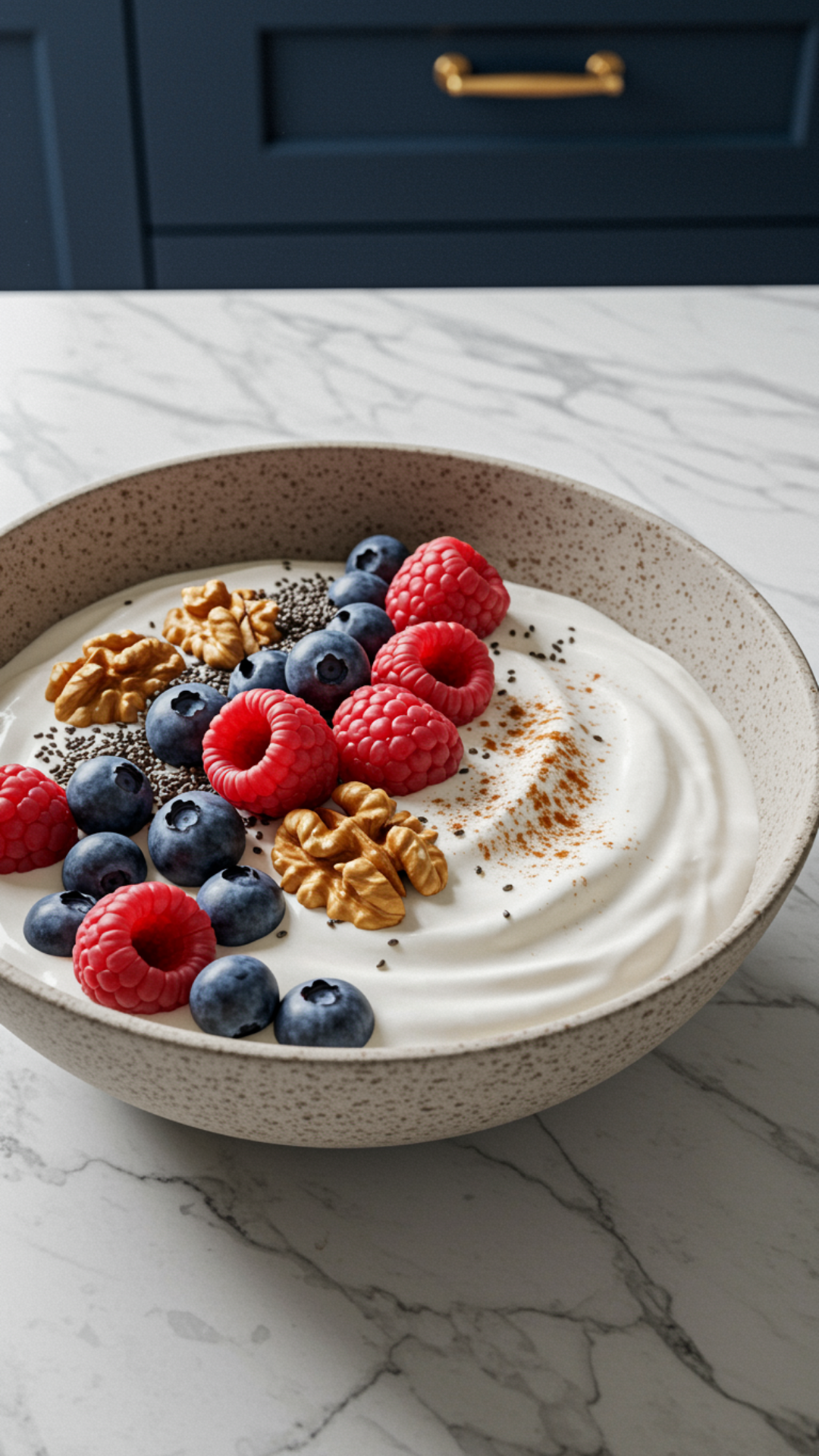
Greek Yogurt Breakfast Bowl
Start with plain Greek yogurt, then add chia seeds, walnuts or pecans, berries, and a sprinkle of cinnamon. This is fast, filling, and easy to customize.
You can also add unsweetened coconut, hemp hearts, or a spoonful of nut butter for more richness.
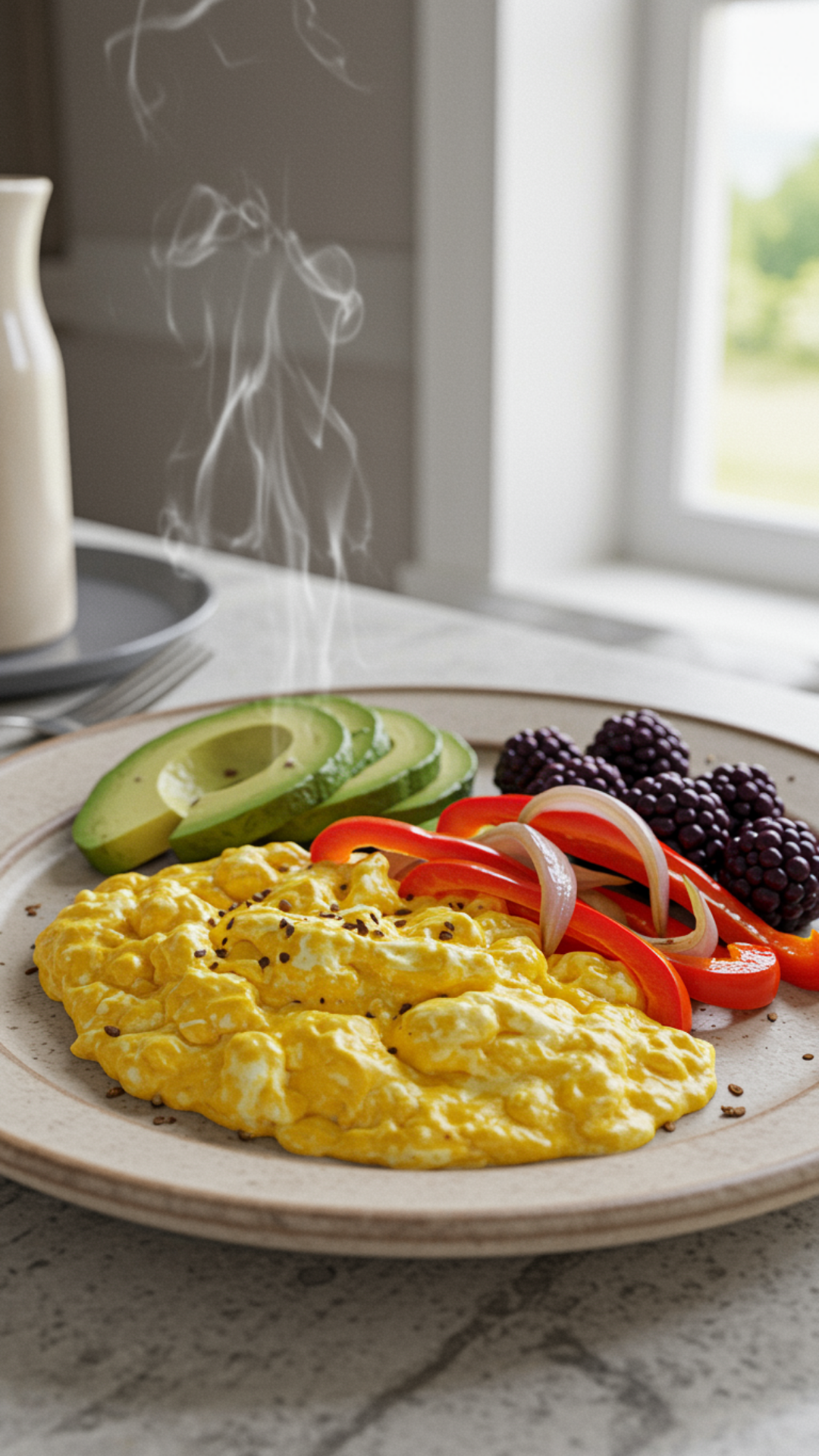
Eggs with Veggies and Avocado
Scrambled eggs with peppers, onions, spinach, and a few slices of avocado make a simple low glycemic breakfast that feels like real food. Add a small slice of sourdough if you want something extra.
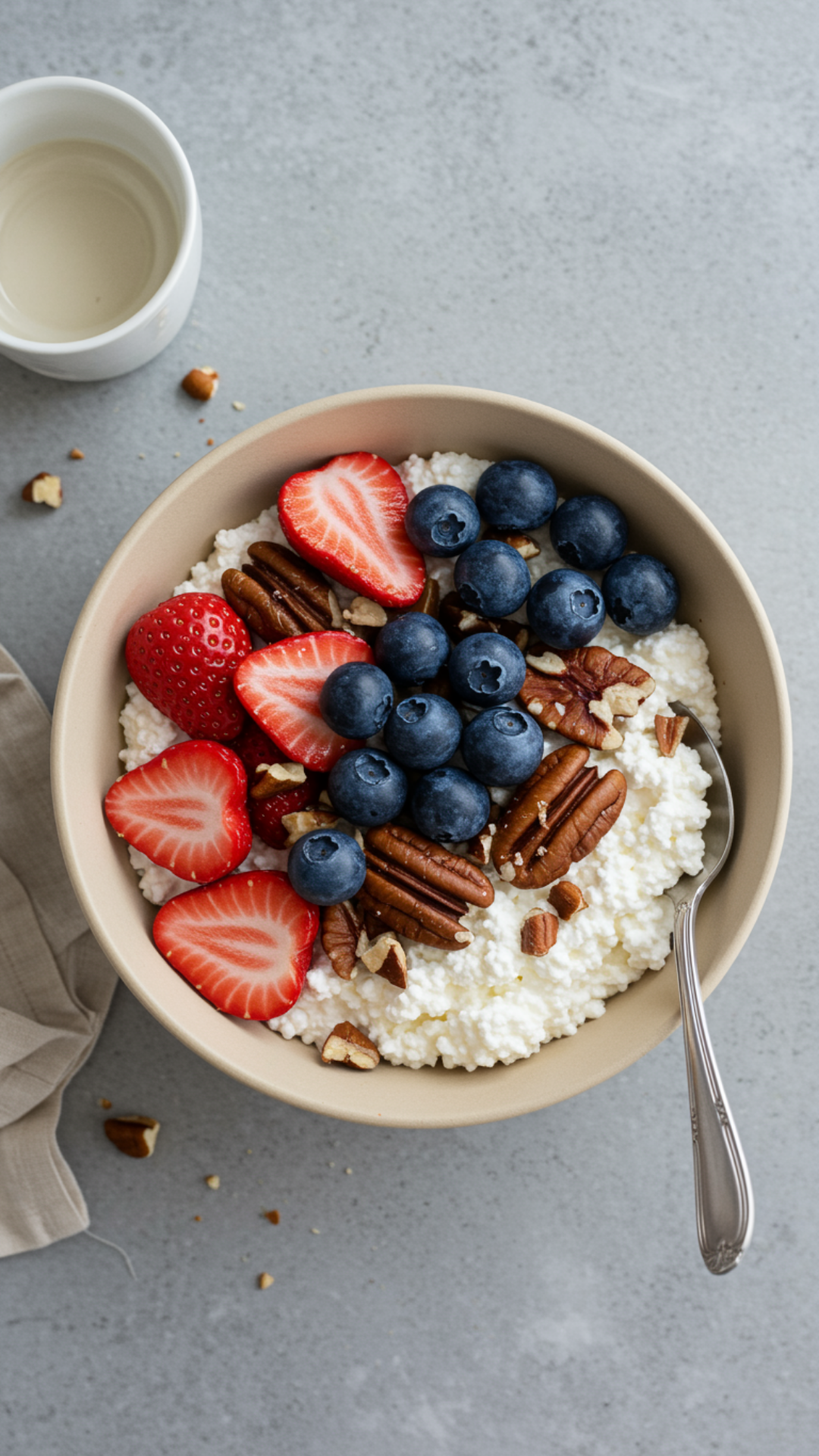
Cottage Cheese Bowl with Fruit and Nuts
Cottage cheese may not win a popularity contest, but it earns its place when you need something quick and high in protein. Pair it with berries, chopped nuts, and cinnamon for a balanced breakfast.
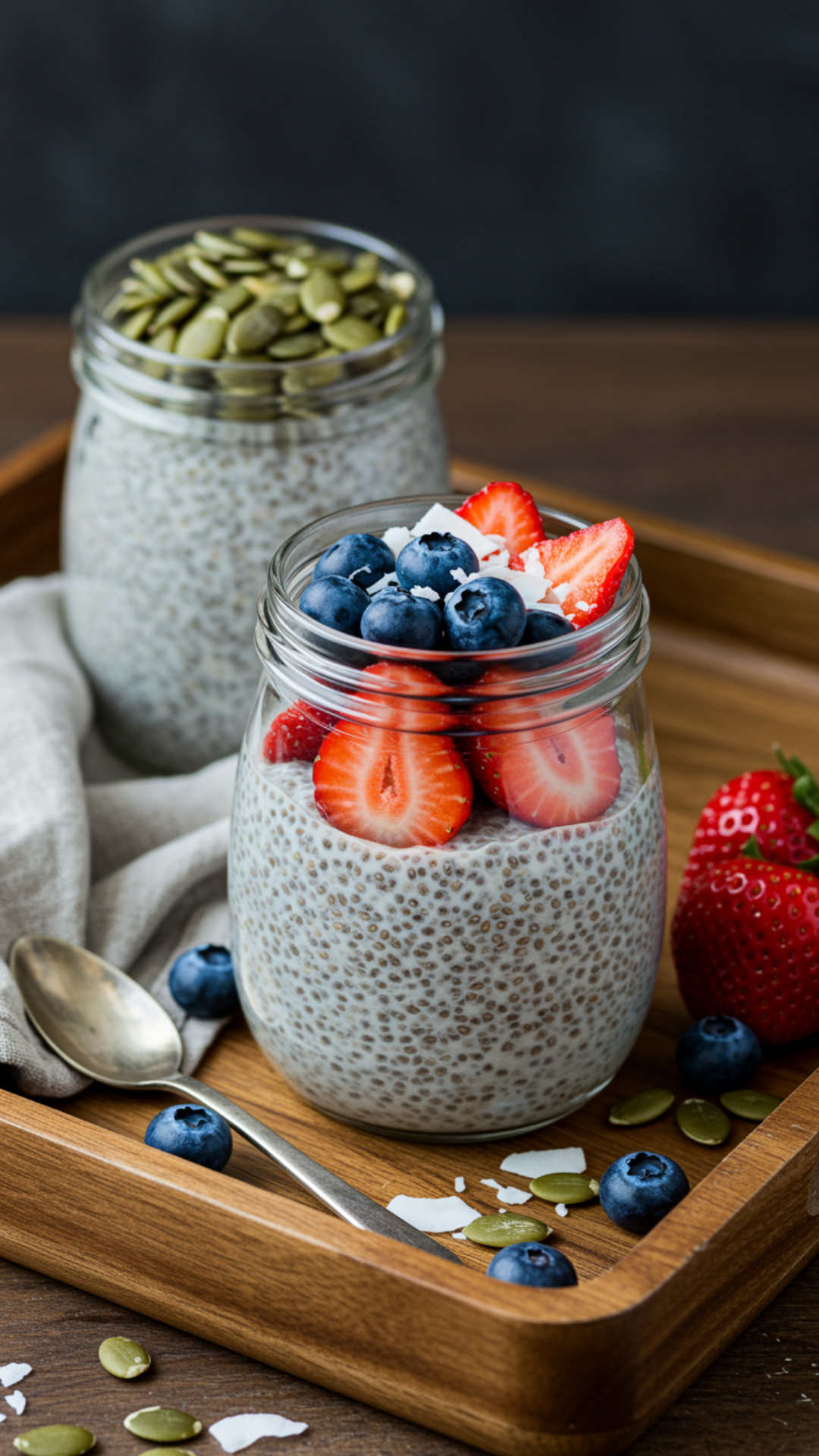
Chia Pudding
Mix chia seeds with unsweetened almond milk or coconut milk, a little vanilla, and cinnamon. Let it sit overnight and top with berries and pumpkin seeds. This works especially well for busy mornings when you need something ready to grab.
Breakfast Bowl with Eggs and Roasted Veggies
Use leftover roasted vegetables from dinner, add eggs, a bit of cheese, and maybe some salsa or Greek yogurt. Breakfast gets a lot easier when leftovers do part of the heavy lifting.
Protein Smoothie Without the Sugar Crash
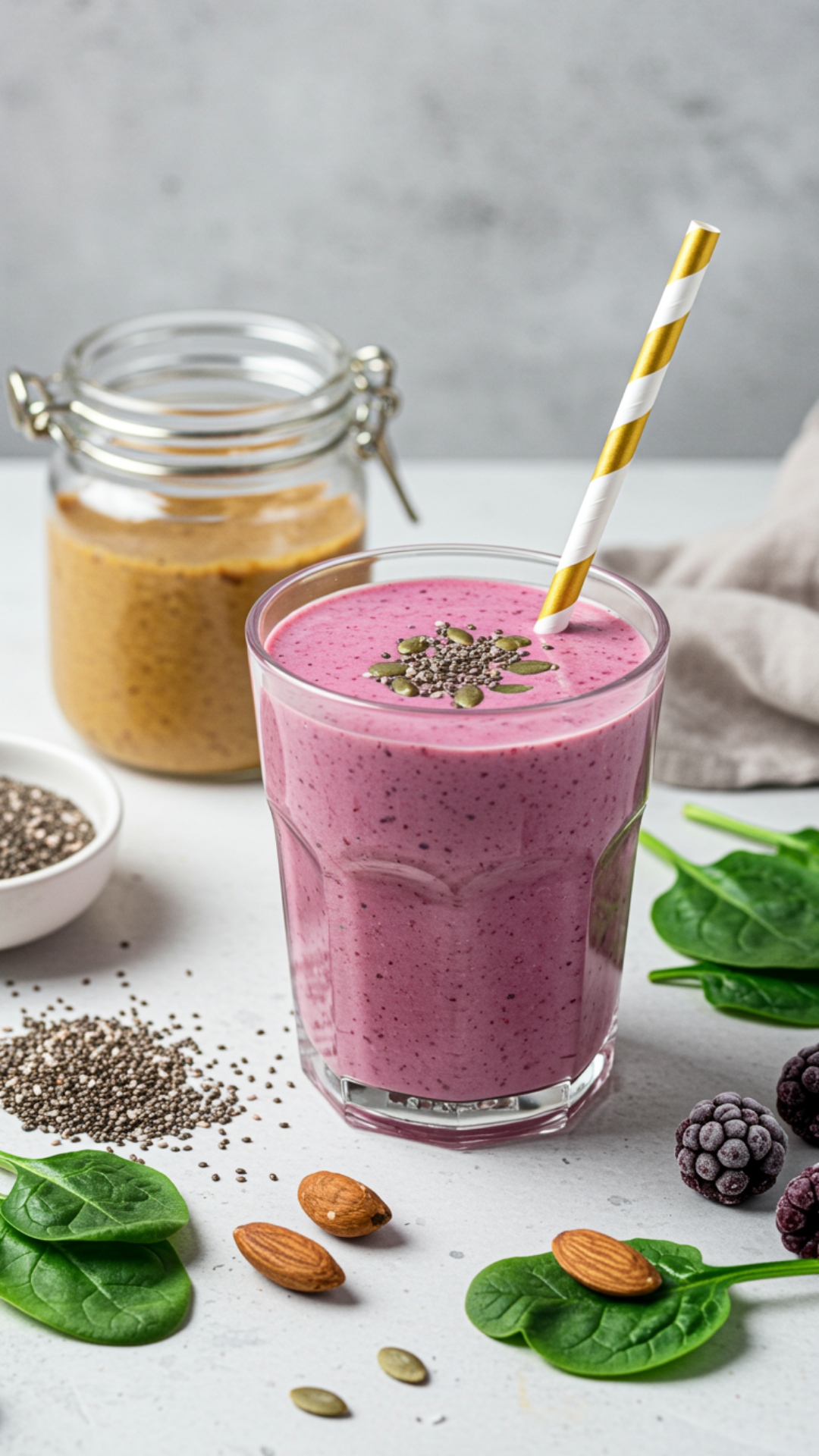
A low glycemic smoothie should include protein, fat, and fiber. Blend unsweetened milk, protein powder, frozen berries, chia seeds, spinach, and nut butter. Skip the fruit juice and sugary yogurt.
Low Glycemic Breakfast Wrap
Use a high-fiber wrap and fill it with eggs, sautéed veggies, cheese, and avocado. This works well for meal prep and makes breakfast feel less repetitive.
3. Easy Low Glycemic Lunch Ideas for Busy Days
Lunch is where many people fall into the trap of convenience foods that are technically food-shaped but do not do much for energy. A good low glycemic lunch should be easy enough for weekdays and satisfying enough that you are not prowling for snacks an hour later.
Chicken Salad Lettuce Wraps
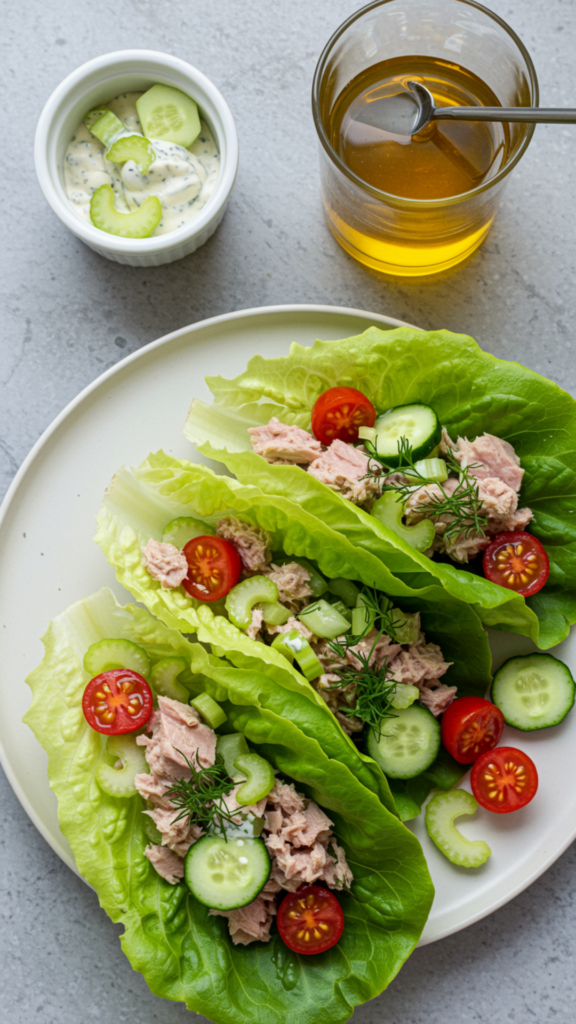
Mix cooked chicken with Greek yogurt or mayo, celery, dill, onion, and seasoning. Wrap it in lettuce leaves or serve over cucumbers and tomatoes for a fresh, crunchy lunch.
Also works well for Tuna.
Tuna Bowls
Canned tuna is one of the easiest lunch staples around. Mix it with mayo or Greek yogurt, chopped pickles, celery, onion, and herbs. Serve it in lettuce cups, over salad greens, or with sliced veggies.
Egg Salad Plate
Pair egg salad with cucumber, cherry tomatoes, olives, and a few seed crackers or a small piece of sourdough. This is simple, inexpensive, and surprisingly filling.
Leftover Protein Bowl
Take leftover chicken, beef, or salmon and build a bowl with greens, roasted vegetables, avocado, and a simple olive oil dressing. A small scoop of rice or beans can work well if balanced with enough protein and fiber.
Greek Chicken Bowl
Layer chopped lettuce, cucumber, tomatoes, olives, red onion, chicken, feta, and a lemon-dill yogurt sauce. It is bright, flavorful, and doesn’t taste like diet food pretending to be lunch.
Taco Salad
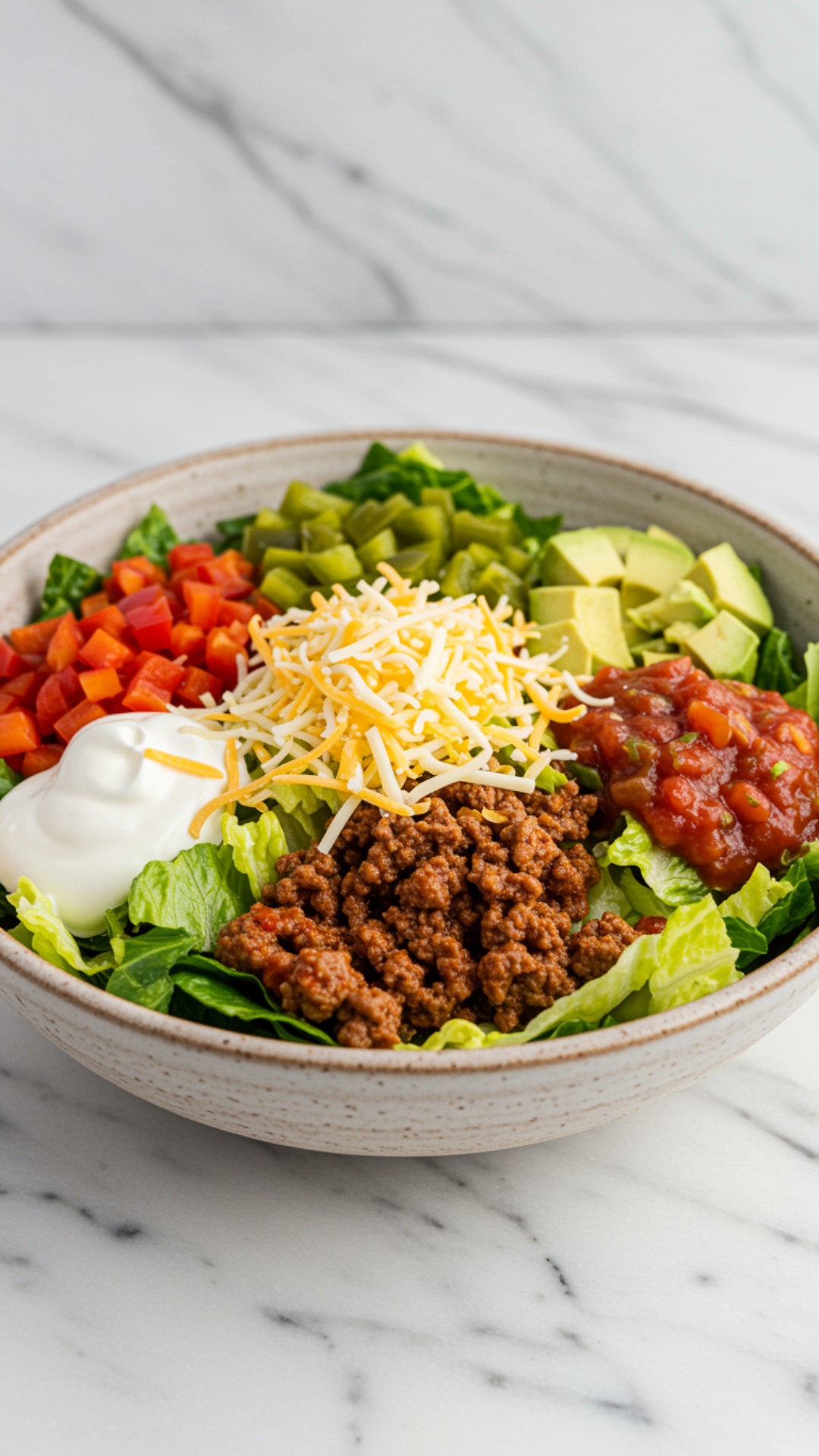
Use ground beef or turkey with taco seasoning, then add lettuce, cheese, salsa, avocado, sour cream, and chopped peppers. You get all the flavor of tacos without the crash that often comes from a pile of chips or tortillas.
Snack Plate Lunch
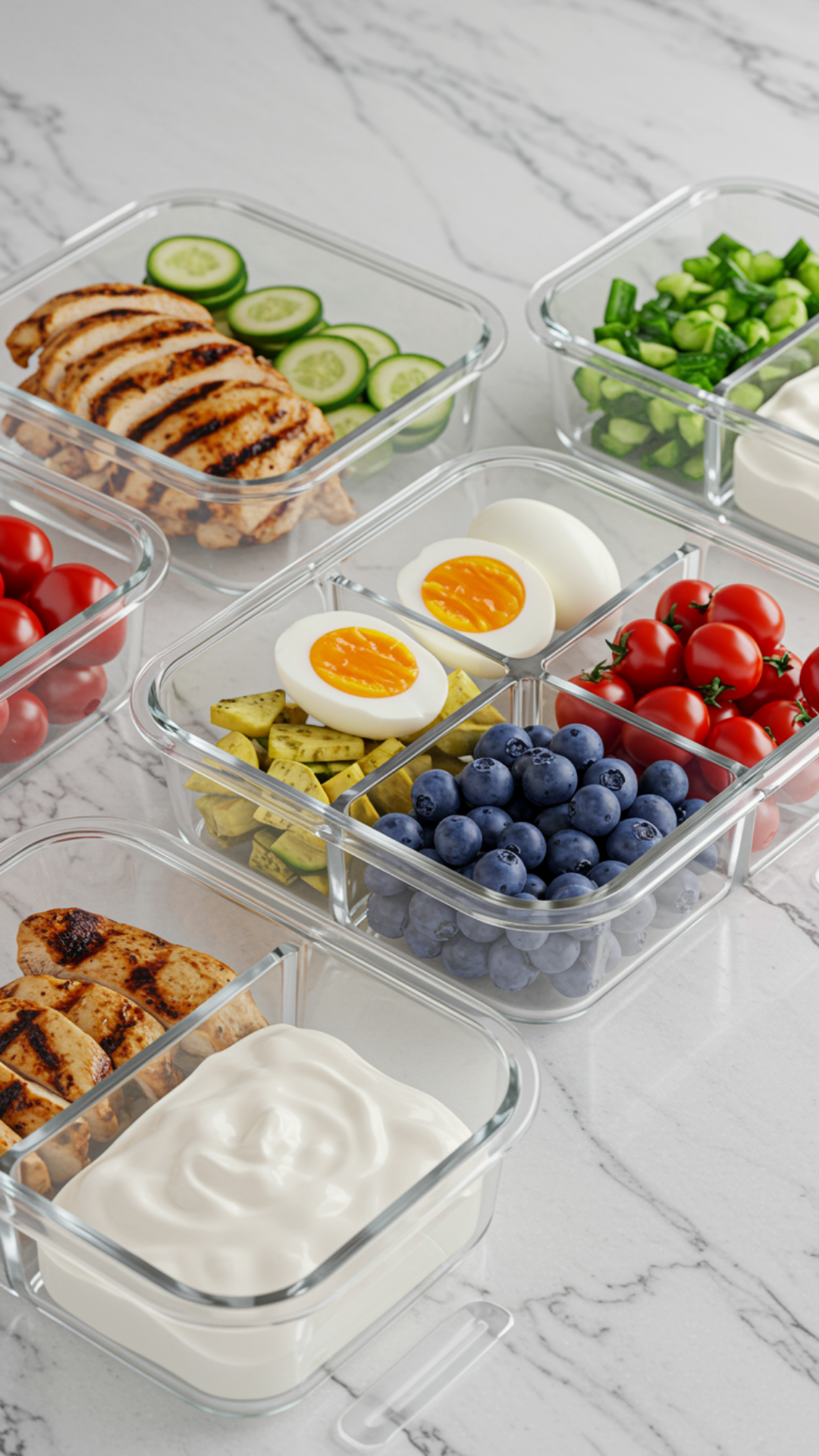
This is one of the best low effort lunches for real life. Combine turkey slices or boiled eggs with cheese, cucumbers, berries, nuts, and a dip like hummus or Greek yogurt ranch. It feels easy because it is.
4. Low Glycemic Dinner Ideas the Whole Family Can Eat
Dinner needs to work for real households. That means it should be satisfying, flexible, and easy to adapt without cooking three separate meals like a short-order diner trapped in your own kitchen.
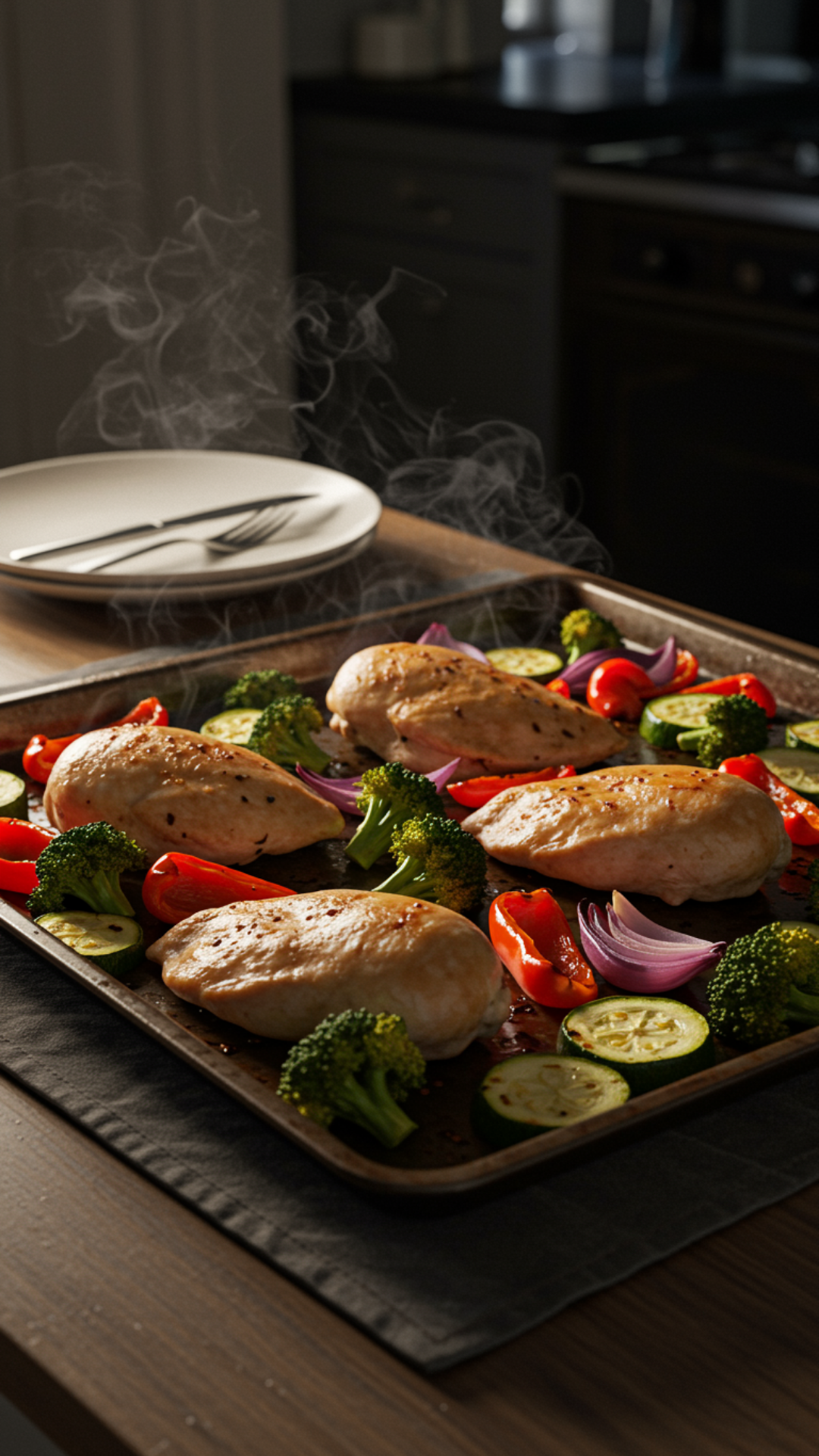
Sheet Pan Chicken and Vegetables
Roast chicken thighs or breasts with broccoli, peppers, zucchini, onions, and olive oil. Add seasoning you love and serve with a simple yogurt sauce or side salad.
This is one of the easiest low glycemic dinners because it uses one pan, one oven, and very little emotional drama.
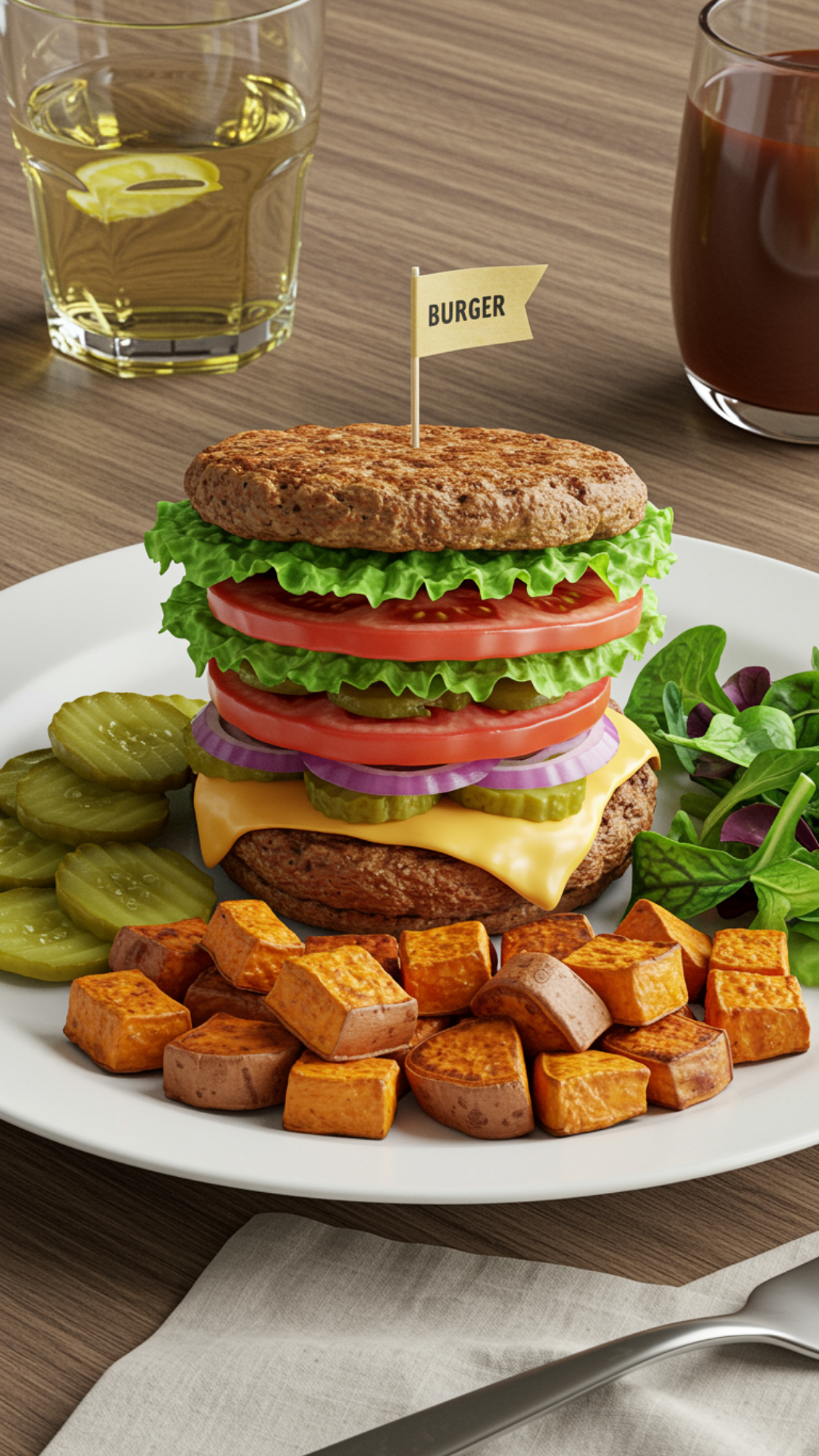
Bunless Burgers with Roasted Potatoes
A balanced low glycemic meal can absolutely include potatoes when paired with protein and fat. Serve burgers with cheese, lettuce, tomato, pickles, and a moderate portion of roasted baby potatoes or sweet potato wedges.
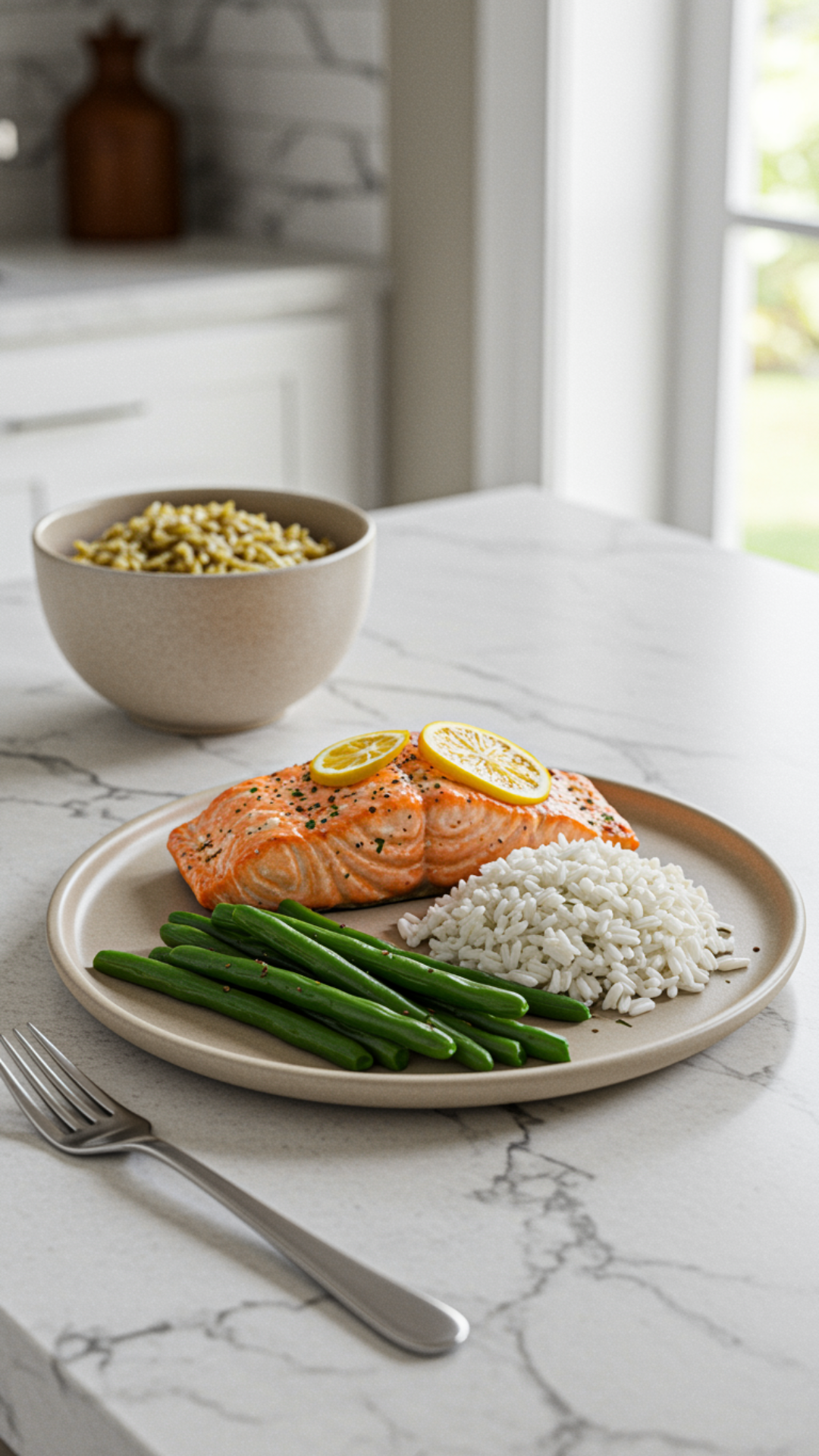
Salmon with Veggies and Rice
Salmon is rich in protein and healthy fats, which makes it a great anchor for a low glycemic dinner. Serve it with asparagus, green beans, or broccoli and a modest scoop of rice.
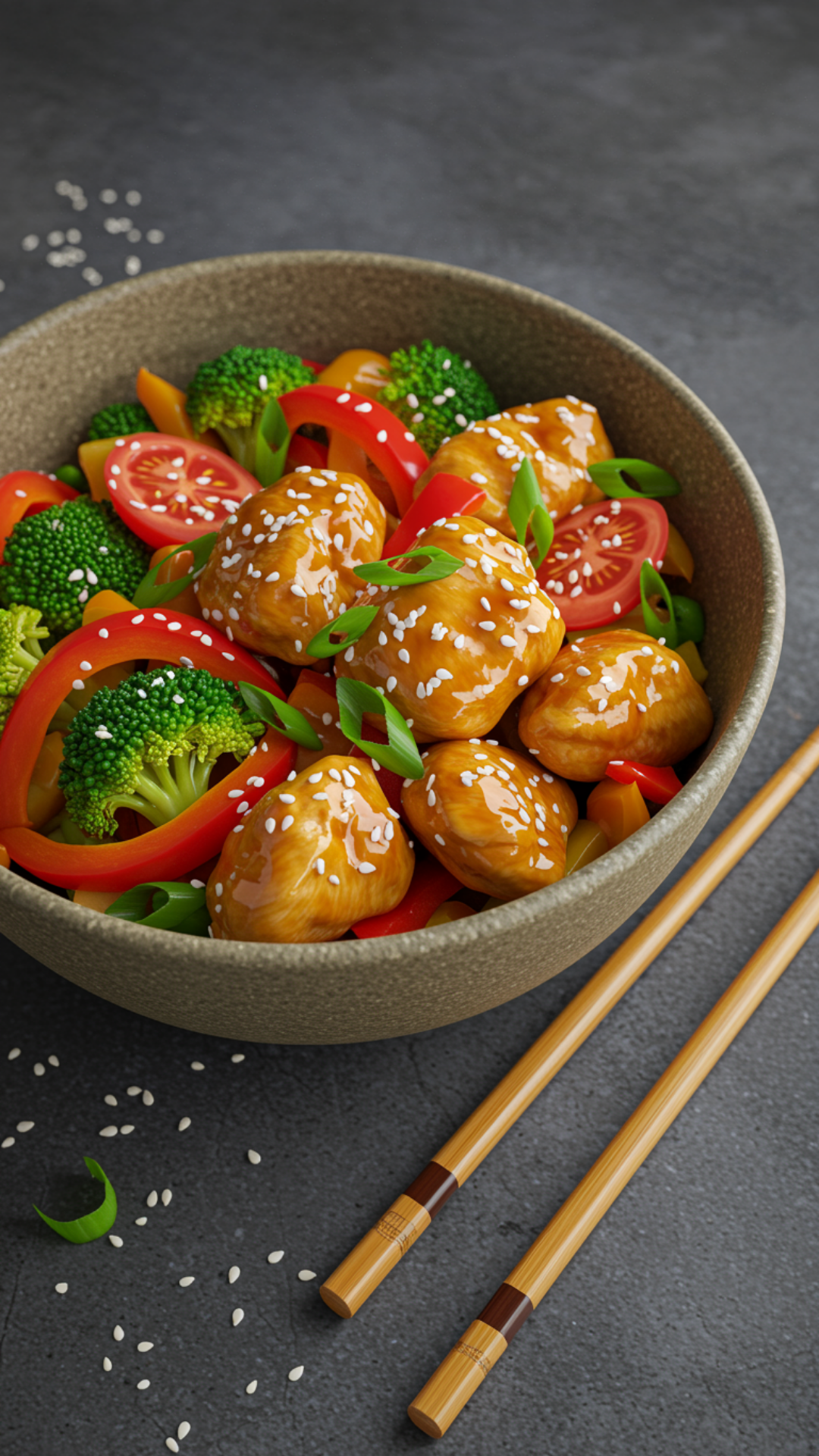
Chicken Stir Fry
Cook chicken with broccoli, peppers, cabbage, snap peas, and a simple sauce made from coconut aminos, garlic, ginger, and sesame oil. Serve it on its own or with a smaller portion of rice.
Taco Bowls
Use seasoned meat, lettuce, tomatoes, cheese, avocado, salsa, sour cream, and cauliflower rice or regular rice in a balanced portion. Taco bowls are easy to customize and easy to repeat.
Stuffed Peppers
Fill bell peppers with ground meat, cauliflower rice or a rice blend, onion, seasoning, cheese, and vegetables. These reheat well and make great leftovers.
Soup and Salad Dinner
A hearty soup with protein and vegetables can be a smart low glycemic option. Think chicken vegetable soup, turkey chili, taco soup, or creamy cauliflower soup paired with a simple salad.
Grilled Chicken with Greek Yogurt Sauce
Serve grilled or baked chicken with roasted vegetables and a lemon-herb Greek yogurt sauce. This adds flavor without relying on sugary sauces or heavy breading.
5. Low Glycemic Snack Ideas That Do Not Feel Punishing
Snacks are where good intentions often get mugged in the parking lot. The fix is not avoiding snacks entirely. It is choosing snacks that include protein, fat, or fiber so they actually help.
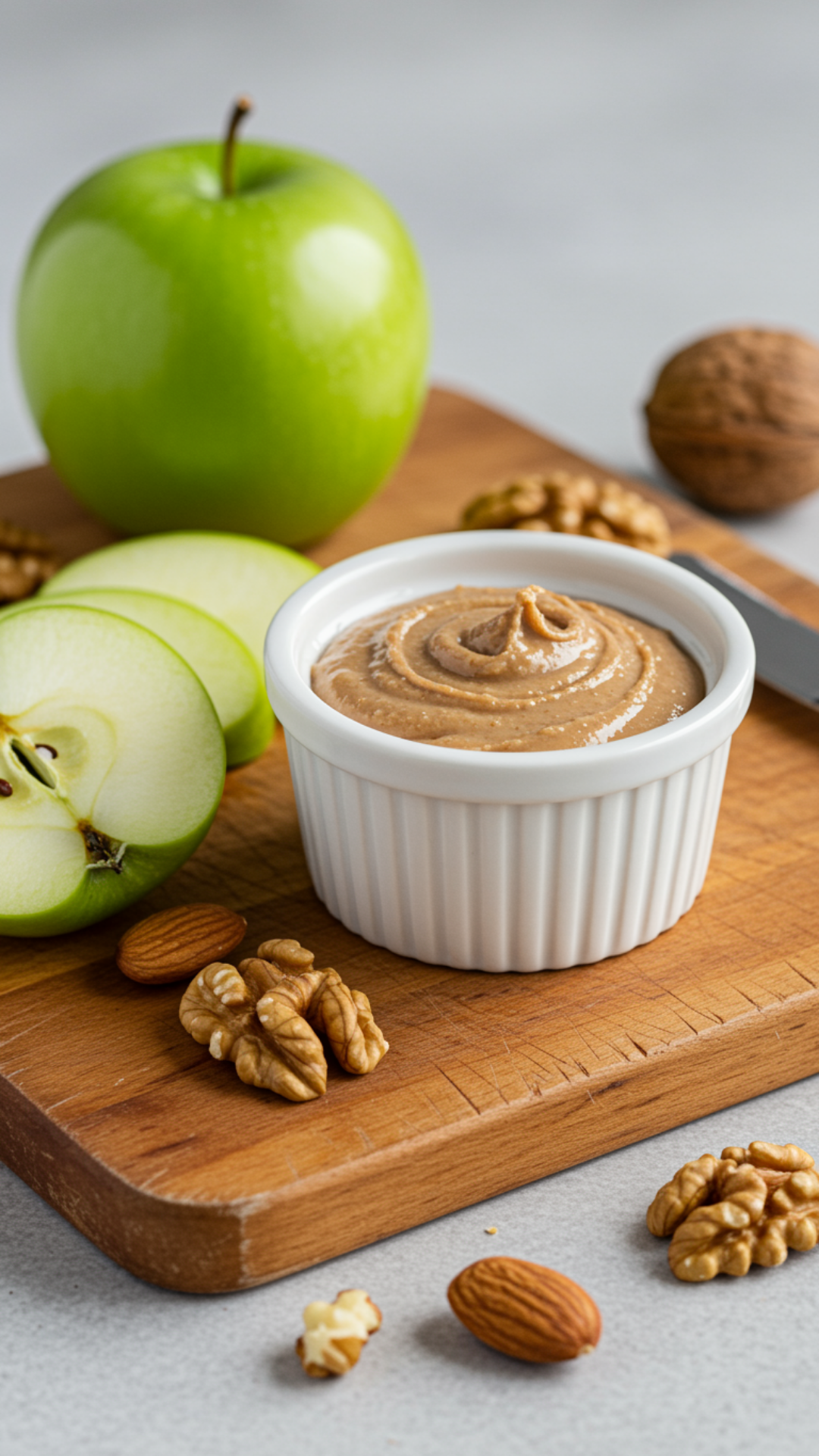
Apple Slices with Nut Butter
This classic works because the fruit is balanced with fat and a little protein.
Greek Yogurt with Cinnamon
Plain Greek yogurt with cinnamon and a few berries can feel like a mini dessert without sending blood sugar skyward.
Cheese and Veggies
Cheese cubes with cucumber slices, bell peppers, or cherry tomatoes are simple and satisfying.
Boiled Eggs
Not glamorous, but reliable. Boiled eggs are one of the easiest low glycemic snacks to keep on hand.
Tuna and Cucumber Slices
Top cucumber rounds with tuna salad for a snack that is crisp, savory, and filling.
Chia Pudding Cups
Make a batch ahead of time and portion into jars for grab-and-go snacks.
Nuts and Seeds
Almonds, walnuts, pumpkin seeds, or mixed nuts can work well in moderate portions.
Cottage Cheese and Berries
High protein, easy, and far more filling than a granola bar that leaves you hungry 20 minutes later.
Turkey Roll-Ups
Roll turkey slices around cheese, cucumber, or a smear of cream cheese for a fast protein snack.
6. Low Glycemic Meal Prep Ideas That Make the Week Easier
You do not need a full Sunday meal prep marathon with matching glass containers lined up like a refrigerator choir. Even a little prep can make low glycemic meals much easier.
Prep proteins
Cook chicken breasts, hard-boiled eggs, taco meat, or salmon ahead of time so meals come together faster.
Wash and chop vegetables
When vegetables are cleaned and ready, you are much more likely to use them.
Make a few sauces
Greek yogurt ranch, lemon-dill sauce, salsa-based dressings, and simple vinaigrettes can make repeated ingredients feel less boring.
Prep breakfast basics
Make chia pudding, boil eggs, or portion Greek yogurt bowls in advance.
Keep easy staples stocked
Canned tuna, frozen vegetables, berries, cheese, nuts, wraps, eggs, and salad greens can save dinner on busy nights.
Build flexible meal components
Instead of prepping full meals, prep ingredients that can turn into bowls, wraps, salads, or plates. This gives you more variety with less effort.
7. Real-Life Low Glycemic Meals Using Everyday Ingredients
Low glycemic eating becomes much easier when you stop chasing perfection and start using what you already have.
Here are a few simple real-life combinations:
Breakfast
Scrambled eggs, sautéed peppers and onions, avocado, and berries
Lunch
Tuna salad with cucumbers, tomatoes, pickles, and cheese
Dinner
Grilled chicken, roasted broccoli, and a moderate serving of potatoes with sour cream or Greek yogurt
Snack
Greek yogurt with chia seeds and cinnamon
Breakfast
Protein smoothie with frozen berries, spinach, chia seeds, and nut butter
Lunch
Leftover taco meat over lettuce with salsa, cheese, and avocado
Dinner
Salmon, green beans, and a scoop of jasmine rice
Snack
Apple slices with peanut butter
Breakfast
Cottage cheese with berries and walnuts
Lunch
Chicken lettuce wraps with chopped veggies and yogurt dressing
Dinner
Turkey chili with a salad
Snack
Boiled eggs and cucumbers
These are not fancy. That is exactly why they work.
8. How to Make Low Glycemic Meals More Filling
If your meals leave you hungry all the time, it usually is not because low glycemic eating is broken. It usually means the meals need more balance.
Here are a few ways to fix that:
Add more protein
A breakfast made of fruit alone will not keep most people full. Add eggs, yogurt, protein powder, cottage cheese, or meat.
Do not fear healthy fat
A salad with dry lettuce and grilled chicken is not a personality. Add avocado, olive oil, cheese, nuts, or dressing.
Use fiber strategically
Vegetables, chia seeds, berries, legumes, and seeds can help meals feel more substantial.
Stop eating naked carbs
Toast alone, crackers alone, fruit alone, or cereal alone often leads to a quick rise and a quick crash. Pair carbs with protein and fat whenever possible.
Make meals satisfying
Flavor matters. When meals taste bland and restrictive, cravings get louder. Use herbs, spices, sauces, citrus, and textures that make food enjoyable.
Turn on your JavaScript to view content
9. Common Mistakes People Make with Low Glycemic Eating
Eating too little
Some people accidentally turn low glycemic eating into undereating. Then they end up exhausted, hungry, and craving sugar later.
Overdoing “healthy” packaged foods
A snack marketed as healthy is not always blood-sugar friendly. Many bars, cereals, yogurts, and smoothies are sugar bombs in a wellness costume.
Forgetting protein at breakfast
Starting the day with enough protein can make a big difference in hunger, cravings, and energy.
Making meals too complicated
If every recipe has 19 ingredients and requires three pans, it will not survive real life for long.
Expecting instant perfection
You do not need to overhaul everything at once. Start by improving one meal a day, then build from there.
10. A Simple Low Glycemic Day of Meals
Here is what a realistic day might look like:
Breakfast
Greek yogurt bowl with chia seeds, walnuts, cinnamon, and blueberries
Lunch
Chicken bowl with lettuce, cucumber, tomato, feta, olives, and lemon-dill yogurt sauce
Snack
Apple with almond butter
Dinner
Sheet pan chicken with broccoli, peppers, onions, and roasted baby potatoes
Evening snack
Cottage cheese with a few berries or a boiled egg with cucumber slices
This kind of day is balanced, flavorful, filling, and realistic. It is not built around restriction. It is built around meals that help you feel better.
11. Low Glycemic Meal Ideas for Families
If you are feeding other people too, the easiest approach is usually building meals everyone can eat and adjusting the portions or sides.
Good family-friendly options include:
taco bowls
grilled chicken with roasted vegetables
burgers with salad and potatoes
chili with toppings
stir fry with meat and vegetables
omelets or breakfast-for-dinner
sheet pan sausage and vegetables
chicken fajita bowls
baked salmon and rice
soup with a snack plate-style side
For family meals, you can always offer optional sides like bread, extra rice, wraps, or fruit for those who need more flexibility, while still keeping the main meal balanced.
12. The Best Low Glycemic Meals Are the Ones You Will Actually Repeat
That is the real secret.
The best low glycemic meals are not the trendiest, prettiest, or most expensive. They are the ones you can make on ordinary Tuesdays when the day got away from you, your energy is low, and people still need to eat.
They are built from ingredients you know, flavors you enjoy, and routines you can keep. They support steadier energy, better fullness, and a more peaceful relationship with food because they work with your life instead of demanding you become a different person.
You do not need to make every meal perfect. You just need more meals that leave you feeling nourished instead of wrecked.
When low glycemic eating becomes practical, flavorful, and flexible, it becomes something you can actually live with. And that is where real change starts.
Low glycemic meals for real life should feel simple enough for busy mornings, flexible enough for family dinners, and satisfying enough that you are not thinking about food every hour. The goal is not punishment. The goal is support. More stable energy. Better fullness. Fewer crashes. Less chaos.
Start with the easiest wins. Add protein to breakfast. Build lunches that actually hold you over. Keep better snacks on hand. Make dinners that balance comfort and blood sugar support. Small shifts stack up fast, and they matter far more than chasing perfection for three days and burning out by Thursday.