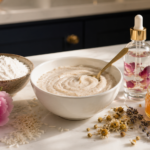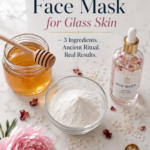

Rice flour face masks have been a staple of Korean and Japanese beauty rituals for centuries, and Pinterest is finally catching up — with pin saves climbing 200% in just the past month. If you have been chasing that coveted glass skin glow without a cabinet full of expensive serums, this one humble pantry ingredient might be the missing piece in your skincare routine.
This post contains affiliate links. If you purchase through one of my links, I may earn a small commission at no extra cost to you. I only recommend products I genuinely love and trust.
What Is a Rice Flour Face Mask?
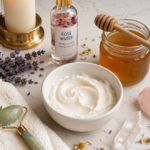
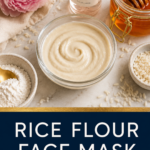
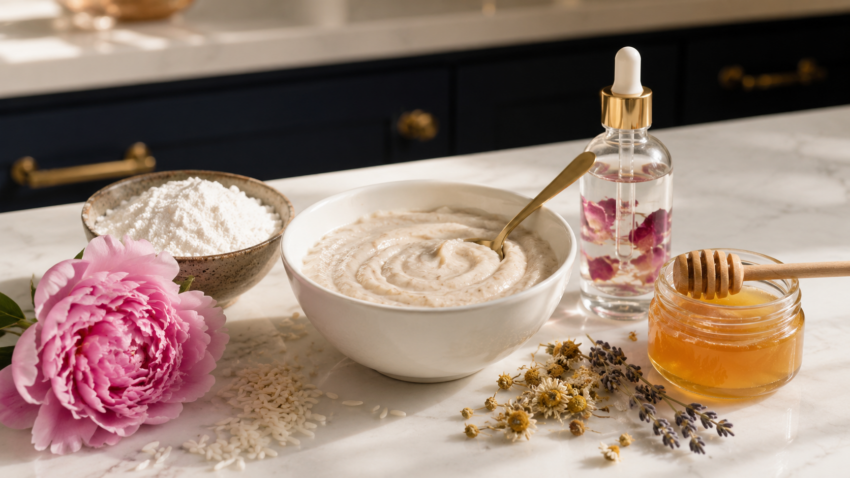
Rice flour is exactly what it sounds like — finely milled rice ground into a soft, powdery consistency. When combined with skin-loving liquids like honey, rose water, or plain yogurt, it transforms into a silky, milky paste that sits beautifully on the skin. The result is a mask that gently exfoliates, brightens, and soothes all at once, without the harshness of synthetic scrubs or chemical peels.
The secret lies in the natural compounds found in rice. Rice contains ferulic acid, allantoin, and inositol — three ingredients you will find listed on high-end brightening serums. Getting them from a whole-food source means your skin receives them in a gentle, bioavailable form that is unlikely to cause irritation.
Benefits of a Rice Flour Face Mask for Your Skin
Before you reach for the measuring spoon, here is a quick look at what rice flour actually does for your complexion.
Gentle physical exfoliation. The fine grain of rice flour buffs away dead skin cells without the micro-tears caused by larger-grained scrubs. This makes it suitable for sensitive skin types and even mature skin, where the barrier tends to be thinner.
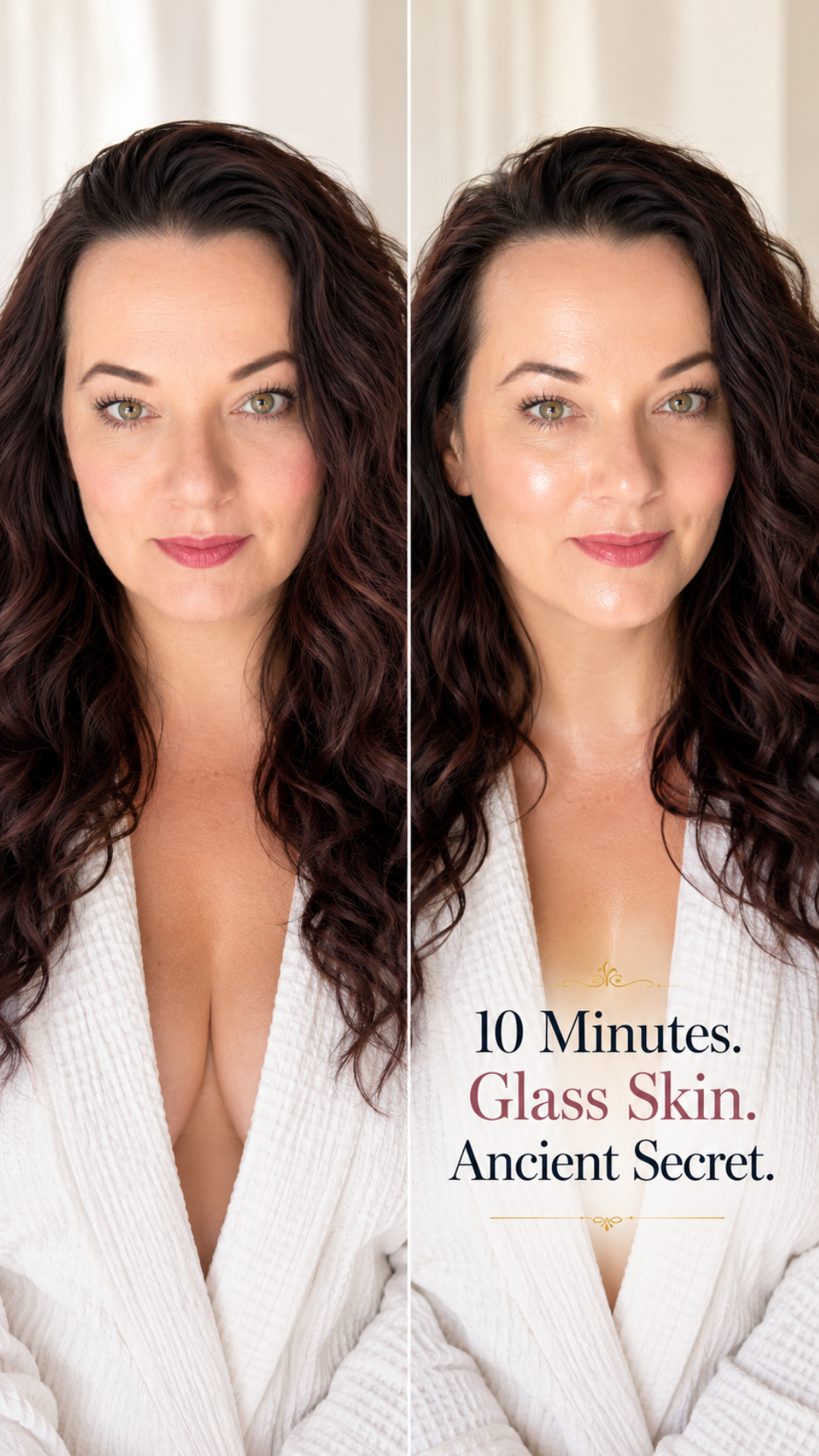
Brightening effect. Rice has been used for generations by women in East Asia specifically for its skin-lightening and brightening properties. Ferulic acid, a polyphenol naturally occurring in rice, helps to neutralize free radicals and reduce the appearance of dark spots and uneven tone over time.
Oil control without stripping. If you have combination or oily skin, rice flour acts like a soft absorbent that pulls excess sebum from the pores without disrupting your skin’s moisture barrier the way clay masks sometimes can.
Anti-inflammatory and soothing. Allantoin, found in the bran layer of rice, is well documented for its ability to calm redness and support skin repair. If your skin is easily flushed or reactive, this is an ingredient worth paying attention to.
Supports collagen production. Inositol, another compound in rice, plays a role in cell communication and has been studied for its potential to support skin firmness and elasticity — making rice flour a smart addition to any anti-aging skincare ritual.
How to Make a Basic Rice Flour Face Mask at Home
This foundational recipe works for most skin types and takes less than five minutes to prepare.
What you will need:
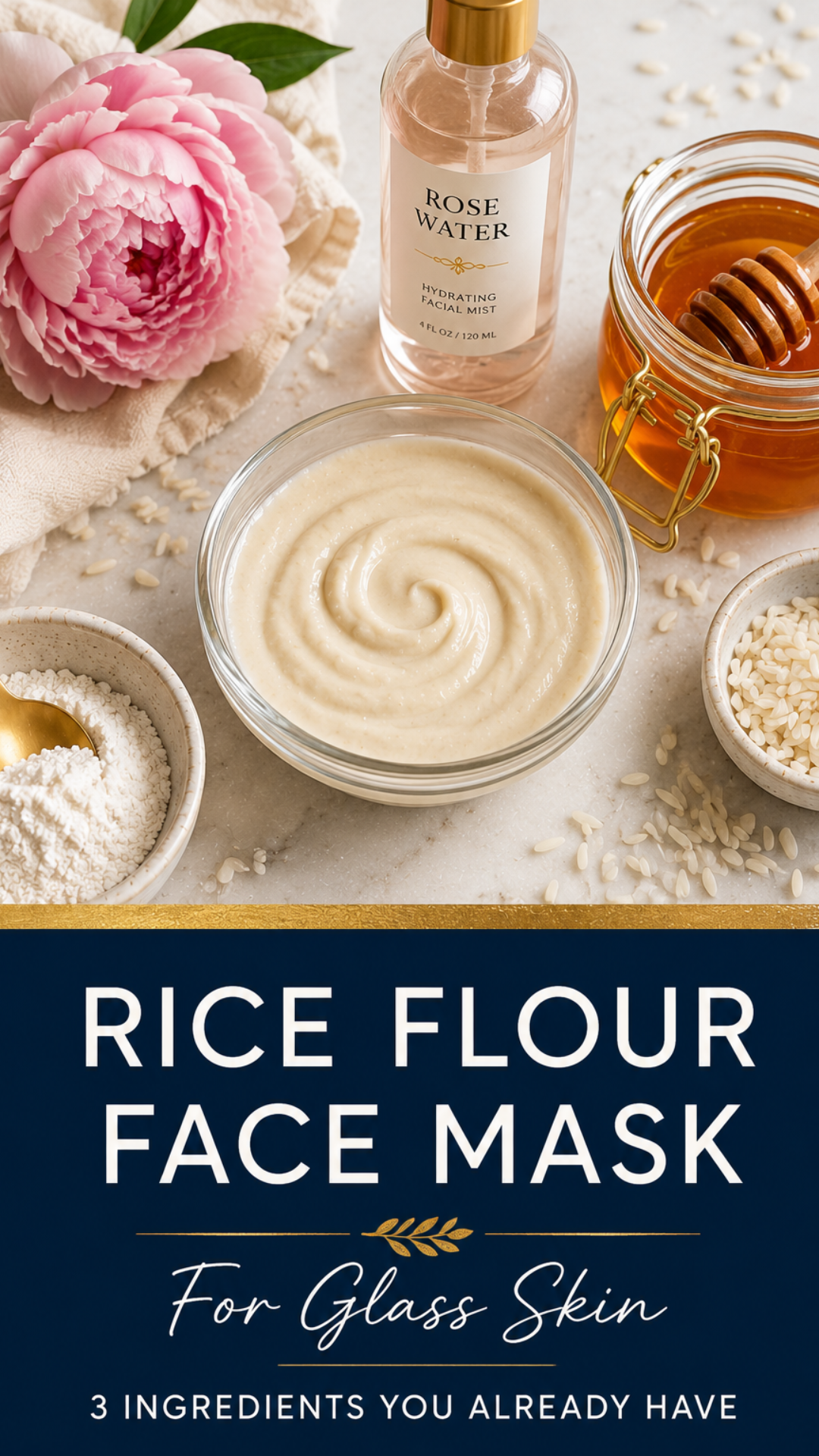
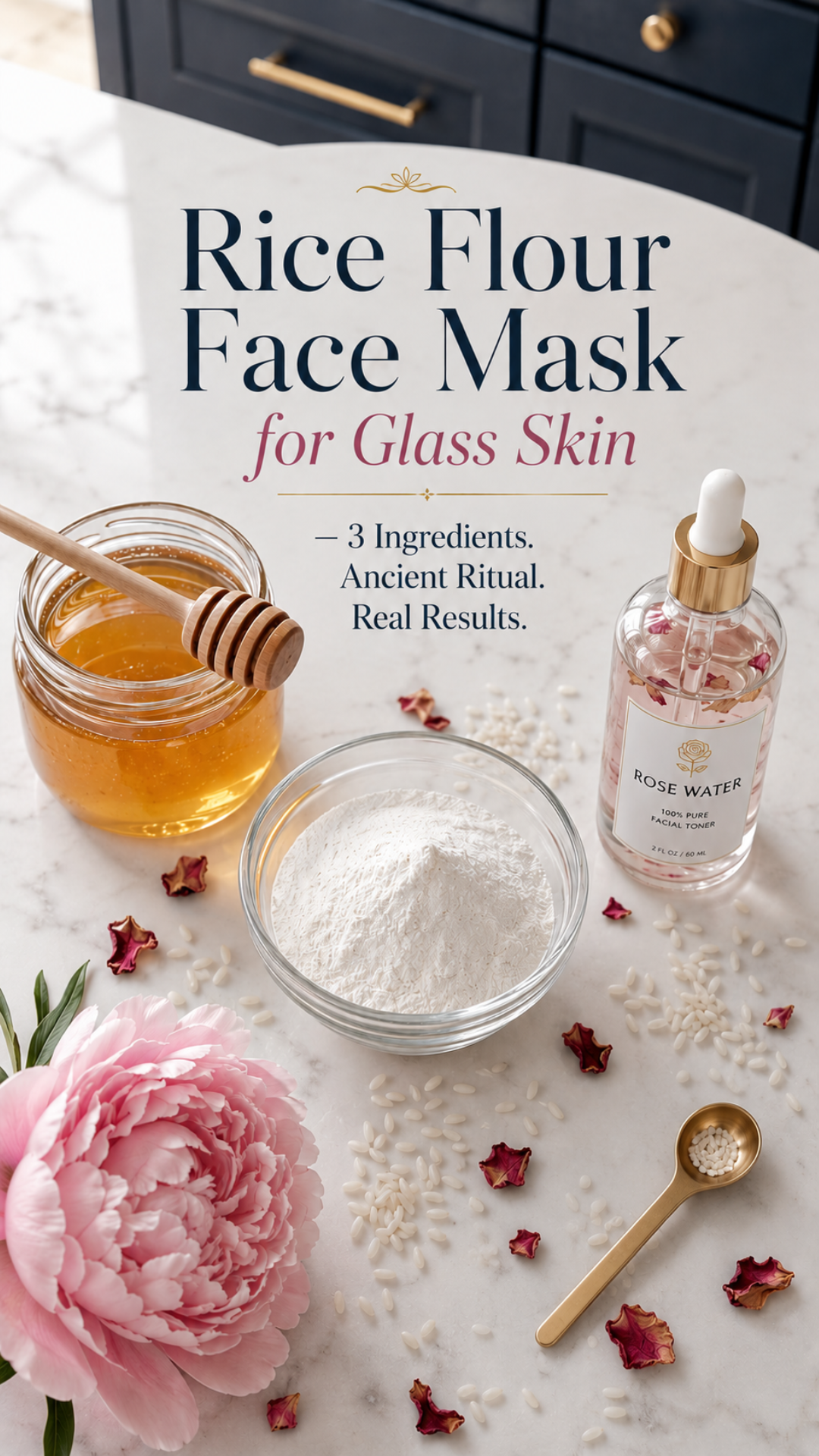
- 1 tablespoon rice flour (white or brown both work; brown is slightly more exfoliating)
- 1 teaspoon raw honey
- 1 to 2 teaspoons rose water (or plain water if you prefer)
Directions:
Combine the rice flour and honey in a small bowl. Add rose water one teaspoon at a time and stir until you reach a smooth, spreadable paste. It should be thick enough to stay on your face without sliding off but not so stiff it feels uncomfortable.
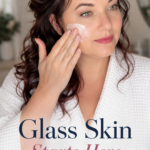
Cleanse your face first, then apply an even layer to your skin using clean fingertips or a silicone mask brush. Leave it on for 10 to 15 minutes. When you are ready to remove it, dampen your fingertips with warm water and use small circular motions to gently massage the mask as you rinse. This activates the gentle exfoliating action of the flour before you wash it away. Pat dry and follow with your usual serum and moisturizer.
Use this mask one to two times per week for best results.
Rice Flour Face Mask Variations for Every Skin Type
One of the things that makes rice flour so versatile is how easily it pairs with other natural ingredients to customize the mask for different concerns.
For dry or mature skin: Rice flour and avocado mask. Mash half a ripe avocado with one tablespoon of rice flour and a teaspoon of jojoba oil. The healthy fats in avocado provide deep nourishment while the rice flour polishes the surface. This combination leaves skin feeling plump and dewy.
For oily or acne-prone skin: Rice flour and green tea mask. Brew a strong cup of green tea, allow it to cool completely, and use it in place of water when mixing your rice flour. Green tea is rich in EGCG, a catechin with documented antibacterial and anti-inflammatory properties. Add a drop of tea tree essential oil if you are dealing with active breakouts.
For hyperpigmentation or uneven tone: Rice flour and turmeric mask. Add a pinch of turmeric to your base rice flour mask. Turmeric contains curcumin, which has been widely studied for its ability to inhibit melanin production and brighten skin over time. Use sparingly — a small pinch is all you need, and you may want to do a patch test first if you have very fair skin, as turmeric can temporarily tint the complexion.
For sensitive or redness-prone skin: Rice flour and oat milk mask. Replace the rose water with oat milk for a deeply calming mask. Oat milk contains beta-glucan, a compound known to reduce skin sensitivity and reinforce the moisture barrier. This is an especially lovely option if your skin tends to flare up with the seasons.
For dull or tired skin: Rice flour and yogurt brightening mask. Plain whole-milk yogurt contains lactic acid, a gentle alpha hydroxy acid that works beautifully alongside rice flour to dissolve dulling surface buildup and reveal fresher skin beneath. This combination is one of the most effective you can make at home for an instant glow.
Tips for Getting the Best Results
Start with clean skin. Masks work most effectively on a freshly cleansed face because they can penetrate the surface without a layer of makeup, sunscreen, or daily buildup acting as a barrier.
Do not skip the massage step. The gentle friction of massaging the mask off with damp fingertips is where much of the exfoliating benefit happens. Do not rinse it off like a rinse-off cleanser — take thirty seconds to work it across your skin before splashing with water.
Always follow with moisturizer. Exfoliation of any kind, even the mildest kind, temporarily opens up the skin’s surface. Following with a good moisturizer helps to seal in hydration and supports your barrier while your skin recovers.
Frequency matters. More is not more when it comes to exfoliating masks. Once or twice a week is sufficient for most skin types. If you are using additional exfoliating products in your routine such as a retinol or an AHA serum, reduce to once a week to avoid overworking your skin.
Store any leftover mixture in the refrigerator. If you make a slightly larger batch, it will keep in a sealed container in the fridge for up to three days. The cool temperature also adds a soothing, de-puffing effect when you apply it.
Where to Source Your Ingredients
Rice flour is available at most grocery stores in the gluten-free baking aisle, as well as at Asian grocery stores where it is sold in larger quantities at a lower price per ounce. Look for superfine rice flour rather than coarse varieties, which can be too abrasive for facial use.
For rose water, seek out brands that list only two ingredients: water and Rosa damascena flower water. Many affordable options are available through health food stores and online retailers. Quality rose water should smell like actual roses, not like synthetic fragrance.
Raw honey is worth spending a little more on. Manuka honey from New Zealand is considered one of the most potent options for skin care due to its high methylglyoxal content, but any raw, unfiltered honey will provide beneficial enzymes and humectant properties.
The Glass Skin Connection: Why This Trend Is More Than a Moment
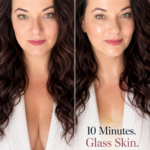
The viral surge around rice flour masks is not accidental. It sits squarely within the broader glass skin movement, which prioritizes luminosity, hydration, and texture refinement over heavy coverage. Korean beauty philosophy has long held that the most beautiful skin is skin that looks effortlessly healthy from the inside out — and rice flour delivers that kind of result precisely because it works with the skin rather than against it.
There is also a meaningful shift happening toward ingredient minimalism. People are increasingly skeptical of long ingredient lists and proprietary blends they cannot pronounce. A mask made from three ingredients you already have in your kitchen is as transparent as skincare gets, and that transparency is part of the appeal.
A rice flour face mask is one of those rare beauty rituals that manages to be both deeply ancient and completely on trend at the same time. It is inexpensive, effective, customizable, and gentle enough for nearly every skin type. Whether you are new to DIY skincare or you are looking to simplify an overcrowded routine, this is a practice worth building into your weekly self-care rhythm.
If you try one of the variations above, the yogurt and rice flour combination is an excellent place to start. Your skin will feel noticeably smoother after a single use, which makes it the kind of ritual that is very easy to fall in love with.
Ready to turn your passion for holistic living and DIY content into a steady income stream? The Evergreen Profit Machine shows you exactly how to build a content-driven business that earns while you sleep. Learn more at aligneddesignmarketing.com/tepm.