There is something quietly transformative about sliding into bed sheets that smell like lavender and cedarwood, or walking into a room that feels instantly calm the moment you push open the door. That experience does not have to come from a store-bought bottle full of synthetic fragrance and mystery ingredients. You can make linen and room sprays at home with essential oils, and once you understand how they actually work on fabric, you will never go back.
This guide covers everything: the science of why some sprays work and others leave your pillowcase smelling like wet carpet, the best base liquids to use, proper dilution ratios for fabric safety, and ten complete recipes organized by mood and purpose. Whether you are spritzing your bed linens before sleep, freshening a musty guest room, or setting an intention before your morning ritual, there is a recipe here for you.
The recipes and information shared in this post are intended for educational and informational purposes only and do not constitute medical advice. Essential oils are potent plant extracts and should always be used with care. Always research individual oils before use, particularly if you are pregnant, nursing, managing a health condition, or using medications.
Some essential oils are not safe for use around pets, particularly cats and dogs. Always verify the safety of any oil before using it in shared spaces with animals. The lavender and eucalyptus breathe easy spray and any blend containing eucalyptus, peppermint, or tea tree should never be used in spaces shared with cats.
Some oils, including cinnamon and clove, can be dermal sensitizers and should not be applied directly to skin or used on linens that have prolonged contact with skin, such as pillowcases. Always follow the specific safety notes included with each recipe.
Results may vary depending on the quality of essential oils used, water mineral content, and storage conditions. Always store your sprays in a cool, dark location and shake well before each use. When in doubt, patch test on a small area of fabric before spraying widely.
I am not a certified aromatherapist or medical professional. Please do your own research and consult a qualified practitioner if you have specific health concerns.
This post contains affiliate links, which means I may earn a small commission if you purchase through my links at no additional cost to you. I only recommend products I genuinely use or trust, and all opinions expressed here are entirely my own. Any commissions earned help support the free content on this blog — so thank you for your support.
What Is a Linen Spray (and How Is It Different from a Room Spray)?
A linen spray is a water-based mist designed to be applied directly to fabric — pillowcases, sheets, duvet covers, curtains, upholstery, and even clothing. A room spray is similar in formulation but intended to be misted into the air rather than onto surfaces.
The distinction matters because fabric holds scent differently than air does. When you spray something directly onto linen, it needs to dry quickly, leave no staining residue, and be diluted at a concentration that is safe for prolonged skin contact (since you are sleeping on it).
Most commercial linen sprays use synthetic fragrance oils, alcohol as a carrier, and a preservative. DIY versions made with pure essential oils are more customizable, free from synthetic ingredients, and far more satisfying to make.
Why Most Homemade Linen Sprays Fail (And How to Avoid It)
If you have ever made a linen spray by shaking essential oils into water and calling it done, you already know what happens: the oil floats on top, you get uneven distribution, it smells off, and sometimes it leaves greasy spots on fabric.
Here is why that happens and how to fix it.
Essential oils and water do not mix. Oil is hydrophobic — it repels water. Without a dispersant or emulsifier, your spray will never fully blend no matter how hard you shake it. When you mist an unemulsified spray onto fabric, you are essentially dotting concentrated essential oil directly onto the fibers, which can cause staining, skin irritation, and inconsistent scent throw.
The solution is a solubilizer. Polysorbate 20, witch hazel, or a high-proof alcohol (like vodka or perfumer’s alcohol) all act as a bridge between the oil and water phases, allowing them to blend into a true solution. This gives you an even mist, faster drying time, and proper dilution across the entire surface.
Distilled Water
Always use distilled water, never tap. Tap water contains minerals and microbes that will cause your spray to go rancid quickly and can leave mineral deposits on dark fabrics. Distilled water is inexpensive, shelf-stable in its unopened form, and odorless.
Witch Hazel (Alcohol-Based)
Witch hazel is the most popular base for DIY linen sprays because it is widely available, inexpensive, and works as a light solubilizer. It helps essential oils disperse more evenly than plain water, and its mild astringent quality helps neutralize odors on fabric rather than just layering scent on top.
Look for witch hazel that is at least 14% alcohol content (most drugstore versions are). Avoid formulas with added fragrance or aloe — you want plain, unfragranced witch hazel.
Use a ratio of roughly 1 part witch hazel to 3–4 parts distilled water for a spray that blends well without smelling too medicinal.
Vodka or Perfumer’s Alcohol
High-proof vodka (80 proof or higher) works similarly to witch hazel and gives a cleaner, more neutral base with slightly better solubilizing power. Perfumer’s alcohol (isopropyl myristate or specially denatured alcohol) is what professional formulators use and produces the most seamless blend, but it is a specialty ingredient you will need to order online.
For a simple home recipe, vodka is a perfectly effective substitute.
Aloe Vera Gel (Unscented)
A small amount of aloe vera gel — no more than 5–10% of your total formula — can help essential oils emulsify and adds a light conditioning quality to the spray. It works especially well in sprays designed for bedding or fabric that touches skin. Use clear, unfragranced aloe only.
Solubilizers: Polysorbate 20
If you want the most stable, professional-quality linen spray, polysorbate 20 is the ingredient to add to your toolkit. It is a gentle, plant-derived emulsifier that fully binds essential oils to water. Use it at a 1:1 ratio with your essential oil total — so for every 1 ml of essential oil, use 1 ml of polysorbate 20, then add your water. The result is a crystal-clear spray with even distribution and no separation.
Dilution Ratios for Linen Sprays: What Is Actually Safe
Dilution matters more in a linen spray than people realize, because these sprays are applied to surfaces you sleep against, rest your face on, and breathe near for hours. The following guidelines are based on general aromatherapy safety standards for leave-on applications.
Standard linen spray (adults, general use): 0.5% to 1% essential oil total For a 100 ml spray bottle: 10–20 drops essential oil
Light room spray (air misting, not fabric contact): 1% to 2% essential oil total For a 100 ml spray bottle: 20–40 drops essential oil
Strong linen spray (fabric only, not pillowcases or items with direct skin contact): Up to 1.5% For a 100 ml spray bottle: 30 drops essential oil maximum
Children’s spaces and nurseries: 0.25% maximum For a 100 ml spray bottle: 5 drops — use only lavender, Roman chamomile, or cedarwood
Pets present: Many essential oils are toxic to cats and dogs. Avoid tea tree, eucalyptus, clove, cinnamon, citrus, peppermint, and pine in any space shared with animals. Safe options in very low dilution include lavender and cedarwood.
Note on drops vs. ml: Approximately 20 drops of essential oil equals 1 ml. Use this to convert when scaling recipes.
The Anatomy of a Good Linen Spray Recipe
Every well-made linen spray has four components:
- Essential oil blend — the scent and therapeutic intention
- Solubilizer or dispersant — witch hazel, vodka, or polysorbate 20
- Distilled water — the body of the spray
- Optional additives — aloe vera, vegetable glycerin (for humidity retention on fabric), or a preservative if making large batches
The basic formula for a 100 ml bottle:
- 10–20 drops essential oil (0.5–1%)
- 10 ml witch hazel or vodka (or 1 ml polysorbate 20 per 1 ml essential oil used)
- Distilled water to fill
Combine the essential oil with the solubilizer first, swirl to blend, then add the distilled water slowly. Label your bottle with the date and recipe. Shake before each use if using witch hazel; polysorbate 20 blends should stay fully emulsified.
Shelf life: 1–3 months without a preservative. Store in a cool, dark location and use a dark glass spray bottle to protect the essential oils from UV degradation.
10 Complete DIY Linen Spray Recipes
Each recipe is written for a 100 ml dark glass spray bottle. Combine essential oils with witch hazel first, then top with distilled water. Shake well before each use.
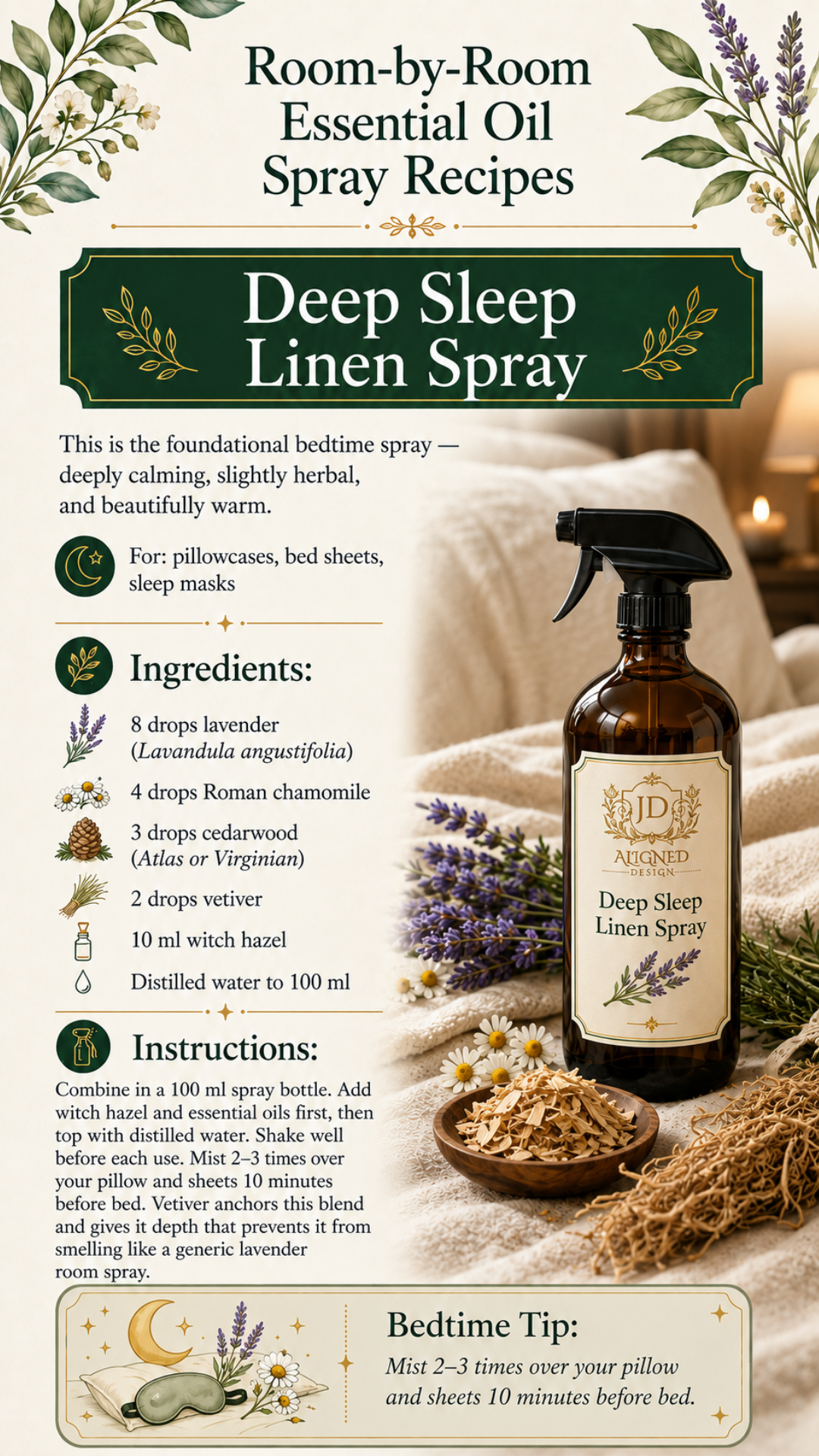
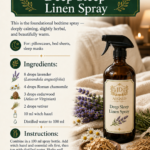
1. Deep Sleep Linen Spray
For: pillowcases, bed sheets, sleep masks
This is the foundational bedtime spray — deeply calming, slightly herbal, and beautifully warm.
- 8 drops lavender (Lavandula angustifolia)
- 4 drops Roman chamomile
- 3 drops cedarwood (Atlas or Virginian)
- 2 drops vetiver
- 10 ml witch hazel
- Distilled water to 100 ml
Vetiver anchors this blend and gives it depth that prevents it from smelling like a generic lavender room spray. Mist 2–3 times over your pillow and sheets 10 minutes before bed.
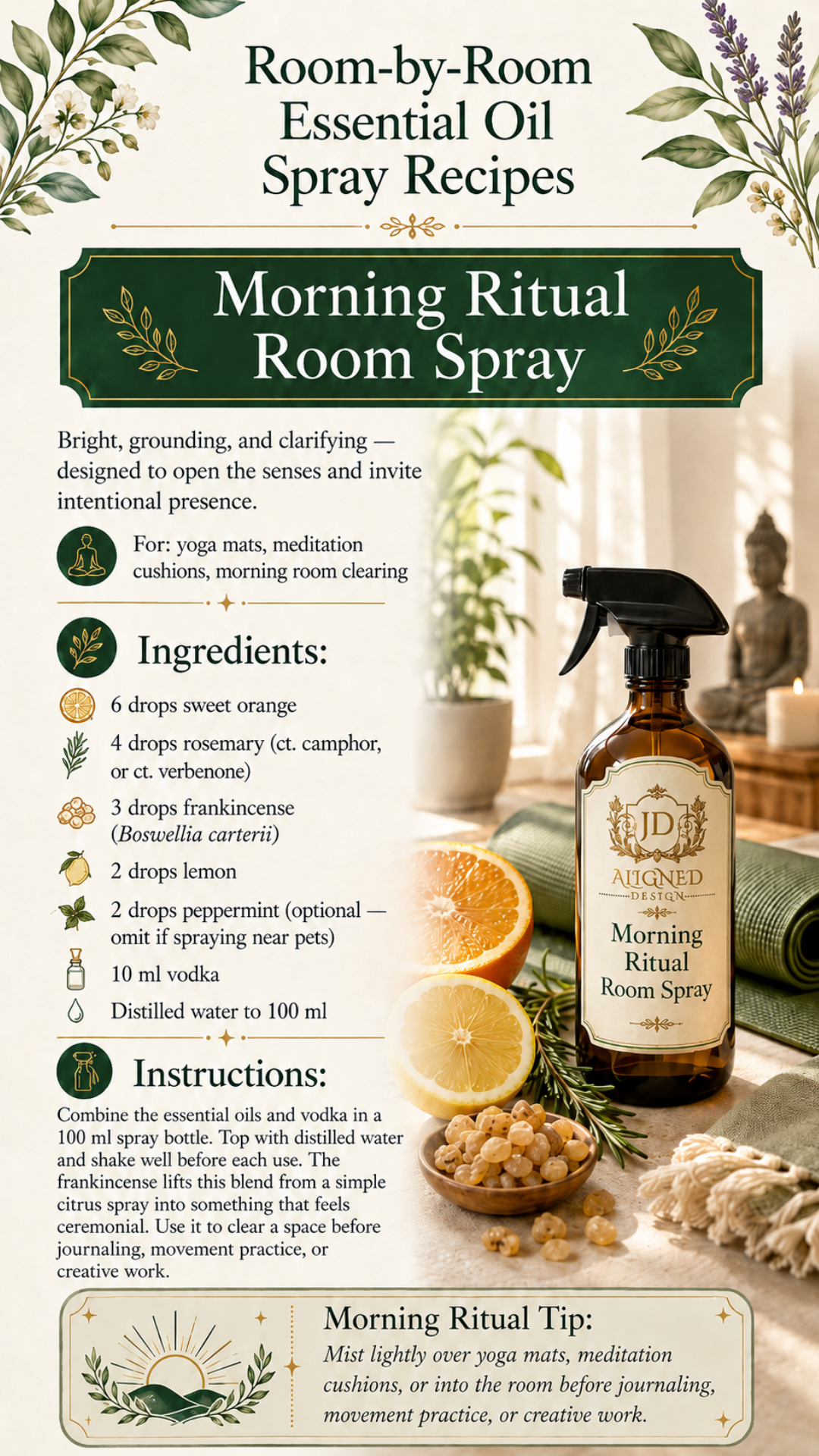
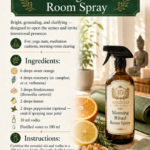
2. Morning Ritual Room Spray
For: yoga mats, meditation cushions, morning room clearing
Bright, grounding, and clarifying — designed to open the senses and invite intentional presence.
- 6 drops sweet orange
- 4 drops rosemary (ct. camphor, or ct. verbenone)
- 3 drops frankincense (Boswellia carterii)
- 2 drops lemon
- 2 drops peppermint (optional — omit if spraying near pets)
- 10 ml vodka
- Distilled water to 100 ml
The frankincense lifts this blend from a simple citrus spray into something that feels ceremonial. Use it to clear a space before journaling, movement practice, or creative work.
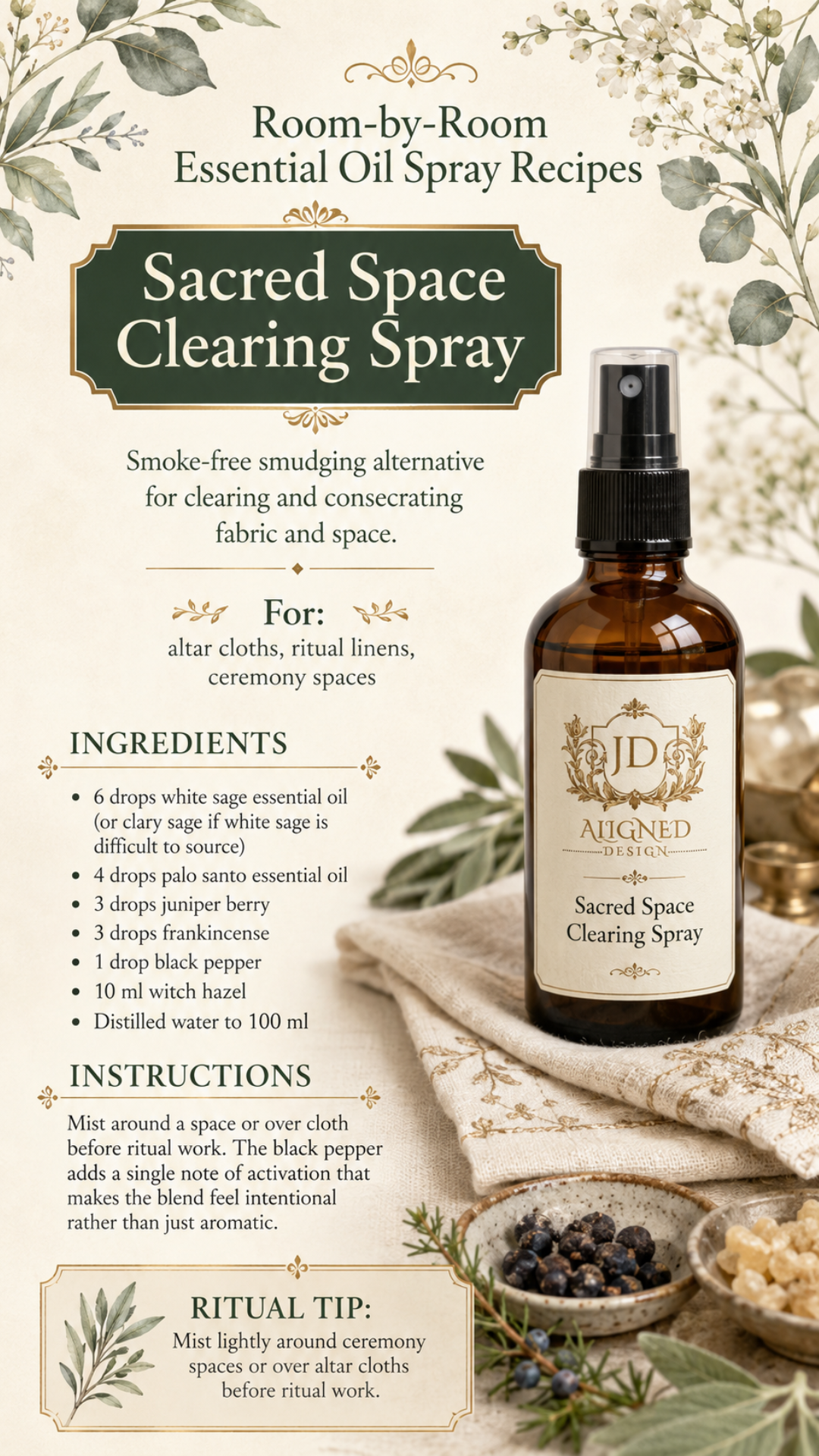
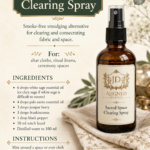
3. Sacred Space Clearing Spray
For: altar cloths, ritual linens, ceremony spaces
Smoke-free smudging alternative for clearing and consecrating fabric and space.
- 6 drops white sage essential oil (or clary sage if white sage is difficult to source)
- 4 drops palo santo essential oil
- 3 drops juniper berry
- 3 drops frankincense
- 1 drop black pepper
- 10 ml witch hazel
- Distilled water to 100 ml
Mist around a space or over cloth before ritual work. The black pepper adds a single note of activation that makes the blend feel intentional rather than just aromatic.
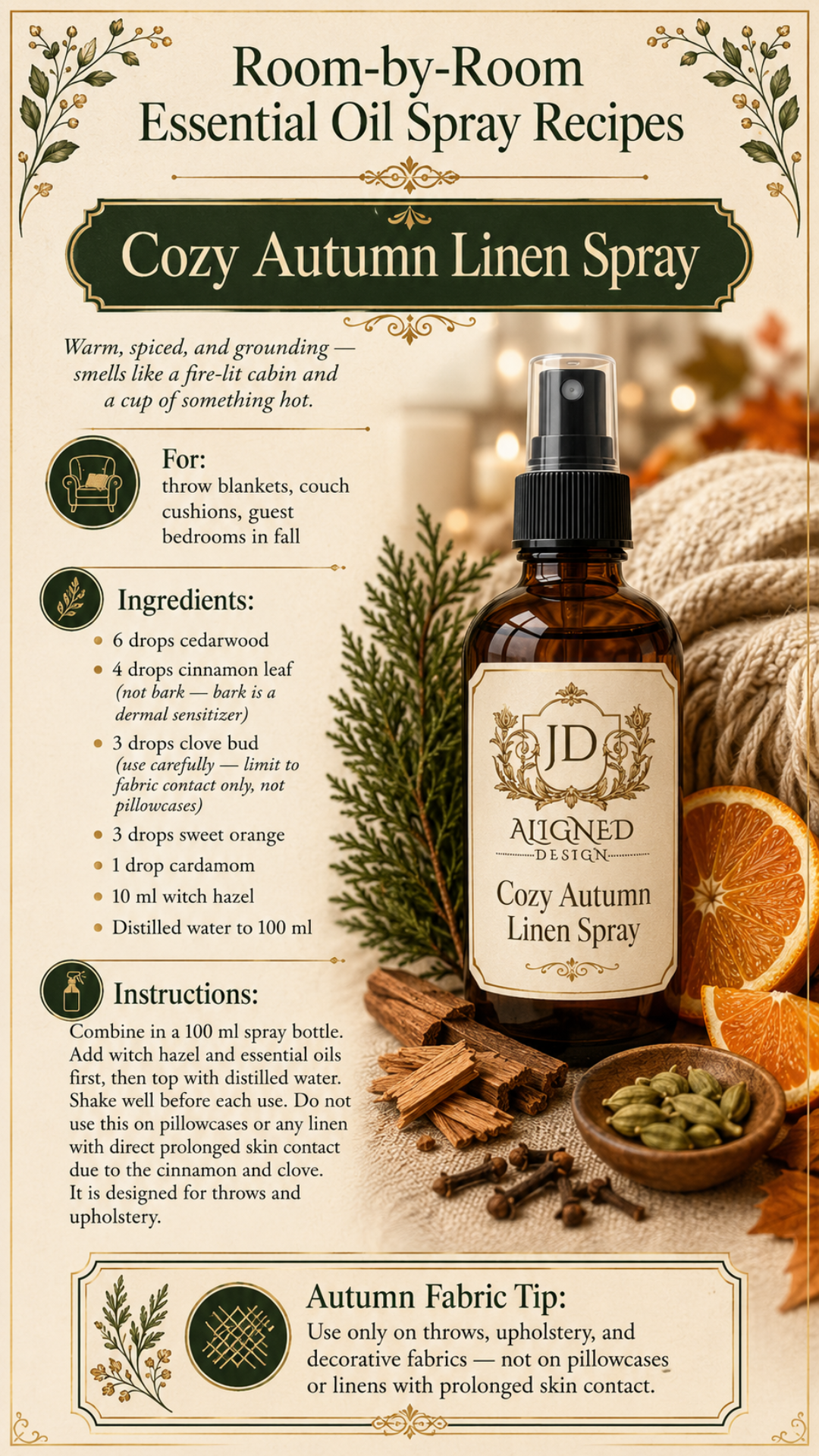
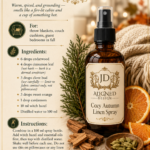
4. Cozy Autumn Linen Spray
For: throw blankets, couch cushions, guest bedrooms in fall
Warm, spiced, and grounding — smells like a fire-lit cabin and a cup of something hot.
- 6 drops cedarwood
- 4 drops cinnamon leaf (not bark — bark is a dermal sensitizer)
- 3 drops clove bud (use carefully — limit to fabric contact only, not pillowcases)
- 3 drops sweet orange
- 1 drop cardamom
- 10 ml witch hazel
- Distilled water to 100 ml
Do not use this on pillowcases or any linen with direct prolonged skin contact due to the cinnamon and clove. It is designed for throws and upholstery.
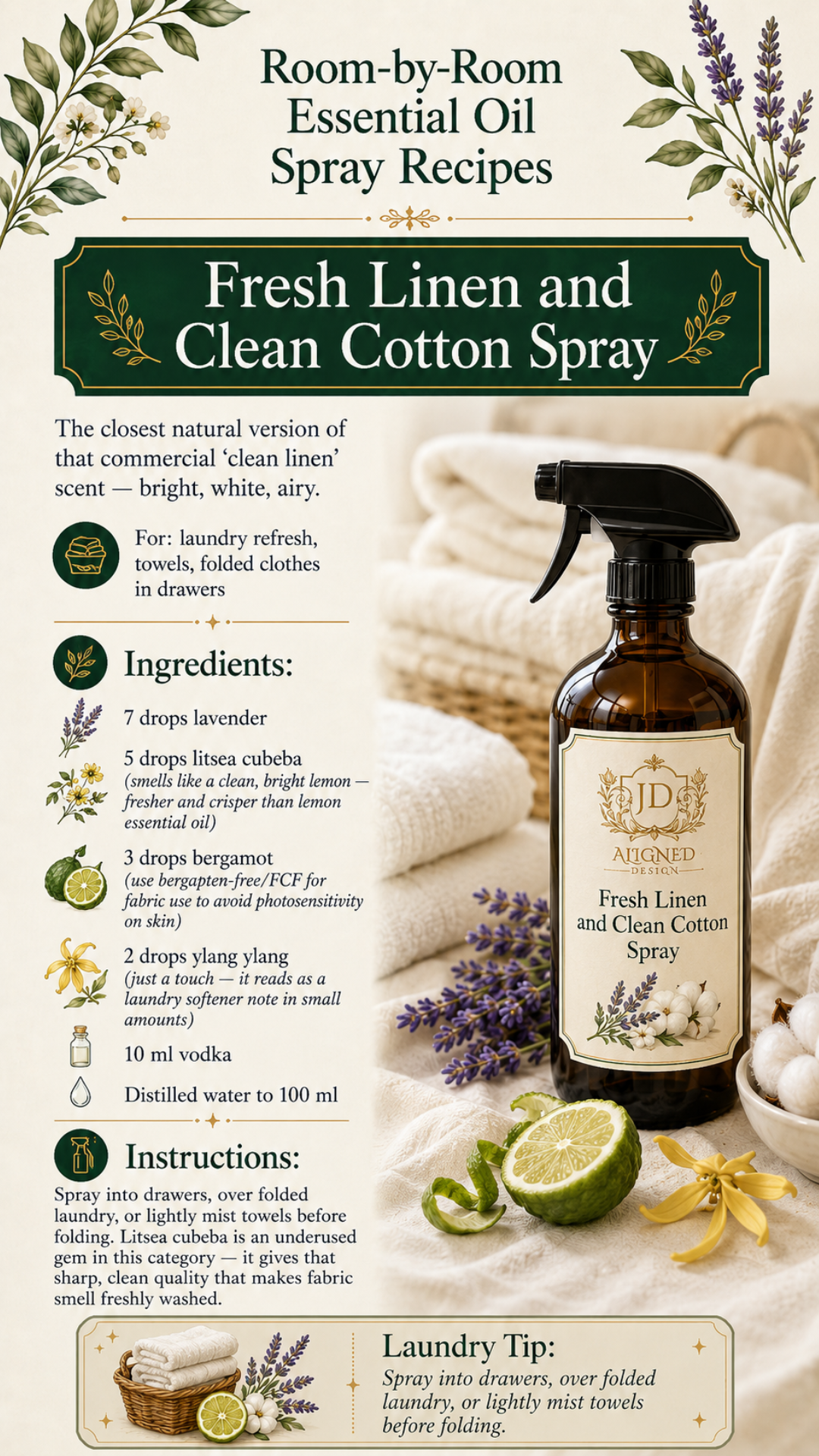
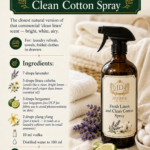
5. Fresh Linen and Clean Cotton Spray
For: laundry refresh, towels, folded clothes in drawers
The closest natural version of that commercial “clean linen” scent — bright, white, airy.
- 7 drops lavender
- 5 drops litsea cubeba (smells like a clean, bright lemon — fresher and crisper than lemon essential oil)
- 3 drops bergamot (use bergapten-free/FCF for fabric use to avoid photosensitivity on skin)
- 2 drops ylang ylang (just a touch — it reads as a laundry softener note in small amounts)
- 10 ml vodka
- Distilled water to 100 ml
Spray into drawers, over folded laundry, or lightly mist towels before folding. Litsea cubeba is an underused gem in this category — it gives that sharp, clean quality that makes fabric smell freshly washed.
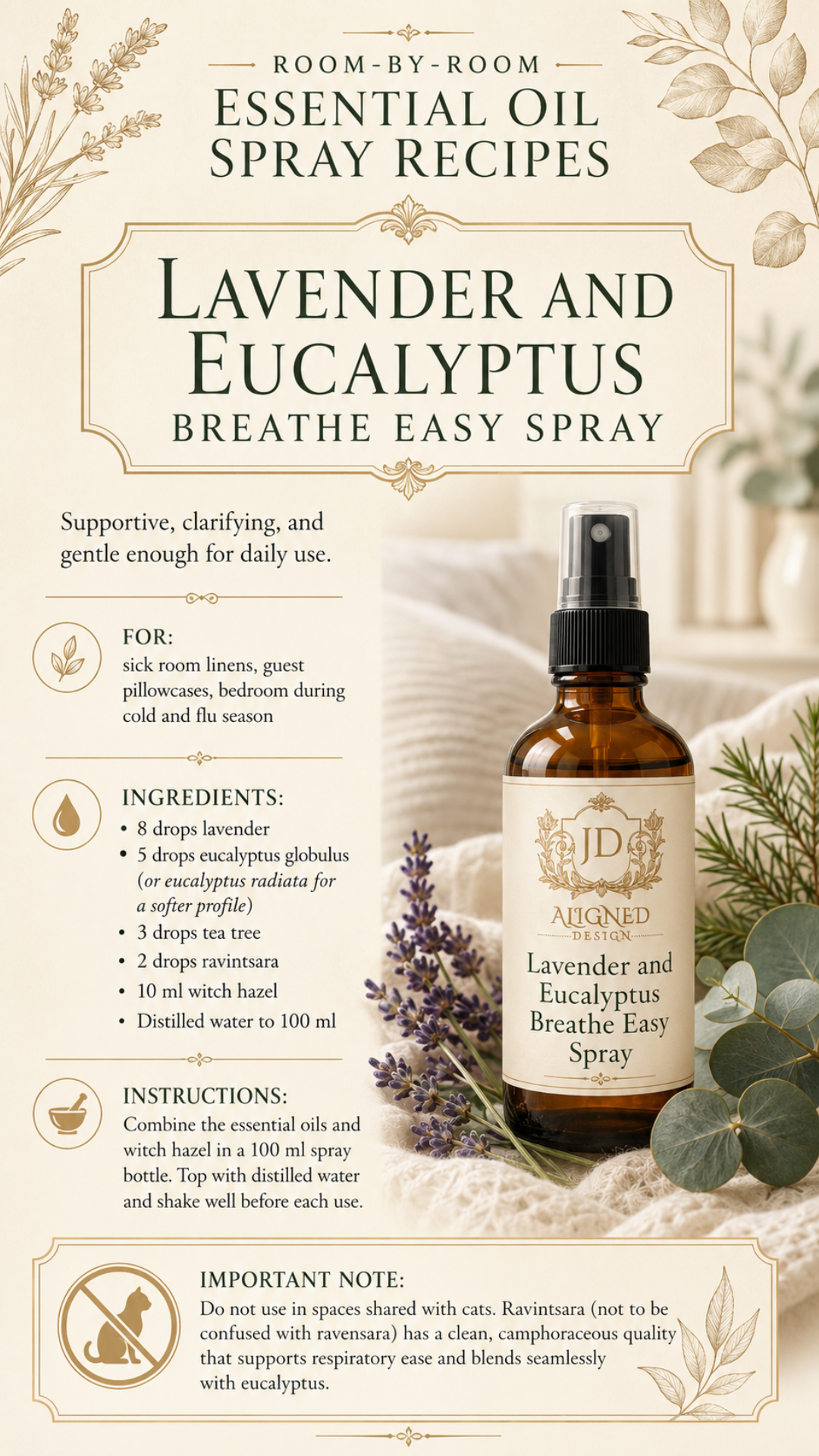
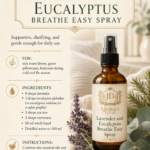
6. Lavender and Eucalyptus Breathe Easy Spray
For: sick room linens, guest pillowcases, bedroom during cold and flu season
Supportive, clarifying, and gentle enough for daily use.
- 8 drops lavender
- 5 drops eucalyptus globulus (or eucalyptus radiata for a softer profile)
- 3 drops tea tree
- 2 drops ravintsara
- 10 ml witch hazel
- Distilled water to 100 ml
Do not use in spaces shared with cats. Ravintsara (not to be confused with ravensara) has a clean, camphoraceous quality that supports respiratory ease and blends seamlessly with eucalyptus.
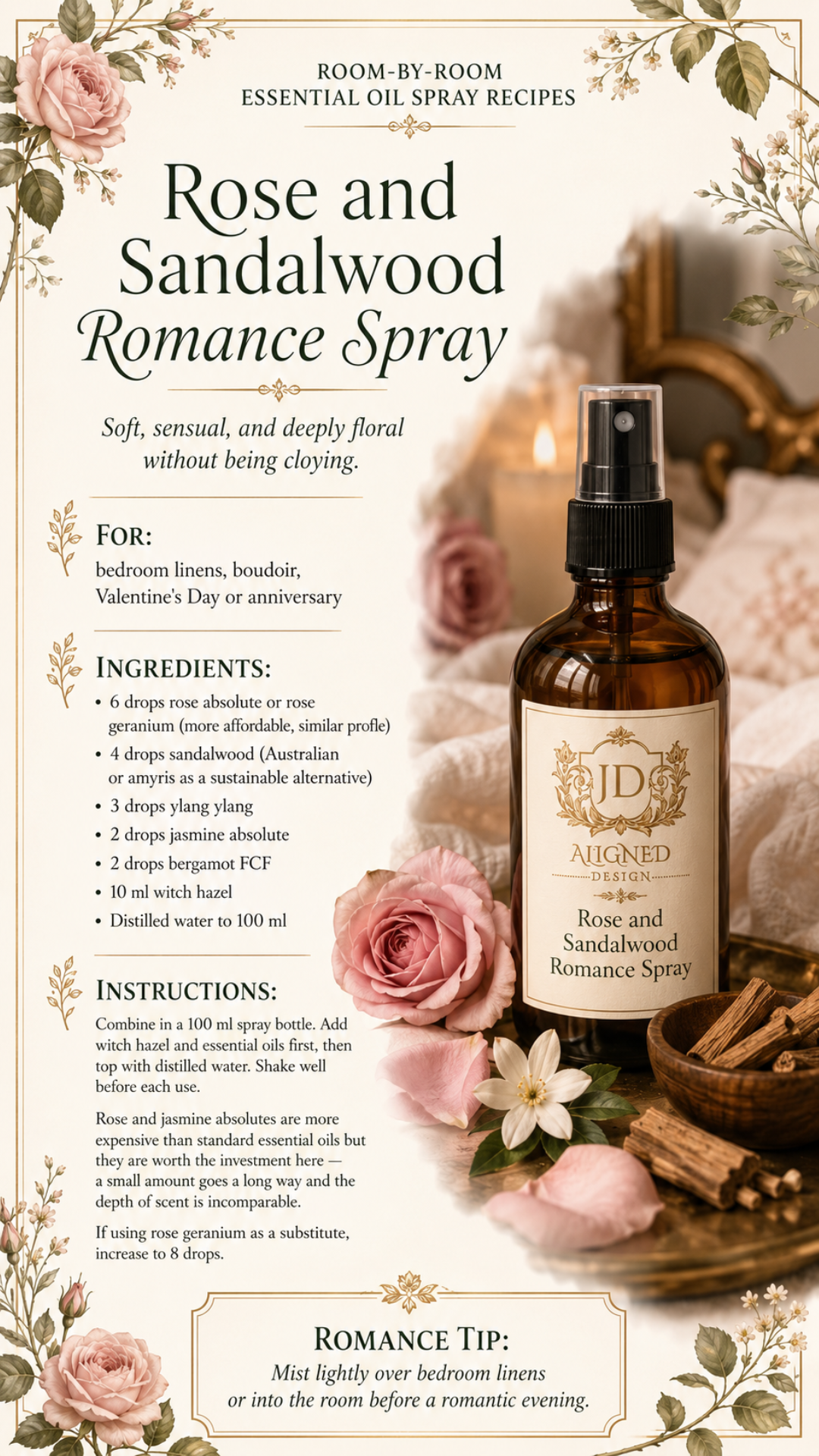
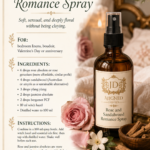
7. Rose and Sandalwood Romance Spray
For: bedroom linens, boudoir, Valentine’s Day or anniversary
Soft, sensual, and deeply floral without being cloying.
- 6 drops rose absolute or rose geranium (more affordable, similar profile)
- 4 drops sandalwood (Australian or amyris as a sustainable alternative)
- 3 drops ylang ylang
- 2 drops jasmine absolute
- 2 drops bergamot FCF
- 10 ml witch hazel
- Distilled water to 100 ml
Rose and jasmine absolutes are more expensive than standard essential oils but they are worth the investment here — a small amount goes a long way and the depth of scent is incomparable. If using rose geranium as a substitute, increase to 8 drops.
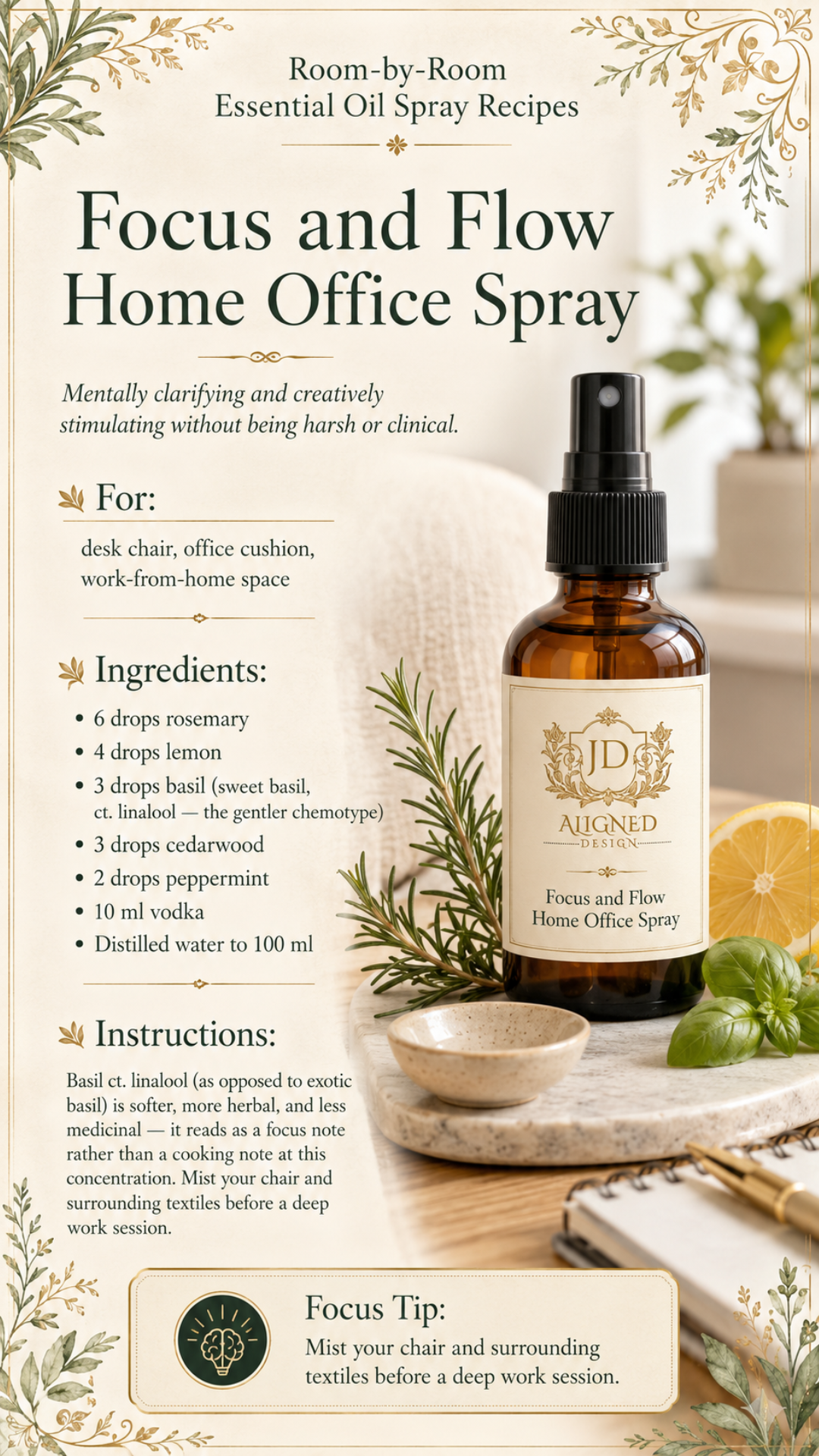
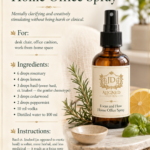
8. Focus and Flow Home Office Spray
For: desk chair, office cushion, work-from-home space
Mentally clarifying and creatively stimulating without being harsh or clinical.
- 6 drops rosemary
- 4 drops lemon
- 3 drops basil (sweet basil, ct. linalool — the gentler chemotype)
- 3 drops cedarwood
- 2 drops peppermint
- 10 ml vodka
- Distilled water to 100 ml
Basil ct. linalool (as opposed to exotic basil) is softer, more herbal, and less medicinal — it reads as a focus note rather than a cooking note at this concentration. Mist your chair and surrounding textiles before a deep work session.
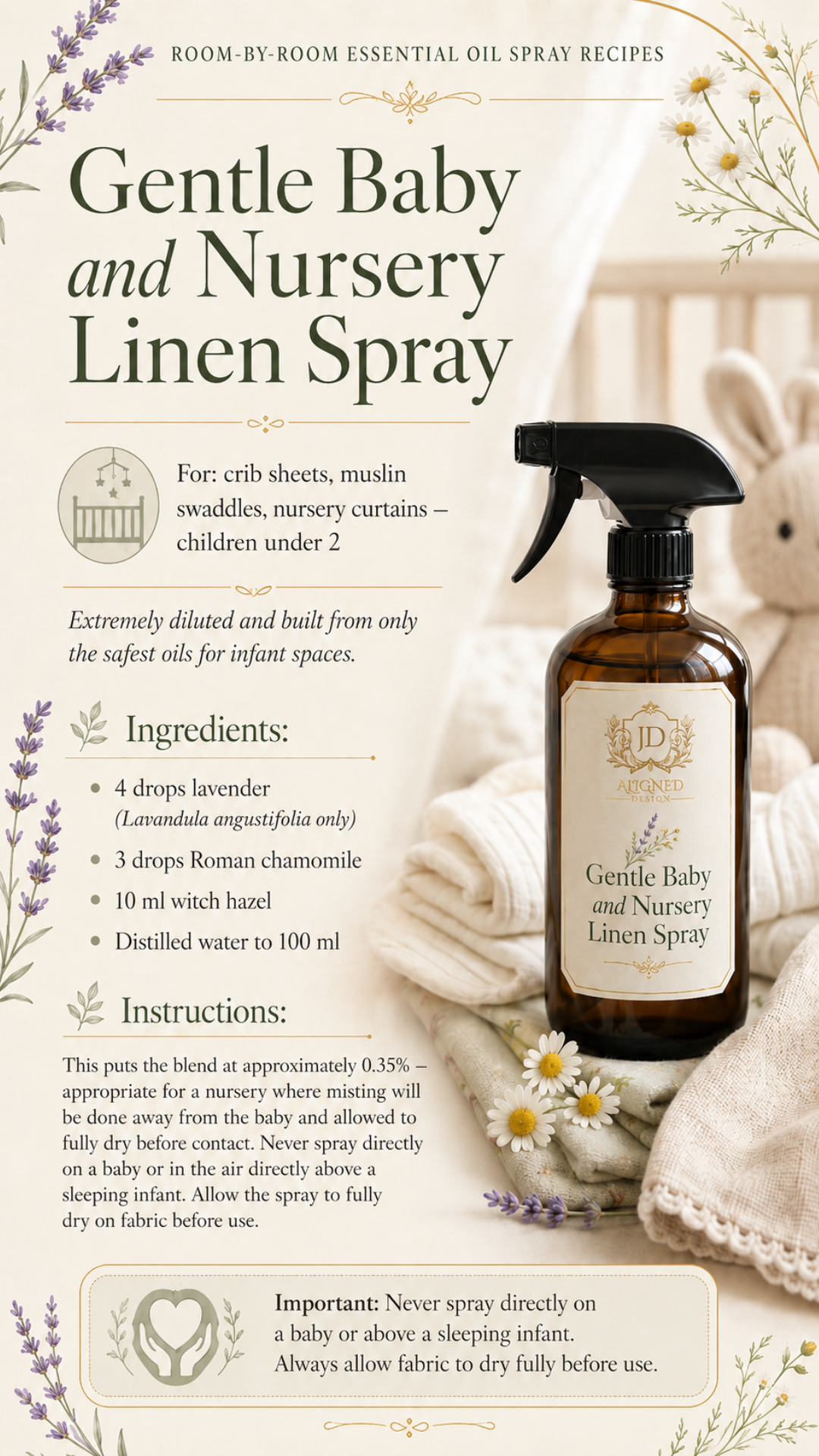
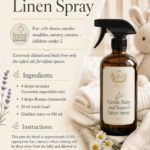
The gentle baby and nursery linen spray recipe included in this post has been formulated at an extremely low dilution rate of approximately 0.35% and uses only essential oils considered among the safest for infant environments. However, essential oil use around infants and young children requires extra caution. Never spray directly on a baby or in the air directly above a sleeping infant. Always allow fabric to dry fully before it comes into contact with a child. If you have any concerns about using essential oils in your child’s space, please consult your pediatrician before use. This recipe is intended for children under 2 only when used as directed. It is not intended as a medical treatment or sleep aid.
9. Gentle Baby and Nursery Linen Spray
For: crib sheets, muslin swaddles, nursery curtains — children under 2
Extremely diluted and built from only the safest oils for infant spaces.
- 4 drops lavender (Lavandula angustifolia only)
- 3 drops Roman chamomile
- 10 ml witch hazel
- Distilled water to 100 ml
This puts the blend at approximately 0.35% — appropriate for a nursery where misting will be done away from the baby and allowed to fully dry before contact. Never spray directly on a baby or in the air directly above a sleeping infant. Allow the spray to fully dry on fabric before use.
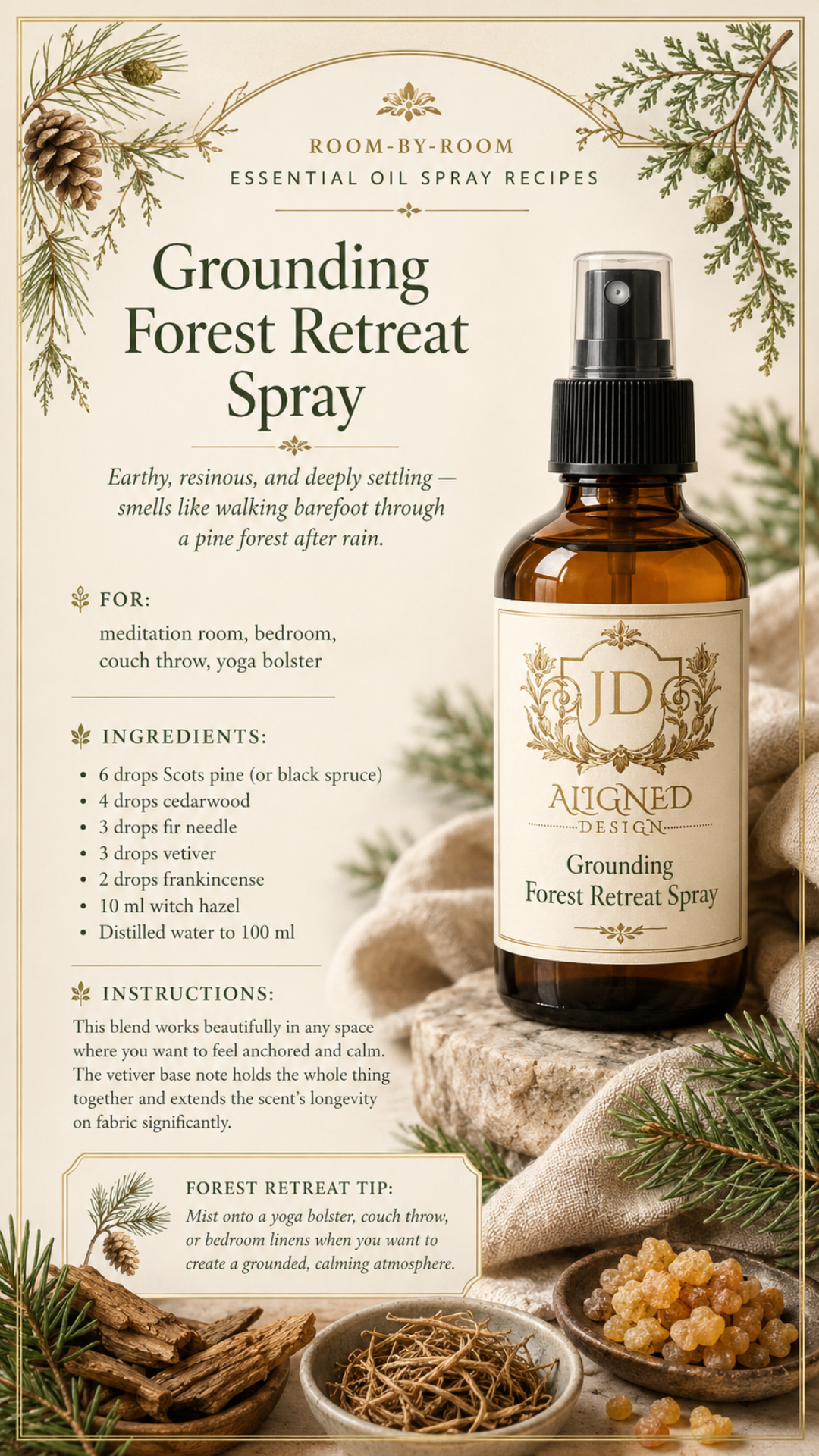
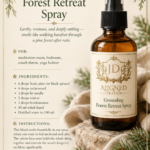
10. Grounding Forest Retreat Spray
For: meditation room, bedroom, couch throw, yoga bolster
Earthy, resinous, and deeply settling — smells like walking barefoot through a pine forest after rain.
- 6 drops Scots pine (or black spruce)
- 4 drops cedarwood
- 3 drops fir needle
- 3 drops vetiver
- 2 drops frankincense
- 10 ml witch hazel
- Distilled water to 100 ml
This blend works beautifully in any space where you want to feel anchored and calm. The vetiver base note holds the whole thing together and extends the scent’s longevity on fabric significantly.
How to Store Your Linen Sprays
Dark amber or cobalt glass spray bottles protect essential oils from UV degradation and extend shelf life. Avoid clear plastic — essential oils will break down certain plastics over time and potentially leach chemicals into your spray.
Store bottles away from heat and direct light. A linen closet shelf, a cool bathroom cabinet, or a bedside table drawer are all ideal locations. If you are not using a commercial preservative like Optiphen or Leucidal Liquid, plan to use your spray within 8–12 weeks of making it, especially in warmer months when bacterial growth in water-based products is faster.
Label every bottle with the recipe name, essential oils used, and the date made.
Frequently Asked Questions
Can I use fragrance oils instead of essential oils? Yes, but fragrance oils are synthetic blends and their safety on fabric varies widely. If you choose to use them, check whether the specific fragrance oil is rated as skin-safe and fabric-safe. The dilution principles are the same, but the therapeutic benefits associated with essential oils do not apply to synthetic fragrance.
Will essential oil linen sprays stain fabric? They can, if the oil is not properly dispersed. This is why solubilization matters. Using witch hazel, vodka, or polysorbate 20 dramatically reduces staining risk. Darker essential oils — patchouli, vetiver, and some absolutes — have a higher staining potential and should be tested on an inconspicuous area first.
How long does the scent last on fabric? Lighter top notes like citrus and peppermint will fade within a few hours. Deeper base notes like cedarwood, sandalwood, vetiver, and frankincense can linger on fabric for 12–24 hours or longer. Blending across top, middle, and base notes gives your spray both immediate impact and staying power.
Can I add these to my laundry? You can add a few drops of essential oil to a wool dryer ball, or add 5–10 drops directly to your fabric softener dispenser during the rinse cycle. Linen sprays as formulated here are designed for post-laundry use — spraying into the dryer or wash cycle directly requires different dilution and formulation considerations.
Is witch hazel safe on all fabrics? Witch hazel is generally safe on most washable fabrics. As with any spray, test on a small, hidden area of delicate fabrics — silk, velvet, and dry-clean-only items should be treated with extra care or skipped entirely.
Making your own linen sprays with essential oils is one of the simplest, most satisfying shifts you can make toward a more intentional home. Once you understand the basic framework — solubilize your oils, dilute appropriately, use distilled water — you can create custom blends for every room, season, mood, and ritual in your life.
Start with one recipe that feels aligned with what you need most right now. A sleep spray if rest has been elusive. A clearing spray if your space feels heavy. A grounding forest blend if the world has felt like too much. The bottles are small, the ingredients are simple, and the ritual of reaching for them each day is its own quiet form of care.