
There is something deeply satisfying about walking into a home that smells intentional. Not the synthetic sweetness of a plug-in air freshener, not the chemical edge of conventional cleaners, but something clean and alive and yours. That is exactly what essential oil blends for the home can give you.
Whether you are brand new to essential oils or you have been collecting tiny brown bottles for years and are finally ready to put them to work, this guide covers everything. We are going to talk about the best oils for your home, how to blend them safely and beautifully, which blends work best room by room and season by season, and how to use them across everything from your diffuser to your laundry to your cleaning routine.
This is the anchor post for the entire essential oils for the home series here on the blog. As new posts go live, you will find them linked throughout — consider this your living reference guide.
This post contains affiliate links, which means I may earn a small commission if you make a purchase through my links, at no additional cost to you. I only recommend products I personally use, trust, or have thoroughly researched. Thank you for supporting this blog — it allows me to continue creating free content for you.
The information on this blog is intended for educational and informational purposes only and is not a substitute for professional medical advice, diagnosis, or treatment. Essential oils are powerful plant-based compounds and should always be used with care. Content shared here, including essential oil recipes, blend suggestions, and usage guidance, reflects my personal experience and general research. It is not intended to diagnose, treat, cure, or prevent any disease or health condition. Always consult a qualified healthcare provider before using essential oils if you are pregnant, nursing, managing a health condition, or have concerns about use around children or pets. Results may vary. Use all recipes and suggestions at your own discretion.
Why Use Essential Oil Blends in Your Home?
Before we get into recipes and ratios, it is worth understanding why so many people are making the shift away from synthetic fragrances and toward plant-based essential oils.
The Problem with Synthetic Home Fragrance
Conventional air fresheners, scented candles made with synthetic fragrance oil, and plug-in diffusers typically contain a cocktail of synthetic chemicals that are not always disclosed on the label. Terms like “fragrance” or “parfum” can legally represent hundreds of undisclosed ingredients, including phthalates, which are hormone-disrupting compounds linked to reproductive and developmental concerns in ongoing research.
For families with children, pets, or anyone with sensitivities, this matters. For those of us who are intentional about what comes into our homes and our bodies, it matters even more. This post was originally going to be 10 recipes but we have added more!
What Essential Oils Bring to the Table
Essential oils are concentrated plant extracts — the aromatic compounds found in the flowers, leaves, bark, roots, and resins of plants. When you diffuse lavender, you are literally releasing molecules that have been studied for their effect on the nervous system. When you clean with tea tree and eucalyptus, you are working with compounds that have documented antimicrobial properties.
That does not mean essential oils are magic or that they replace medicine. But it does mean they are real, complex, living chemistry — and they work.
Beyond function, there is the ritual of it. Choosing your blends, building a signature scent for your home, shifting the atmosphere from chaotic to calm or flat to energized with a few drops of oil — that is a form of everyday intentional living that compounds over time.
Essential Oil Safety: What You Need to Know Before You Start
This section is not meant to scare you away from essential oils. It is meant to help you use them confidently and correctly, because a little knowledge here protects both you and your family.
Dilution is Non-Negotiable
Essential oils are highly concentrated. One drop of peppermint oil is roughly equivalent to 28 cups of peppermint tea. Applying undiluted essential oils directly to skin can cause sensitization, irritation, and in some cases, chemical burns.
For home blends that come into contact with skin (linen sprays, body mists, bath blends), always dilute in a carrier oil or in water with an appropriate dispersant. We will cover dilution ratios throughout this guide and in the individual posts linked below.
For diffuser blends and room sprays that are primarily airborne, dilution is still important — more is not better when it comes to diffusing essential oils, and over-diffusion can cause headaches and respiratory irritation.
Pets and Children
Several essential oils are unsafe for pets, particularly cats and dogs. Cats lack the liver enzymes needed to metabolize certain compounds found in tea tree, eucalyptus, clove, and citrus oils, among others. If you have cats, avoid diffusing these oils in enclosed spaces and keep them out of any sprays your cat might walk through or lick.
For children under two, skip essential oils in diffusers entirely. For children two and up, use child-safe oils (lavender, frankincense, cedarwood, chamomile) at reduced diffusion times and in well-ventilated spaces. Peppermint and eucalyptus are generally avoided around children under ten due to their high 1,8-cineole content, which can affect respiratory function.
Quality Matters
Not all essential oils are created equal. The market is flooded with synthetic or adulterated oils marketed as pure. Look for brands that offer GC/MS (gas chromatography/mass spectrometry) testing, source information, and clear botanical names on their labels. You do not need to spend a fortune, but you do need to buy from brands that are transparent about their sourcing and testing.
The Essential Oil Starter Kit for the Home
If you are building your collection from scratch, these are the oils that will get you the furthest. They blend well with each other, they are widely available in quality versions, and they cover the full range of what you need in a home fragrance and cleaning toolkit.
The Foundations
Lavender (Lavandula angustifolia) — The great blender. Lavender softens almost everything it touches. It reads as clean, calm, and floral without being heavy. Use it in bedroom blends, linen sprays, cleaning blends where you want to remove the medicinal edge, and anywhere you want the space to feel restful.
Lemon (Citrus limon) — Bright, clean, energizing. One of the best oils for making a cleaning blend smell genuinely clean rather than herbal. It pairs beautifully with eucalyptus and tea tree to cut the clinical edge. Note that expressed citrus oils are photosensitive — avoid using on skin before sun exposure.
Tea Tree (Melaleuca alternifolia) — The workhorse of natural cleaning. Tea tree has documented antimicrobial, antifungal, and antiviral properties. It is not the most beautiful scent on its own, but paired with lemon, lavender, or eucalyptus it becomes genuinely pleasant while doing its job.
Eucalyptus (Eucalyptus globulus or radiata) — Clean, medicinal, and clarifying. Excellent in bathroom blends and cleaning sprays. Eucalyptus radiata is considered the gentler variety and is slightly more rounded in scent than globulus.
Peppermint (Mentha piperita) — Energizing and sharp. Use it in kitchen and workspace blends where you want focus and freshness. It is also a natural deterrent for certain insects. Use sparingly — it is potent.
Frankincense (Boswellia serrata or carterii) — The anchor note. Frankincense adds depth, warmth, and a quality that can only be described as sacred. It slows everything down, in the best way. Use it in meditation spaces, living room blends, and anywhere you want presence.
Cedarwood (Cedrus atlantica) — Warm, woody, grounding. A natural pairing with lavender for sleep blends and with citrus for clean, fresh masculine or gender-neutral home fragrances.
Sweet Orange (Citrus sinensis) — The friendly citrus. Warmer and rounder than lemon, sweet orange is incredibly versatile and particularly beautiful in kitchen blends, holiday recipes, and diffuser blends for social spaces.
Rosemary (Salvia rosmarinus) — Herbaceous and clarifying. Excellent in home office blends for focus and memory. Pairs beautifully with lemon and eucalyptus for kitchen and bathroom cleaning blends.
Clove (Eugenia caryophyllata) — Use sparingly. Clove is warming, spicy, and deeply aromatic. It anchors autumn and winter blends and has strong antimicrobial properties for cleaning recipes. It can irritate skin, so keep it to low percentages.
Understanding Essential Oil Notes: Top, Middle, and Base
If you have ever blended essential oils only to find the scent has completely changed after twenty minutes, it is because of how notes behave over time.
Top notes evaporate quickly. They are what you smell first. Citrus oils (lemon, orange, grapefruit, bergamot), peppermint, and eucalyptus are top notes. They create an immediate first impression but fade within 30–60 minutes.
Middle notes are the heart of the blend. They emerge once the top notes begin to fade and last several hours. Lavender, rosemary, clove, tea tree, and most herbal oils are middle notes.
Base notes are the anchors. They evaporate slowly, lasting hours or even days. Frankincense, cedarwood, sandalwood, vetiver, and patchouli are base notes. They ground a blend and give it staying power.
A balanced home blend typically uses:
- 30–40% top notes
- 50–60% middle notes
- 10–20% base notes
This is a guideline, not a rule — but if your blends feel flat or disappear too fast, adjusting your note balance will change everything.
Room-by-Room Essential Oil Blends for the Home
Every room in your home has a different energy, purpose, and need. Here is how to approach each one.
Kitchen Blends: Clean, Energizing, and Food-Safe
The kitchen is where you want something that reads as genuinely clean, cuts through cooking odors without smelling medicinal, and energizes rather than relaxes (this is a workspace, after all).
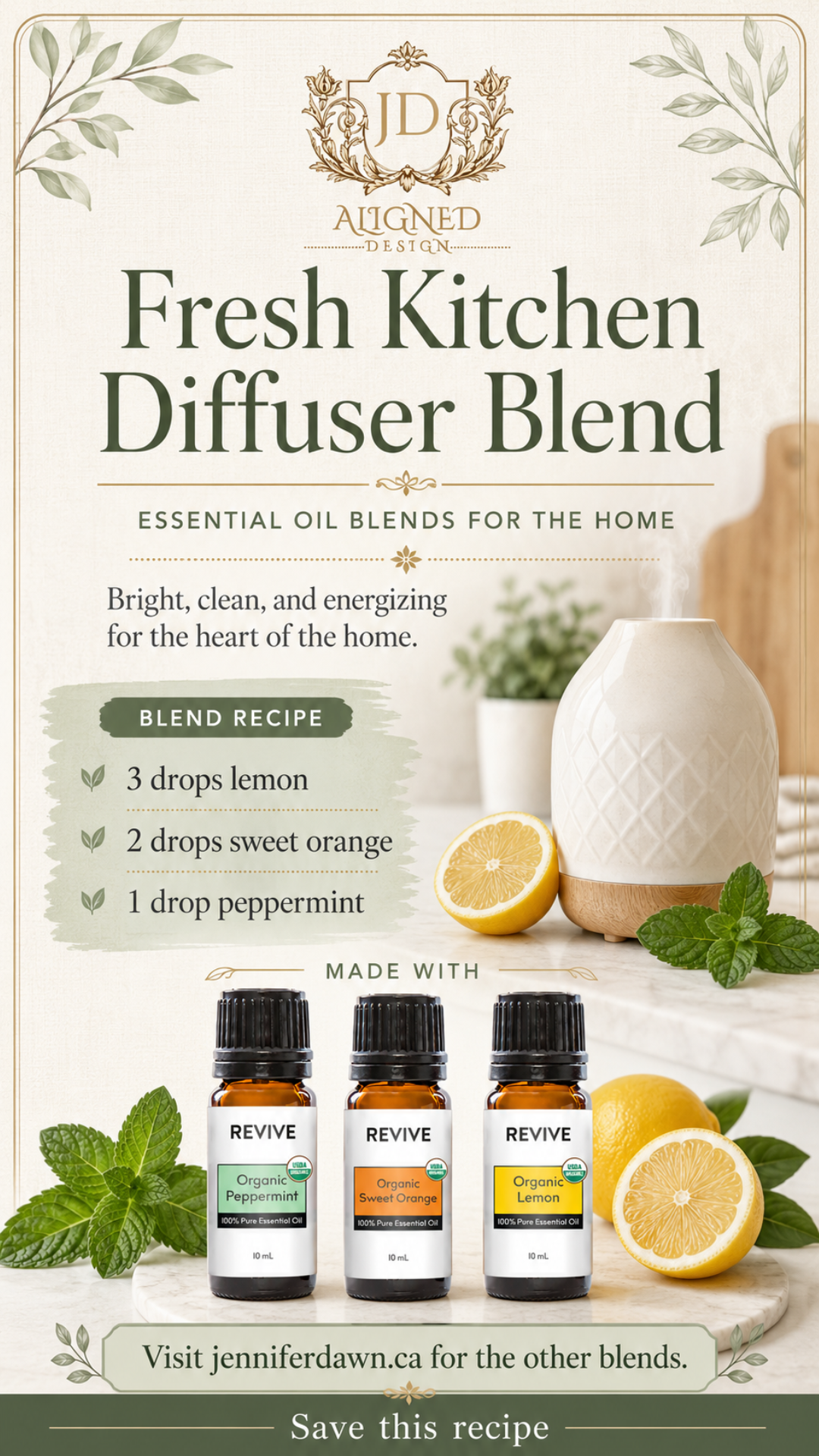
Fresh Kitchen Diffuser Blend
- 3 drops lemon
- 2 drops sweet orange
- 1 drop peppermint
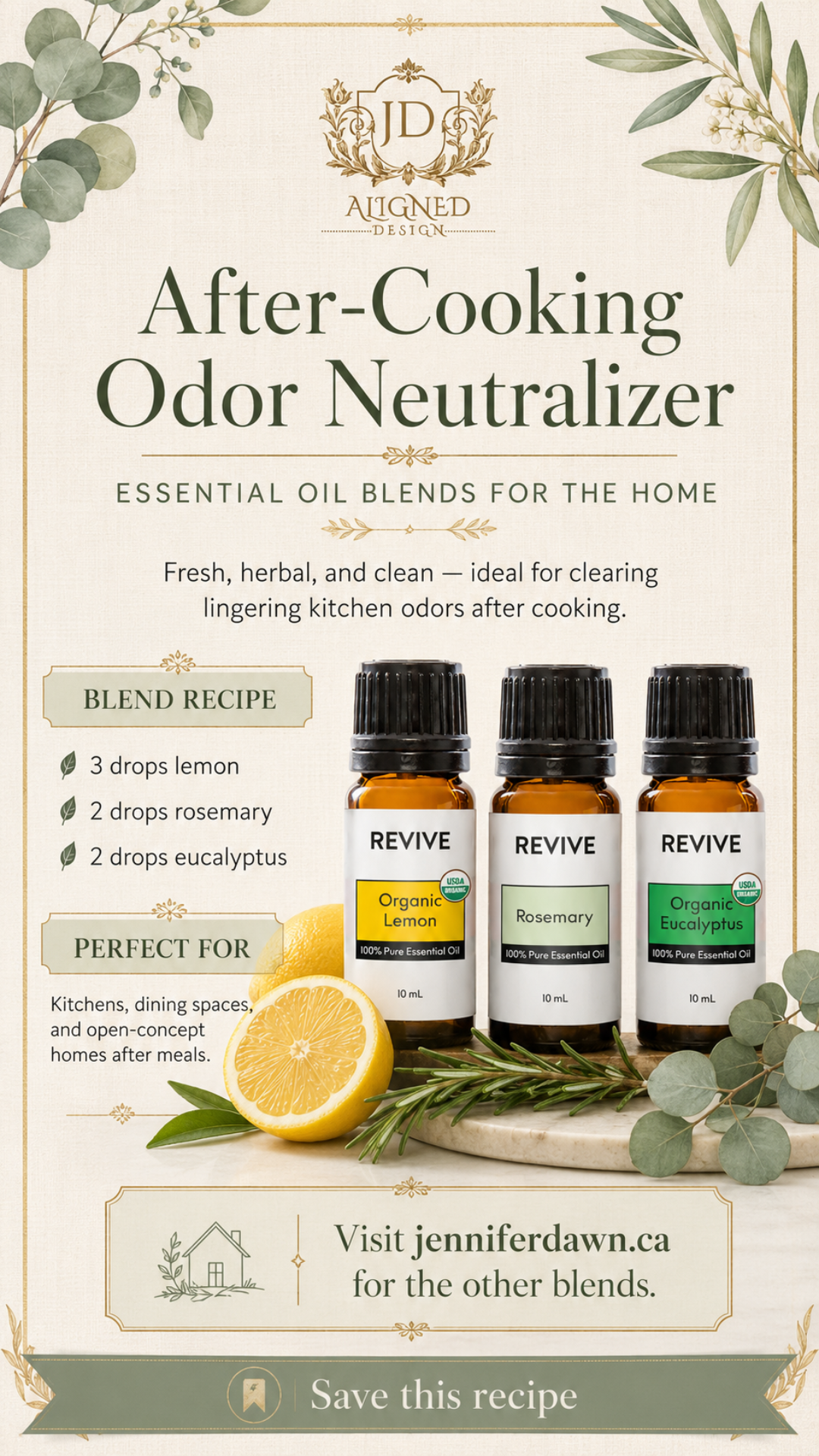
After-Cooking Odor Neutralizer
- 3 drops lemon
- 2 drops rosemary
- 2 drops eucalyptus
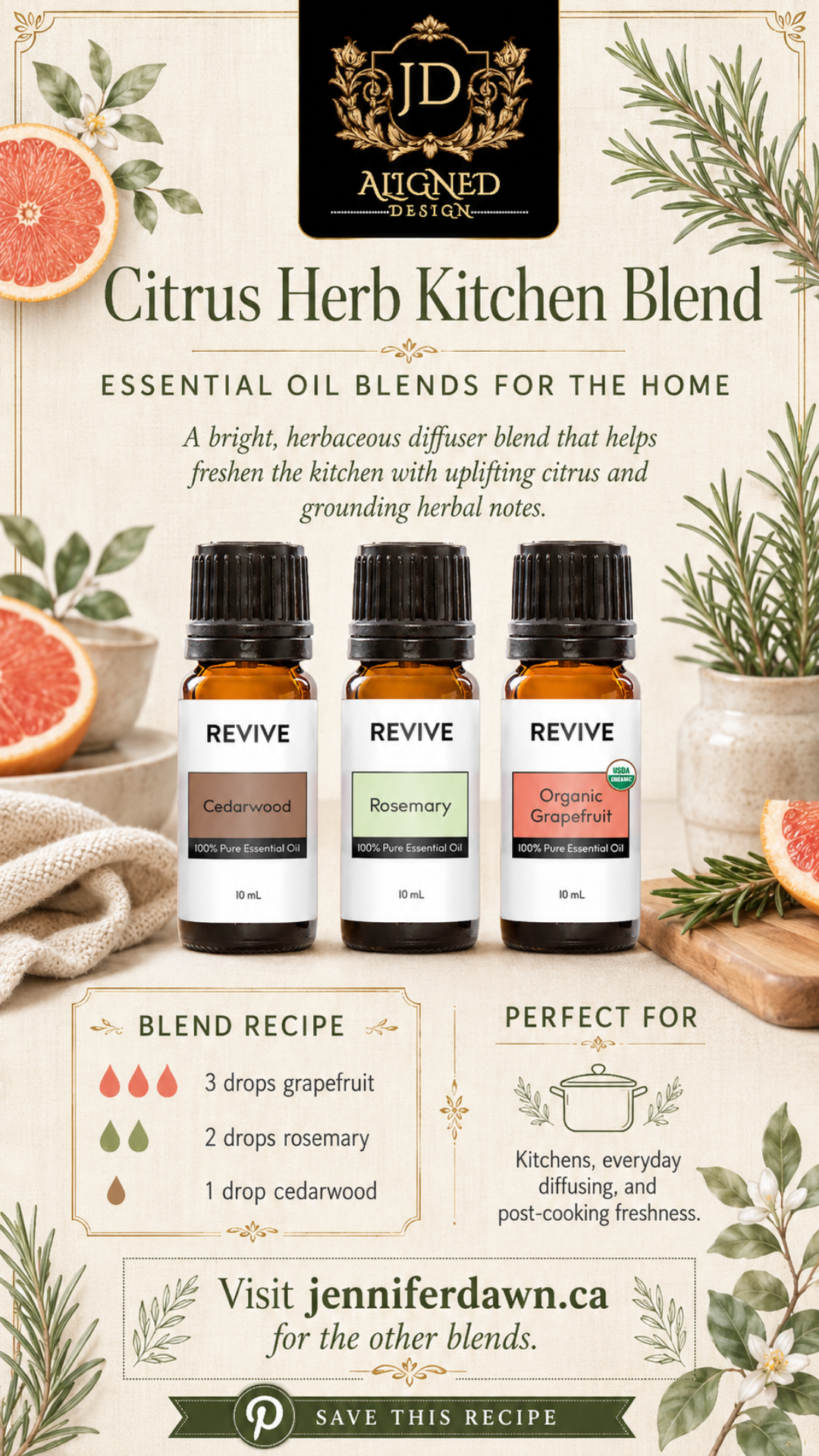
Citrus Herb Kitchen Blend
- 3 drops grapefruit
- 2 drops rosemary
- 1 drop cedarwood
For kitchen cleaning sprays — the kind you actually use on countertops and surfaces — head to [this post on DIY essential oil cleaning sprays] where we cover full recipes with proper dilutions and carrier solutions for every surface type.
Bedroom Blends: Rest, Calm, and Deep Sleep
The bedroom is the room that benefits most from a consistent aromatherapy practice. When you use the same blend every night, your nervous system begins to associate that scent with sleep. It becomes a cue — and over time, a powerful one.
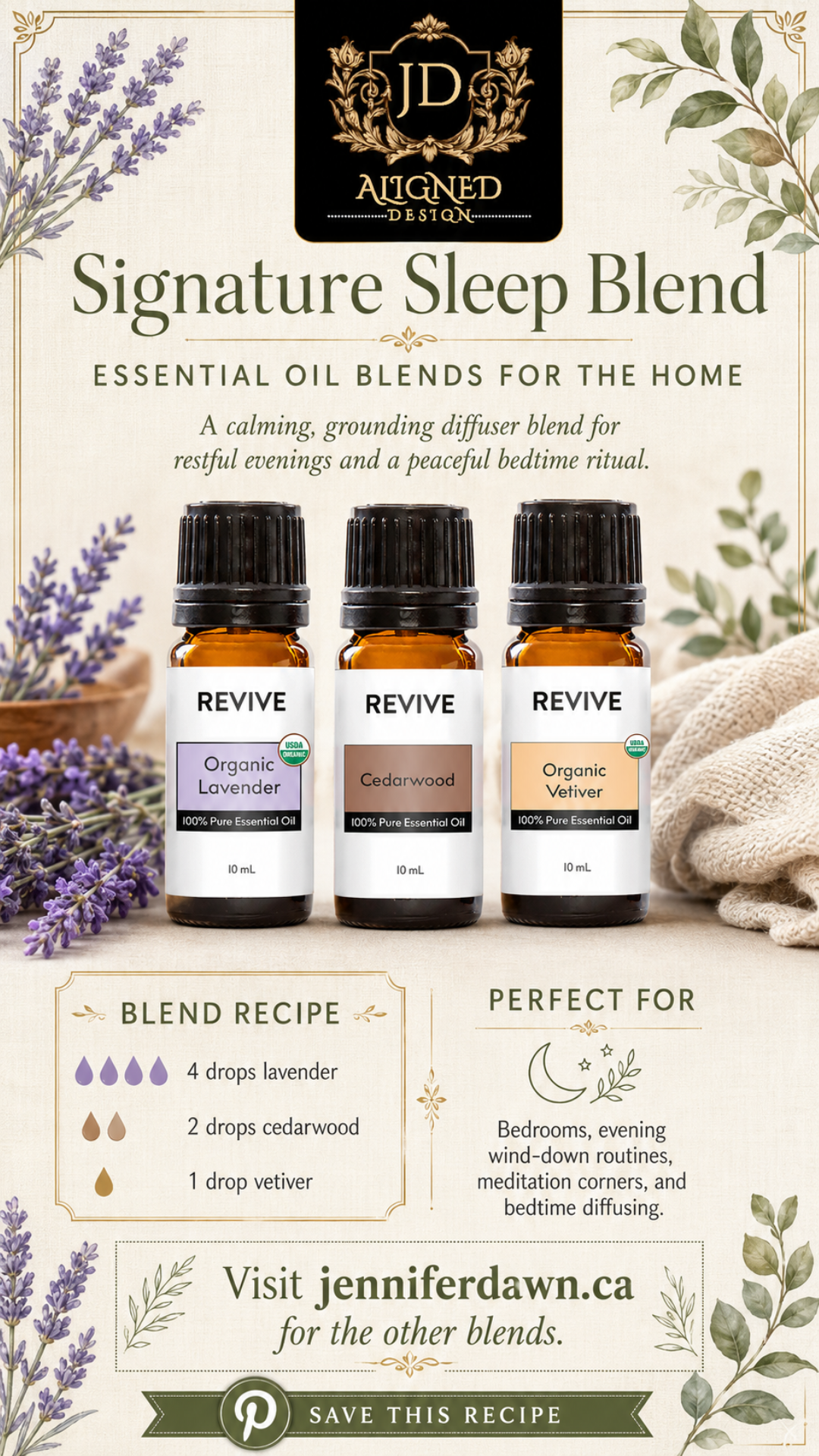
Signature Sleep Blend
- 4 drops lavender
- 2 drops cedarwood
- 1 drop vetiver
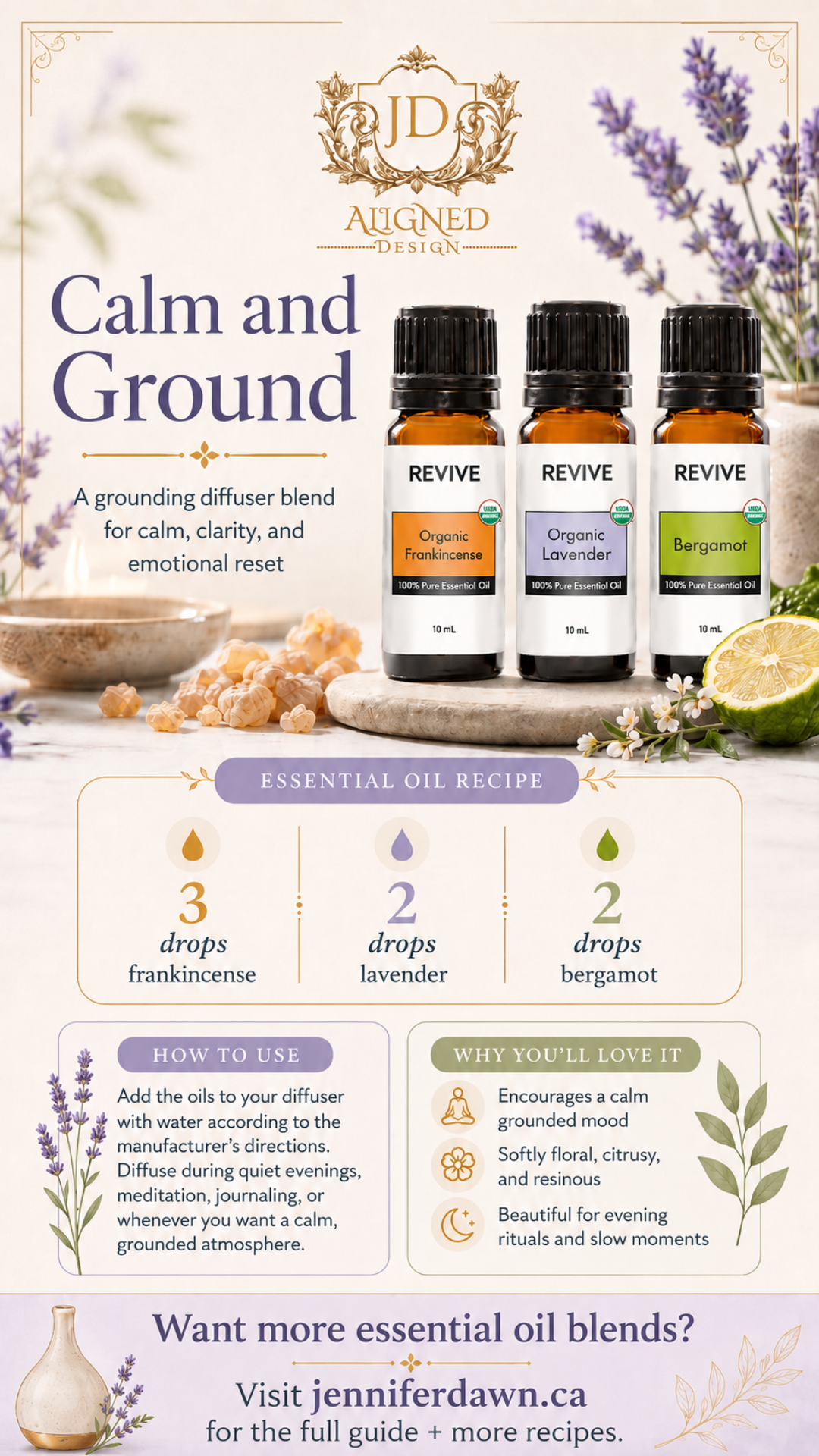
Calm and Ground
- 3 drops frankincense
- 2 drops lavender
- 2 drops bergamot
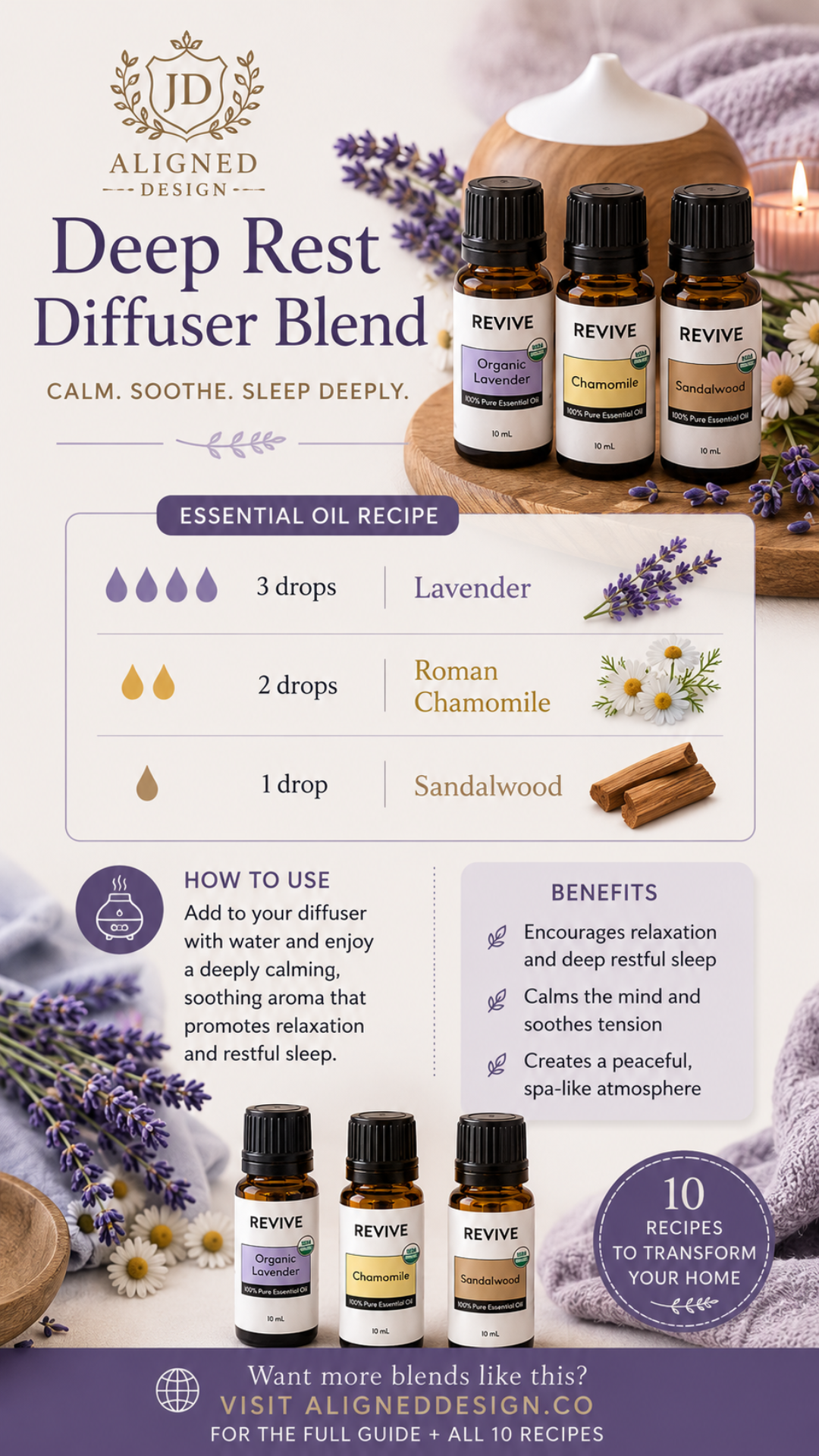
Deep Rest Diffuser Blend
- 3 drops lavender
- 2 drops Roman chamomile
- 1 drop sandalwood
For spraying directly on your pillows and bedding, see [this post on DIY linen sprays] for complete recipes with proper dilution ratios, the right base to use for stain-free application, and the best essential oil combinations for sleep, refresh, and in-between.
Bathroom Blends: Fresh, Clean, and Spa-Like
The bathroom calls for oils with genuine antimicrobial properties as well as something that elevates the room from purely functional to spa-adjacent.
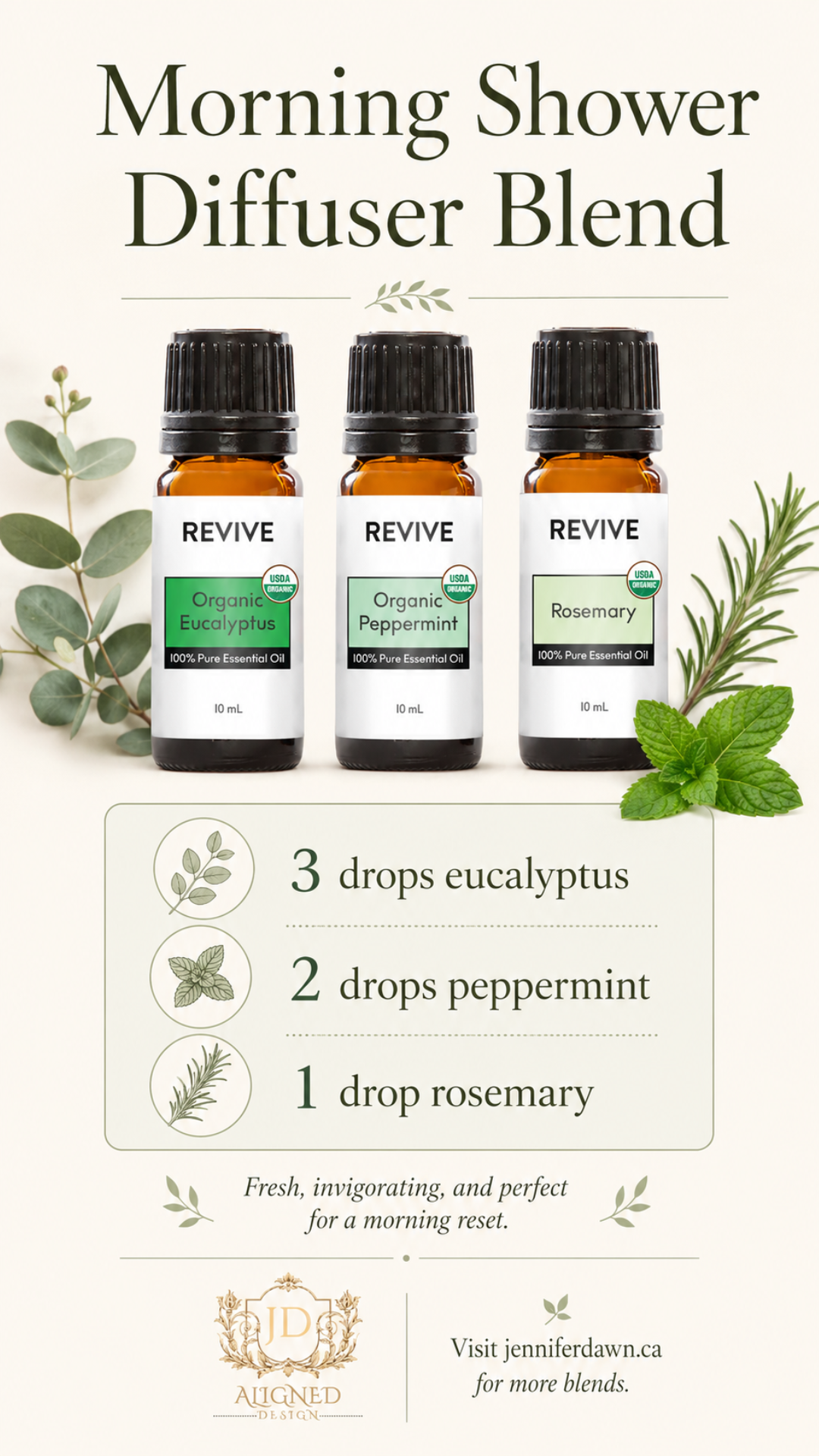
Morning Shower Diffuser Blend
- 3 drops eucalyptus
- 2 drops peppermint
- 1 drop rosemary
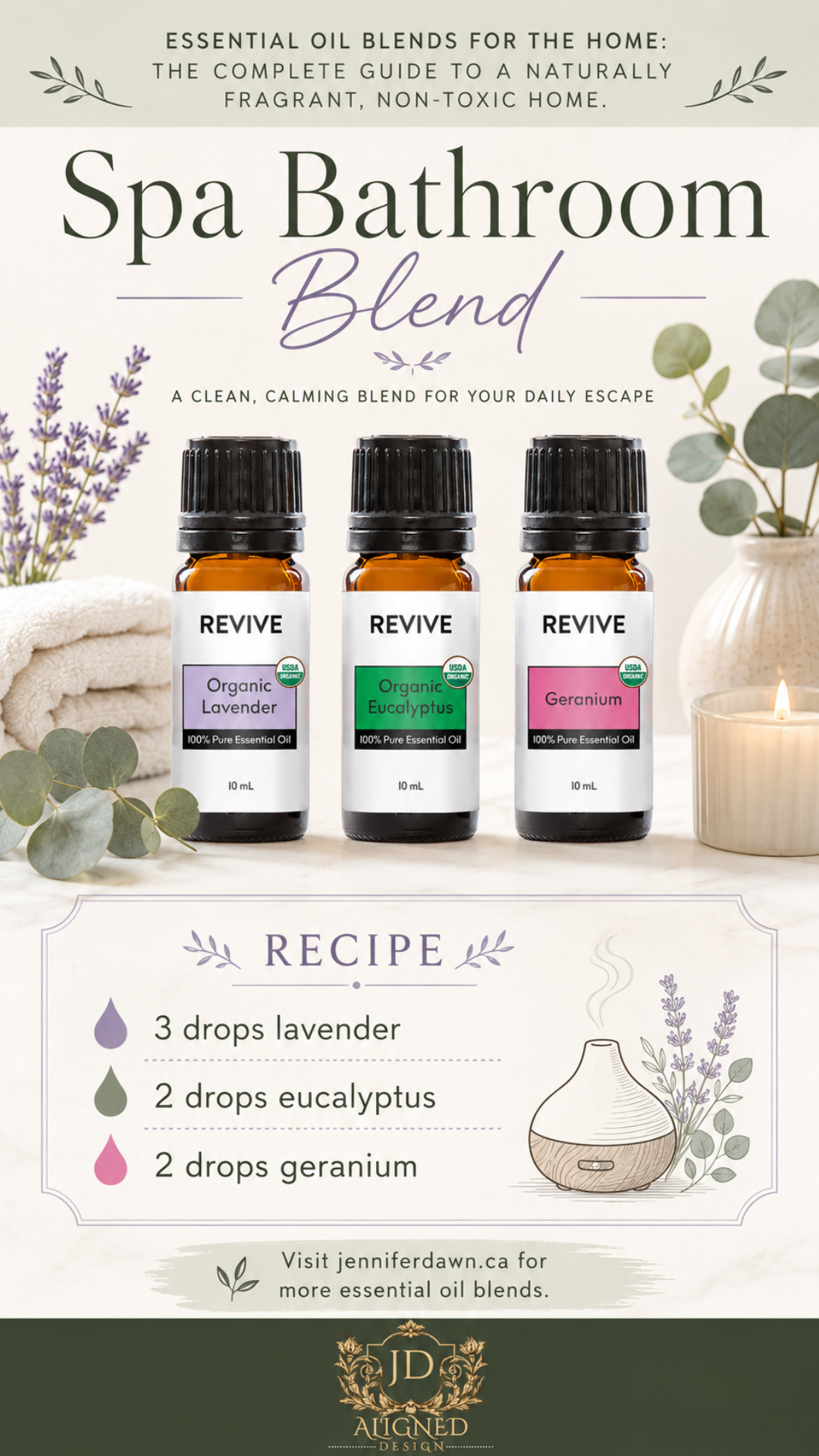
Spa Bathroom Blend
- 3 drops lavender
- 2 drops eucalyptus
- 2 drops geranium
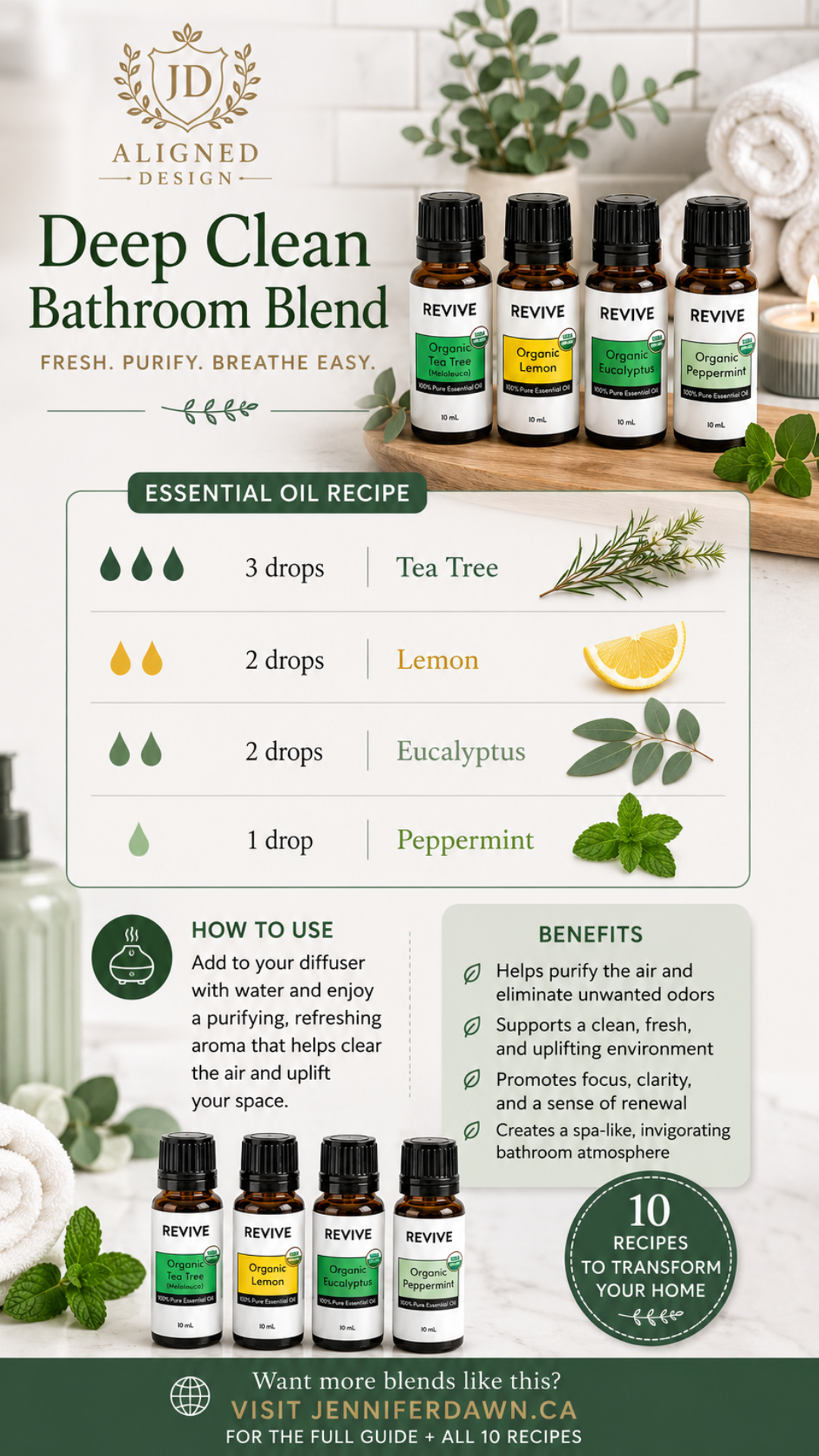
Deep Clean Bathroom Blend
- 3 drops tea tree
- 2 drops lemon
- 2 drops eucalyptus
- 1 drop peppermint
For bathroom cleaning sprays — toilet, tile, mirrors, and all-purpose — visit [this post on essential oil cleaning sprays for the bathroom] for surface-specific formulations.
Living Room Blends: Welcoming, Warm, and Grounding
The living room is your gathering space. You want something that makes people feel immediately welcome and at ease — warm, slightly sweet, with enough depth to feel like it belongs to a real home.
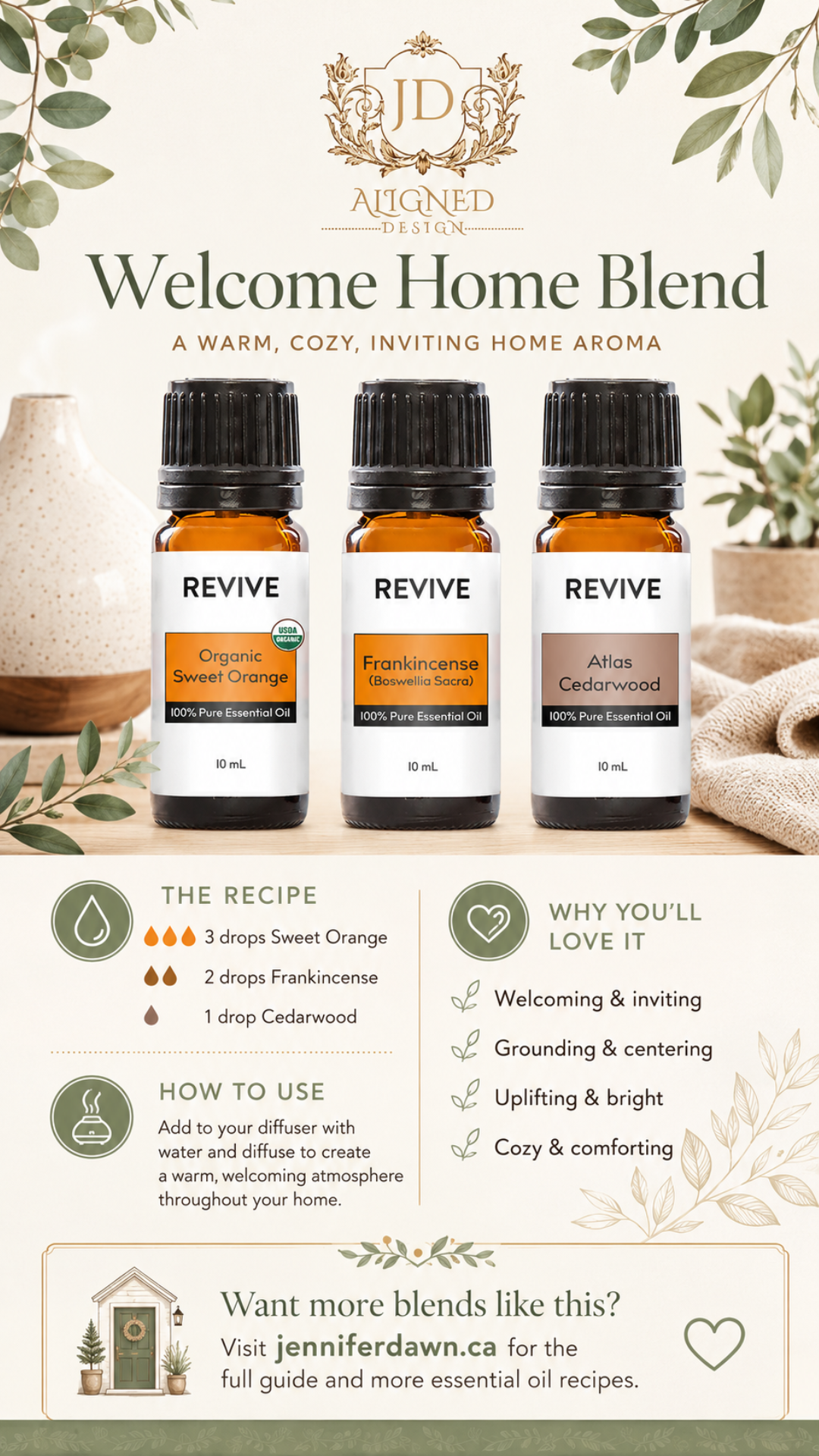
Welcome Home Blend
- 3 drops sweet orange
- 2 drops frankincense
- 1 drop cedarwood
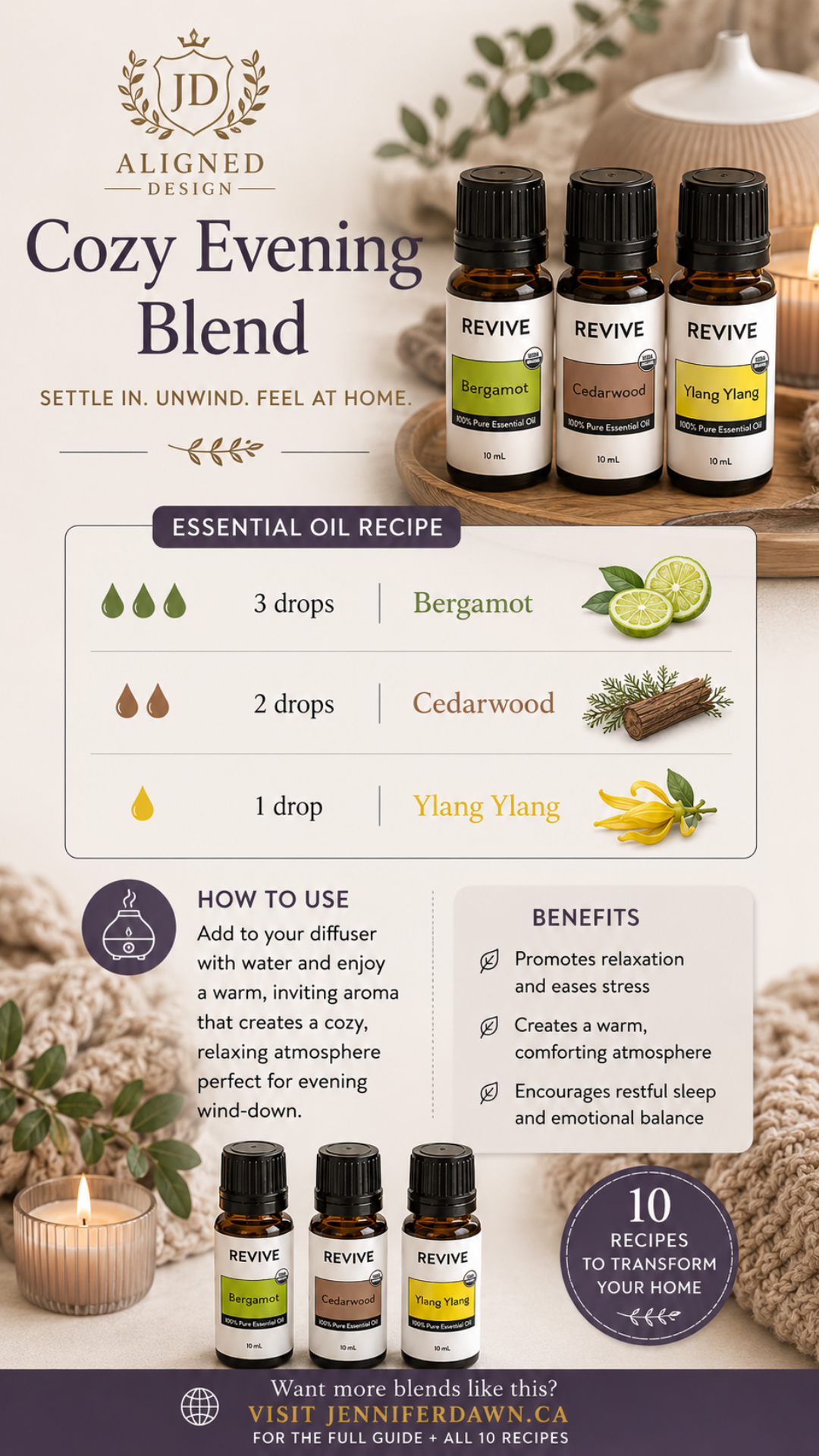
Cozy Evening Blend
- 3 drops bergamot
- 2 drops cedarwood
- 1 drop ylang ylang
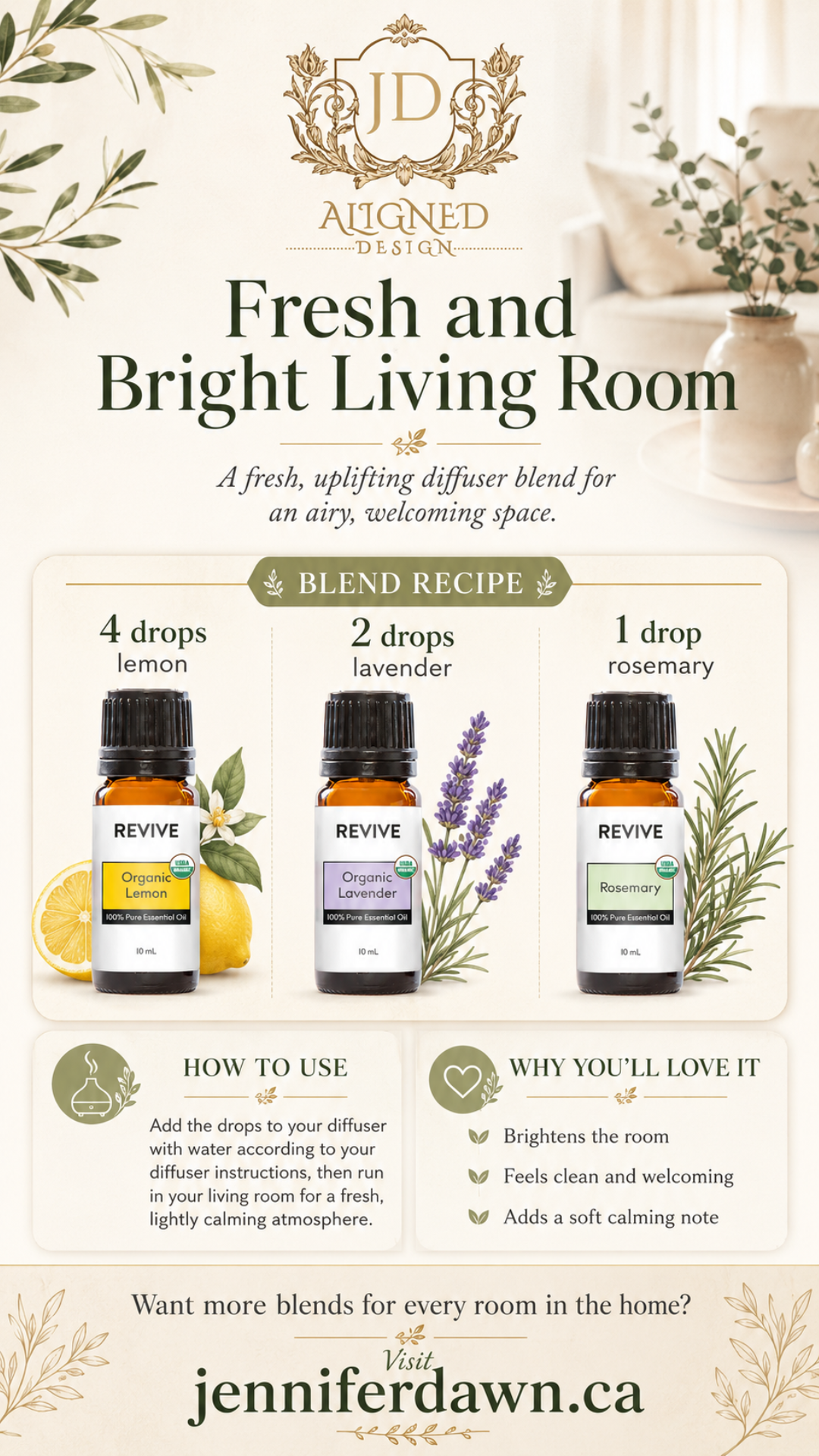
Fresh and Bright Living Room
- 4 drops lemon
- 2 drops lavender
- 1 drop rosemary
Home Office Blends: Focus, Clarity, and Sustained Energy
If you work from home, your workspace deserves its own aromatherapy strategy. Focus blends should wake up the brain without creating agitation, sustain concentration without creating dependency on stimulants, and keep the space feeling clear and purposeful.
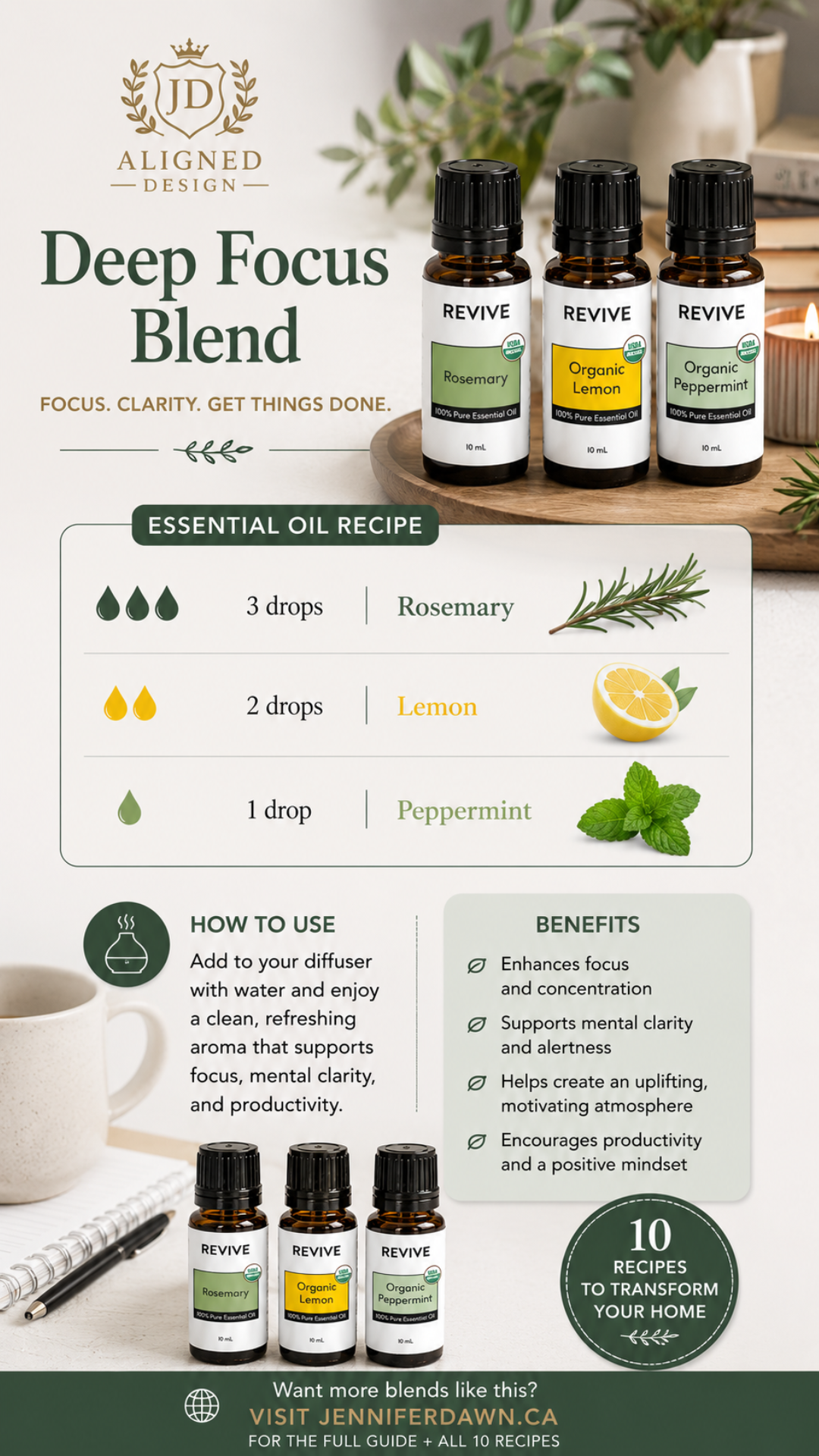
Deep Focus Blend
- 3 drops rosemary
- 2 drops lemon
- 1 drop peppermint
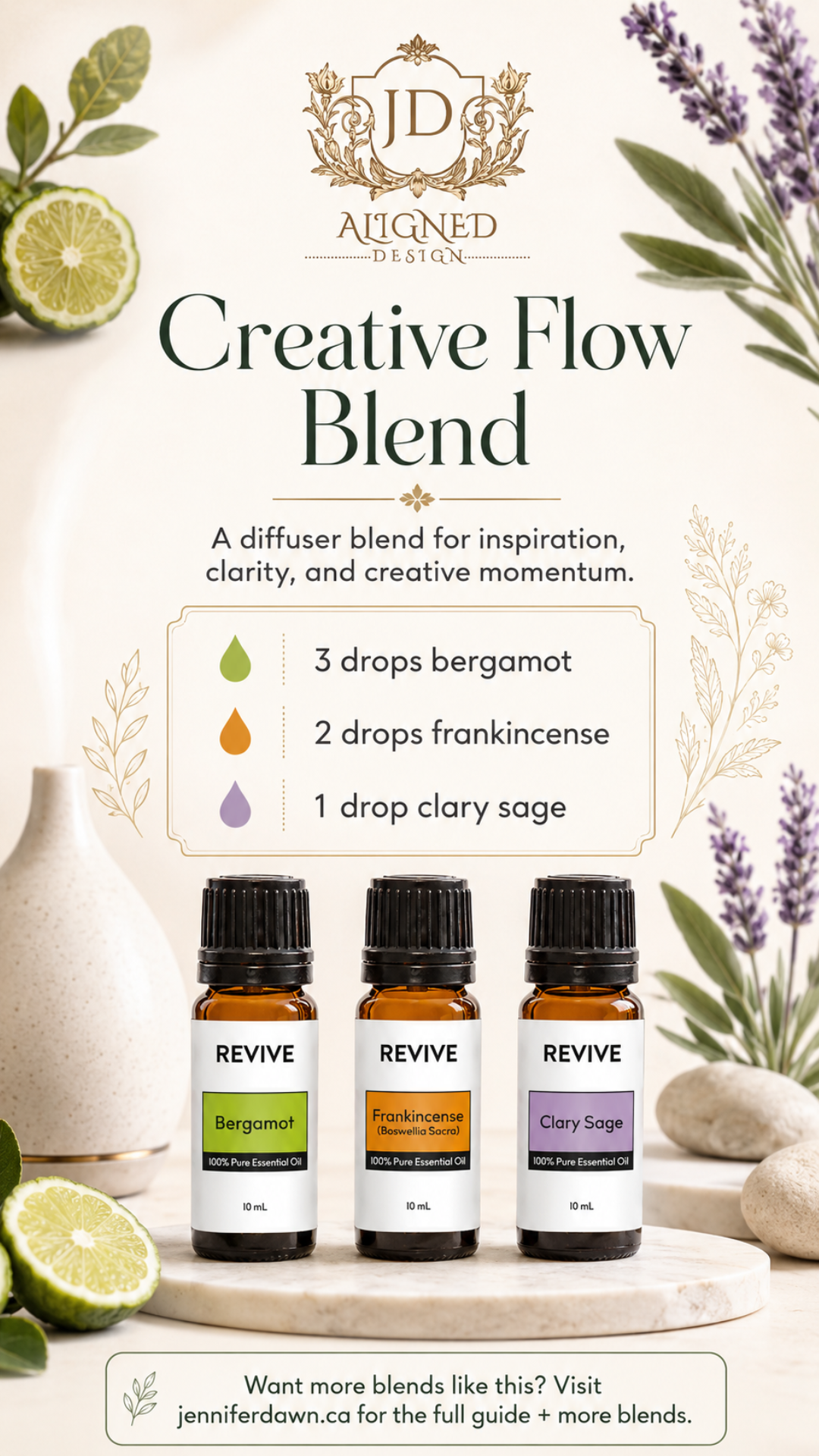
Creative Flow Blend
- 3 drops bergamot
- 2 drops frankincense
- 1 drop clary sage
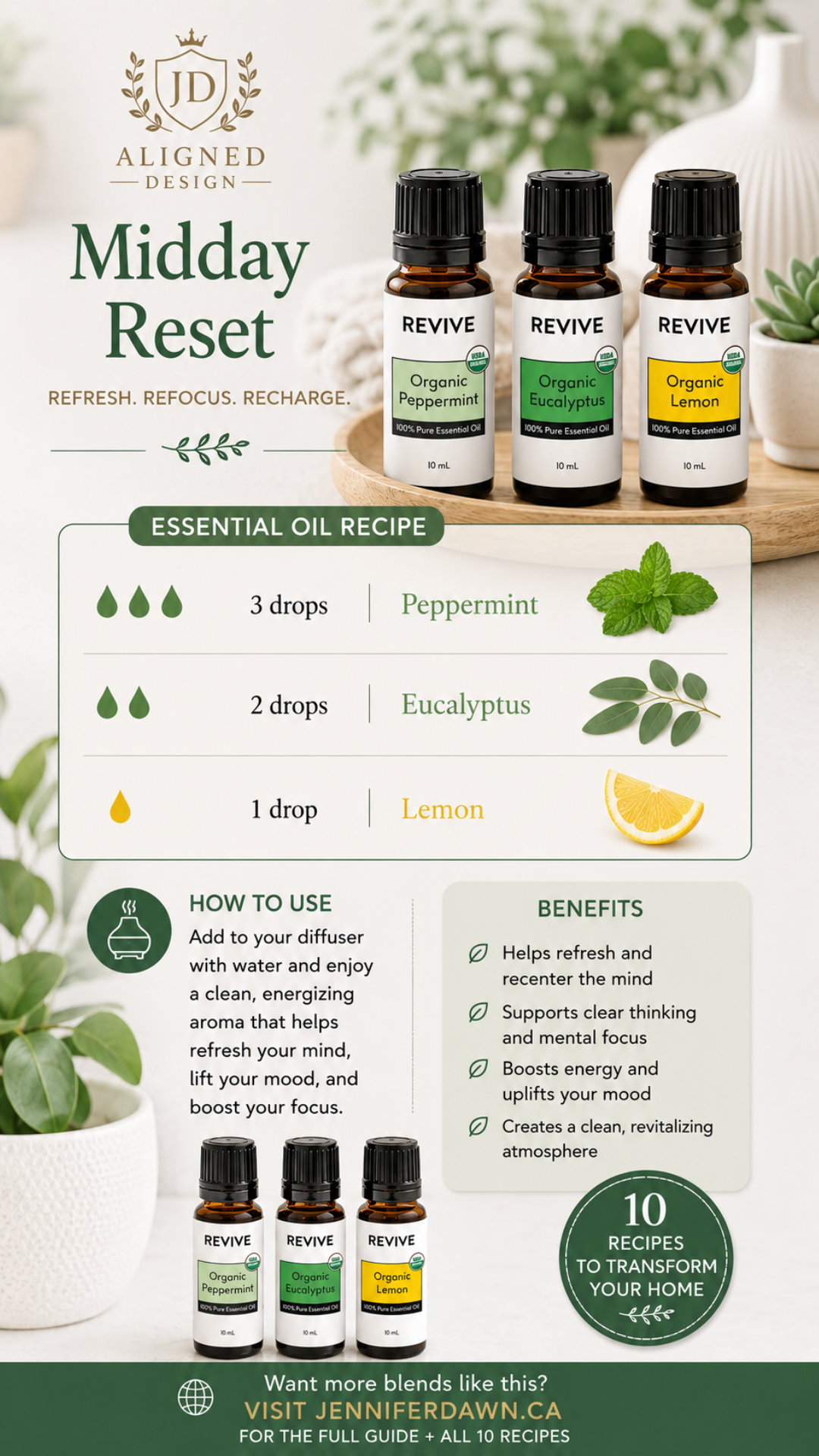
Midday Reset
- 3 drops peppermint
- 2 drops eucalyptus
- 1 drop lemon
Run your diffuser for 30–60 minutes on and 30 minutes off. Continuous diffusion numbs your olfactory system and diminishes both the aromatic and functional benefits.
Laundry Room Blends: Clean Scent Without Synthetic Fragrance
Conventional laundry detergents and dryer sheets are some of the heaviest synthetic fragrance sources in the home. Essential oils cannot replace detergent, but they can replace synthetic fragrance additives beautifully.
Add 10–15 drops of essential oil to a quarter cup of unscented liquid castile soap mixed into your wash. You can also add 5–10 drops to a small wool dryer ball for subtle scent in the dryer.
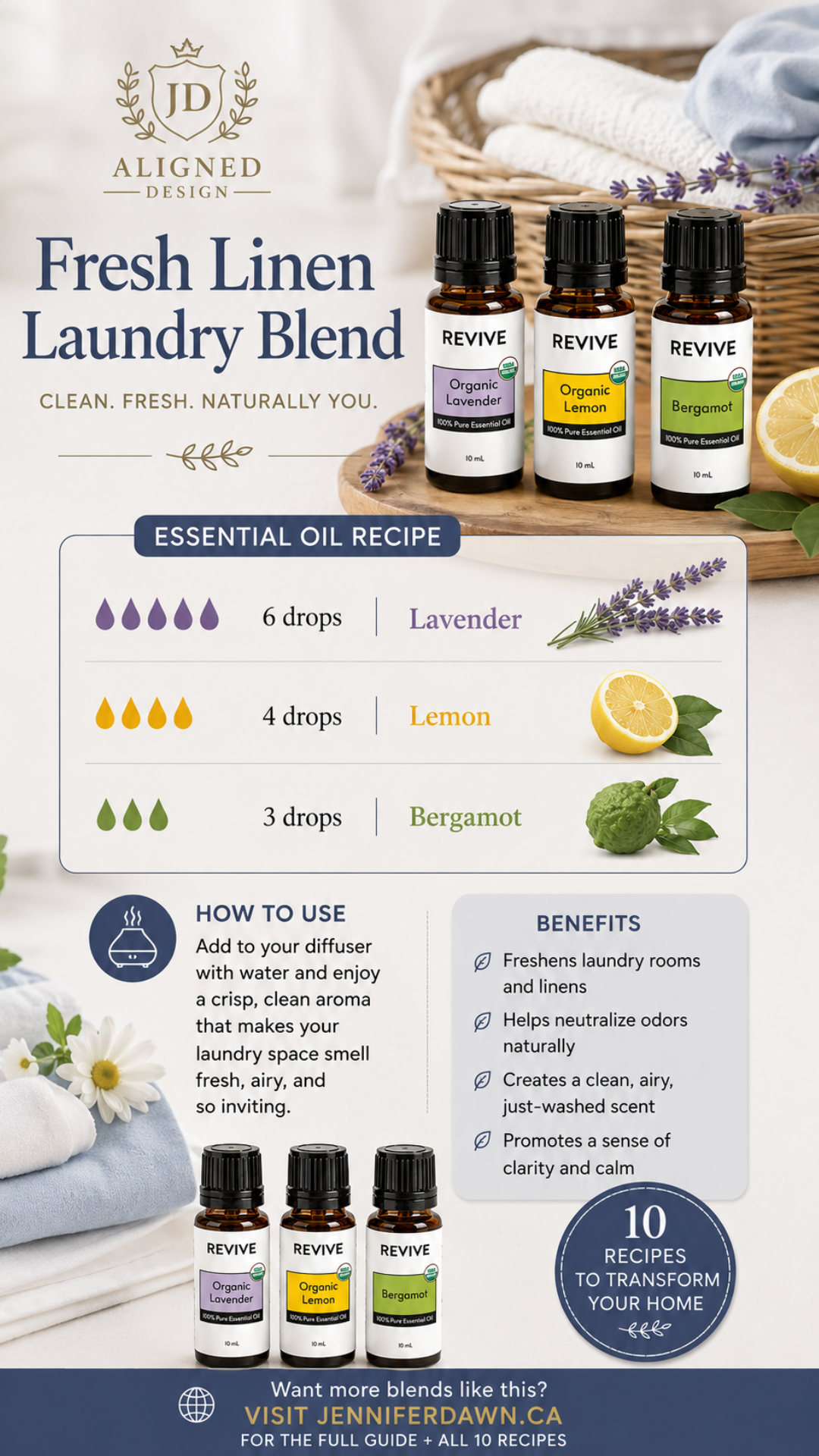
Fresh Linen Laundry Blend
- 6 drops lavender
- 4 drops lemon
- 3 drops bergamot
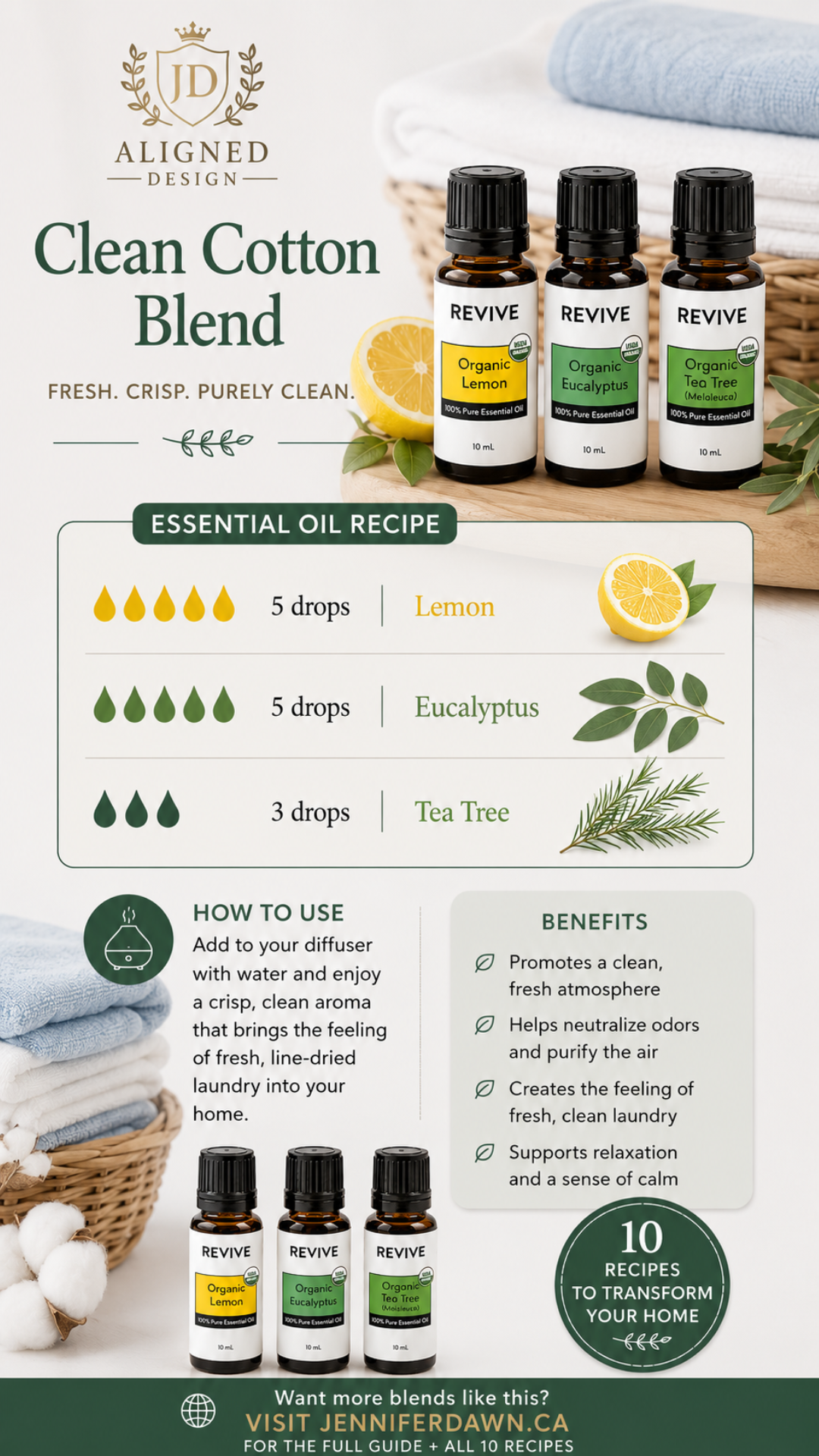
Clean Cotton Blend
- 5 drops lemon
- 5 drops eucalyptus
- 3 drops tea tree
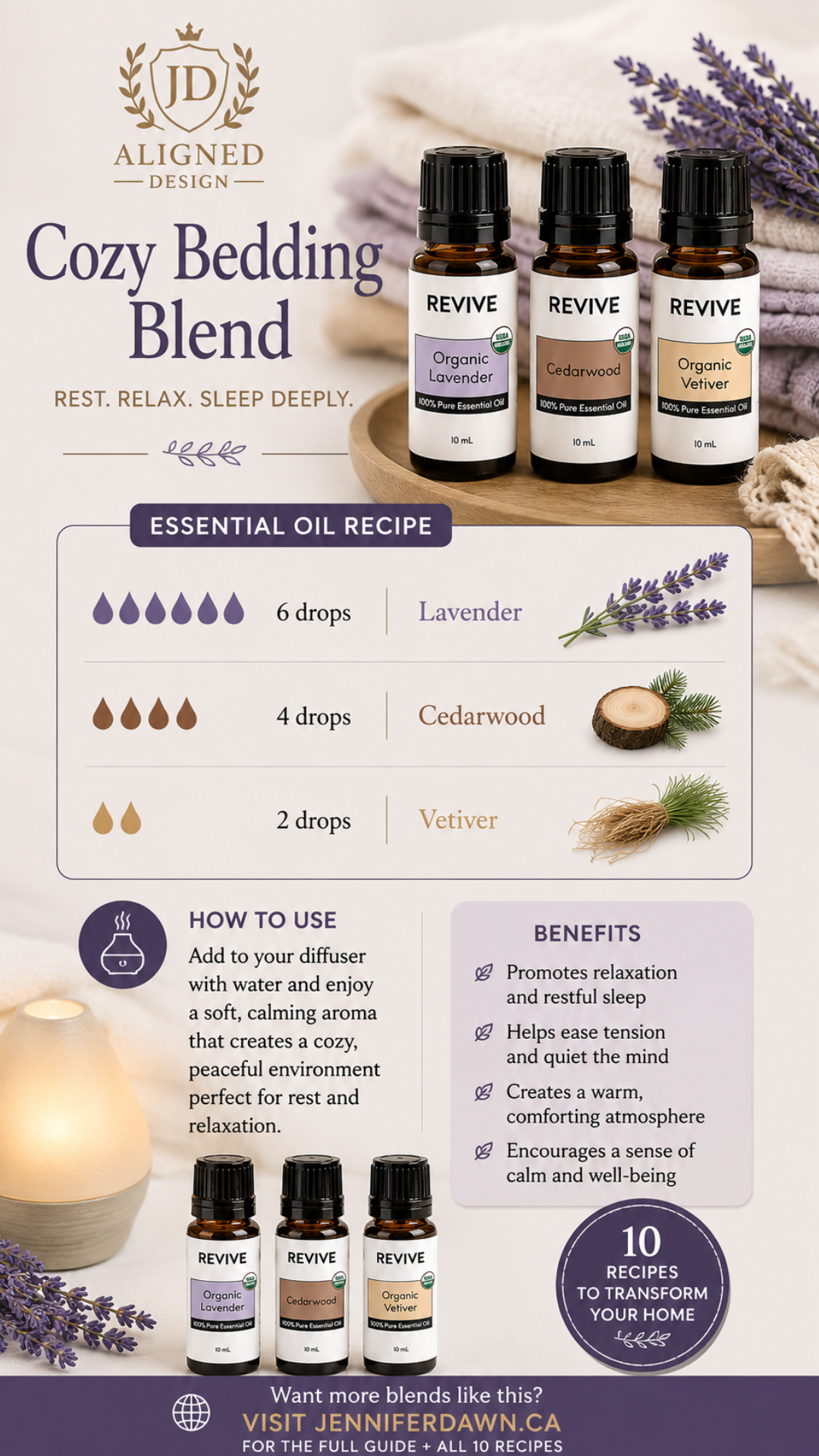
Cozy Bedding Blend
- 6 drops lavender
- 4 drops cedarwood
- 2 drops vetiver
Seasonal Essential Oil Blends for the Home
One of the most satisfying things about building an essential oil practice at home is how naturally it shifts with the seasons. Here is a seasonal framework to guide your blending throughout the year.
Spring Blends: Fresh, Floral, and Renewing
Spring blends should feel like opening a window after a long winter. Light florals, green herbs, and fresh citrus carry the energy of renewal and new beginnings.
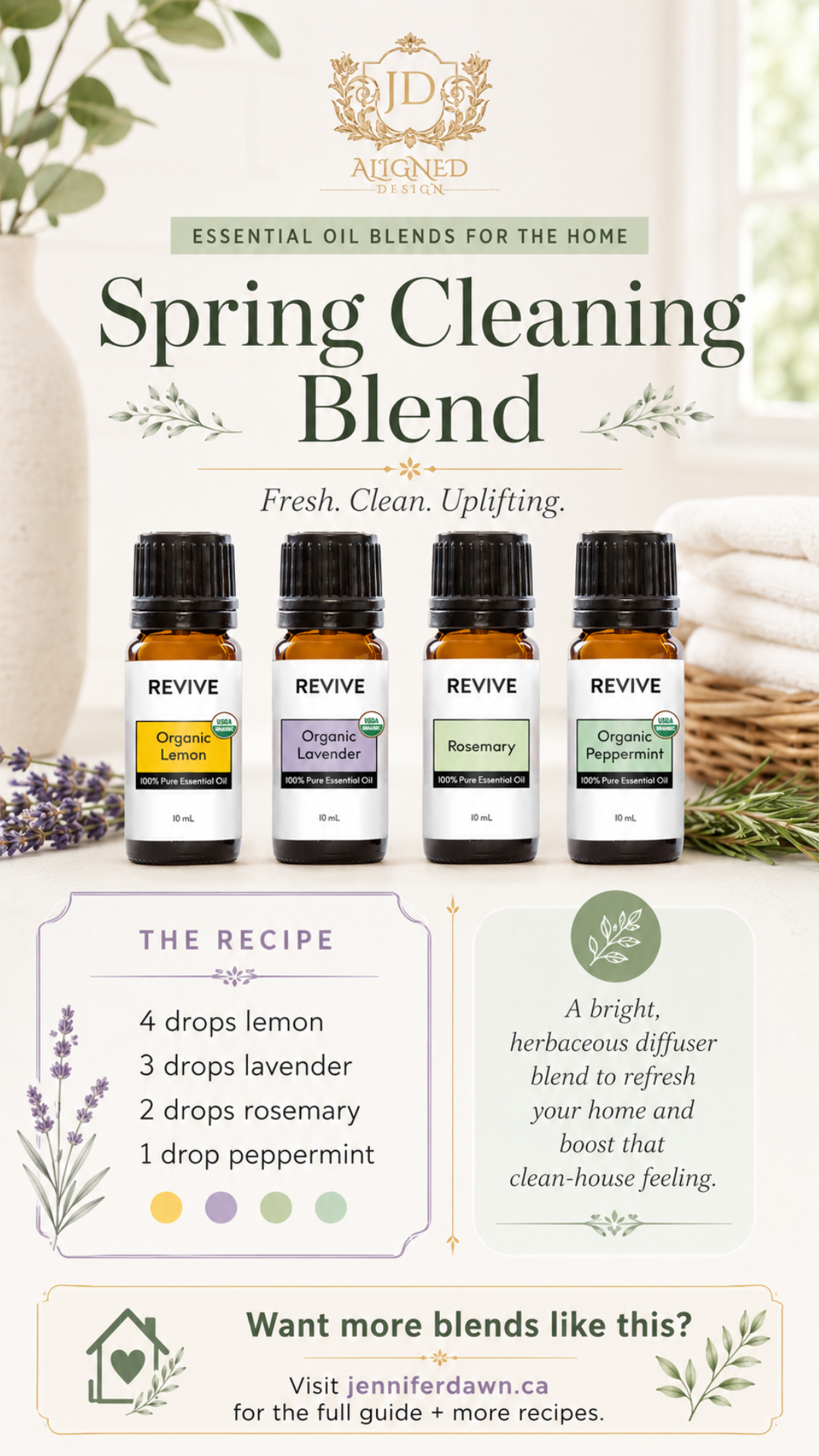
Spring Cleaning Blend
- 4 drops lemon
- 3 drops lavender
- 2 drops rosemary
- 1 drop peppermint
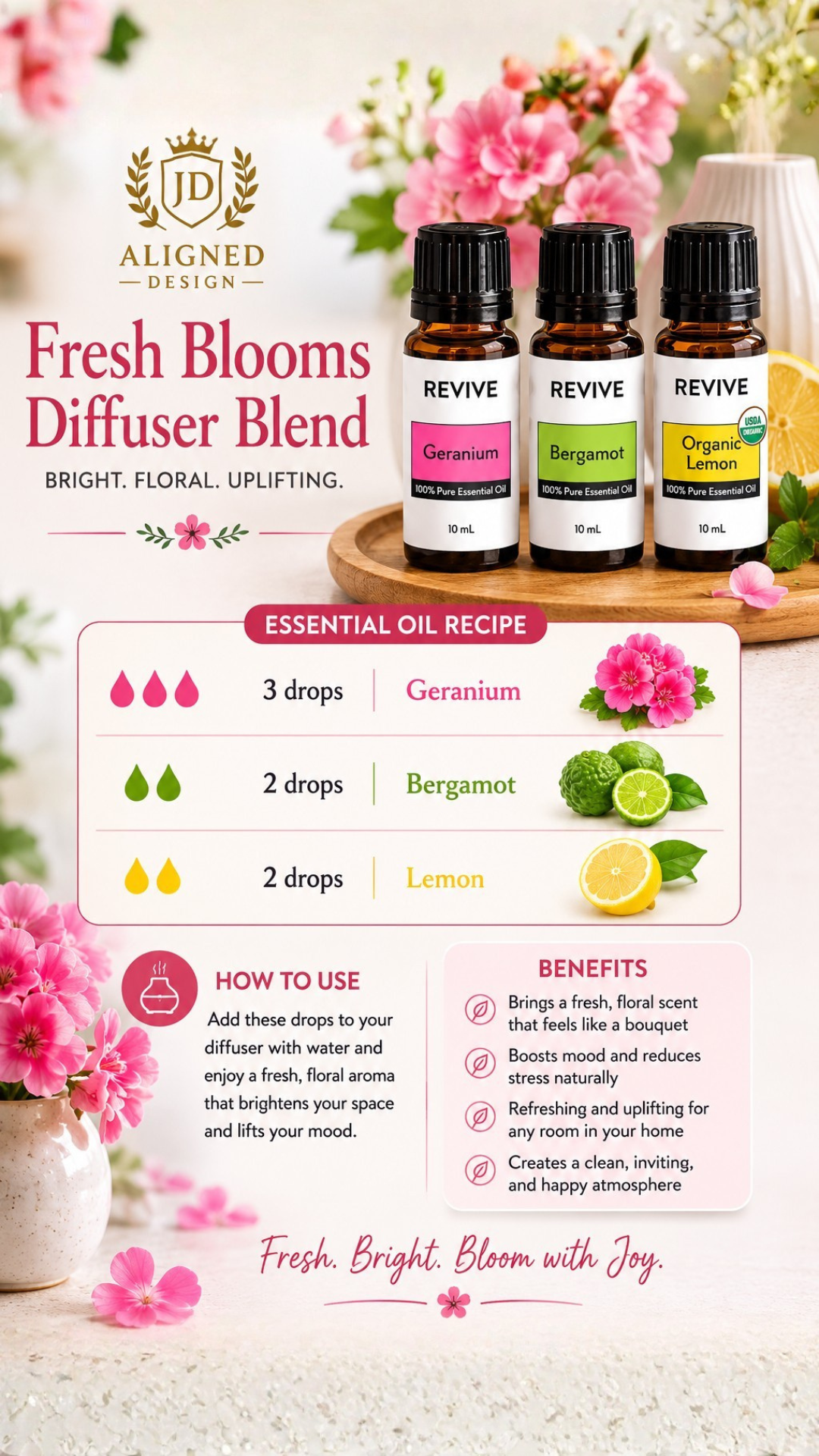
Fresh Blooms Diffuser Blend
- 3 drops geranium
- 2 drops bergamot
- 2 drops lemon
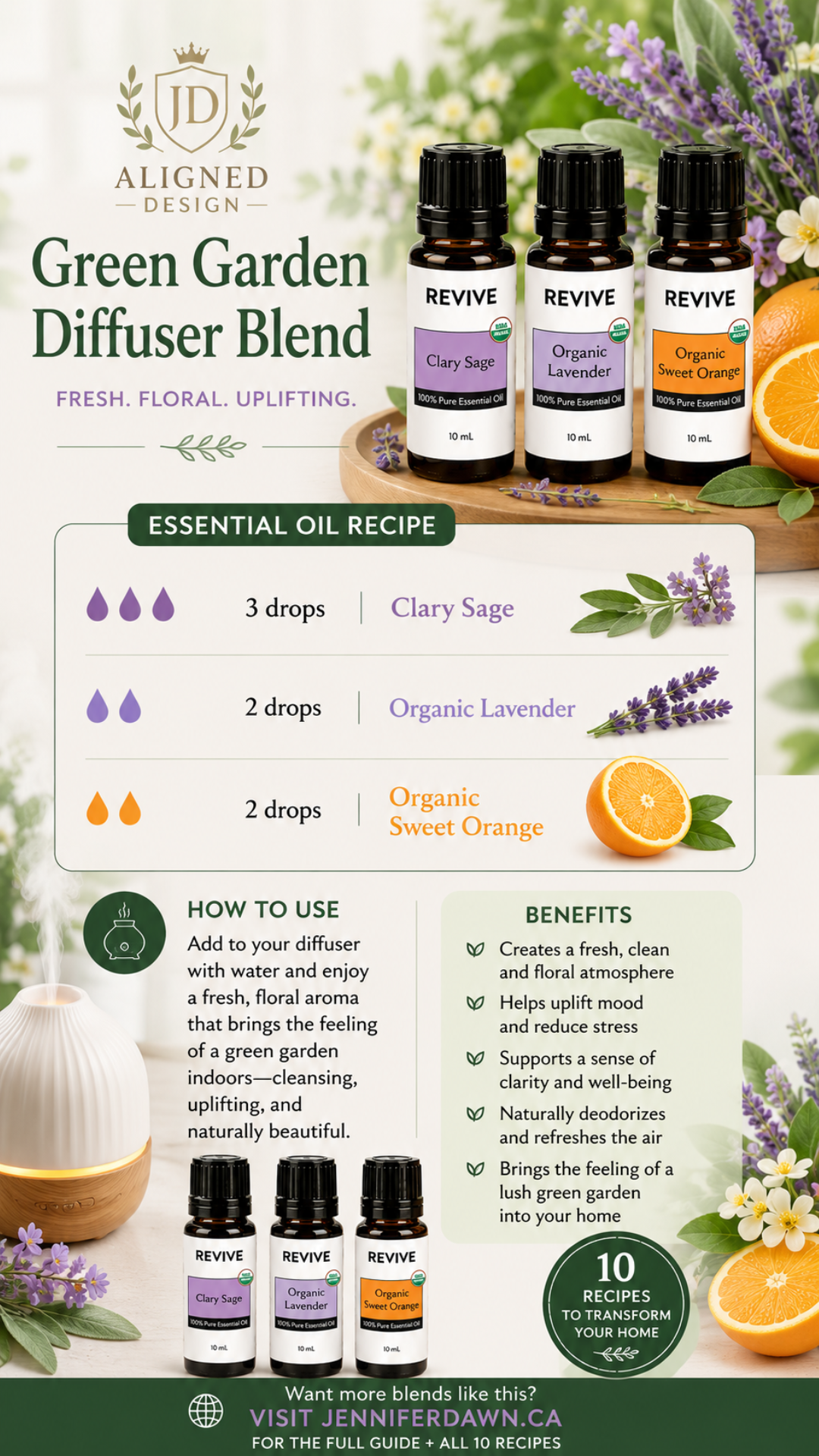
Green Garden Blend
- 3 drops clary sage
- 2 drops lavender
- 2 drops sweet orange
Summer Blends: Bright, Cooling, and Uplifting
Summer blends call for the citruses, the mints, and anything that feels fresh and energizing. This is also the season for light floral combinations.
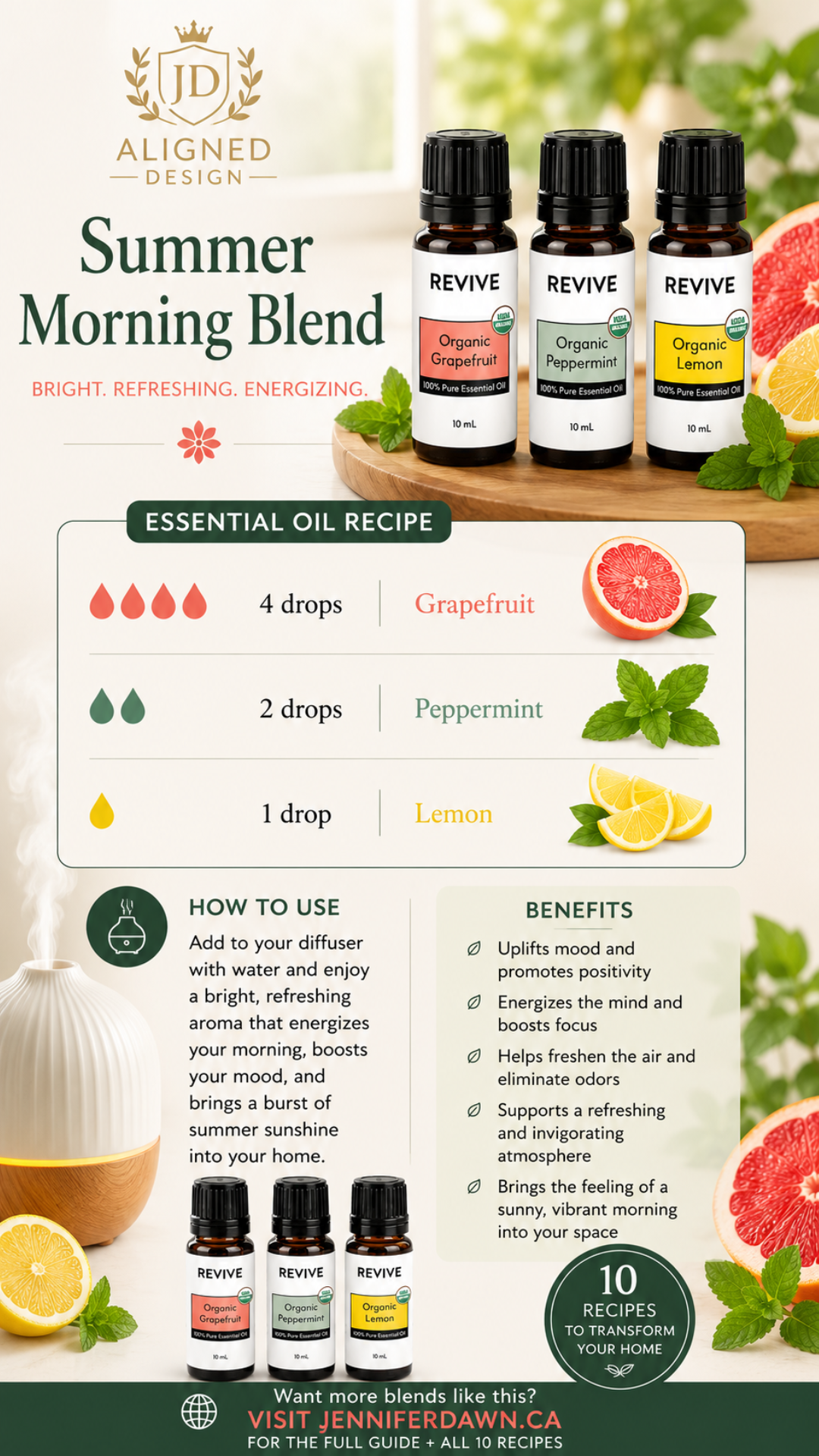
Summer Morning Blend
- 4 drops grapefruit
- 2 drops peppermint
- 1 drop lemon
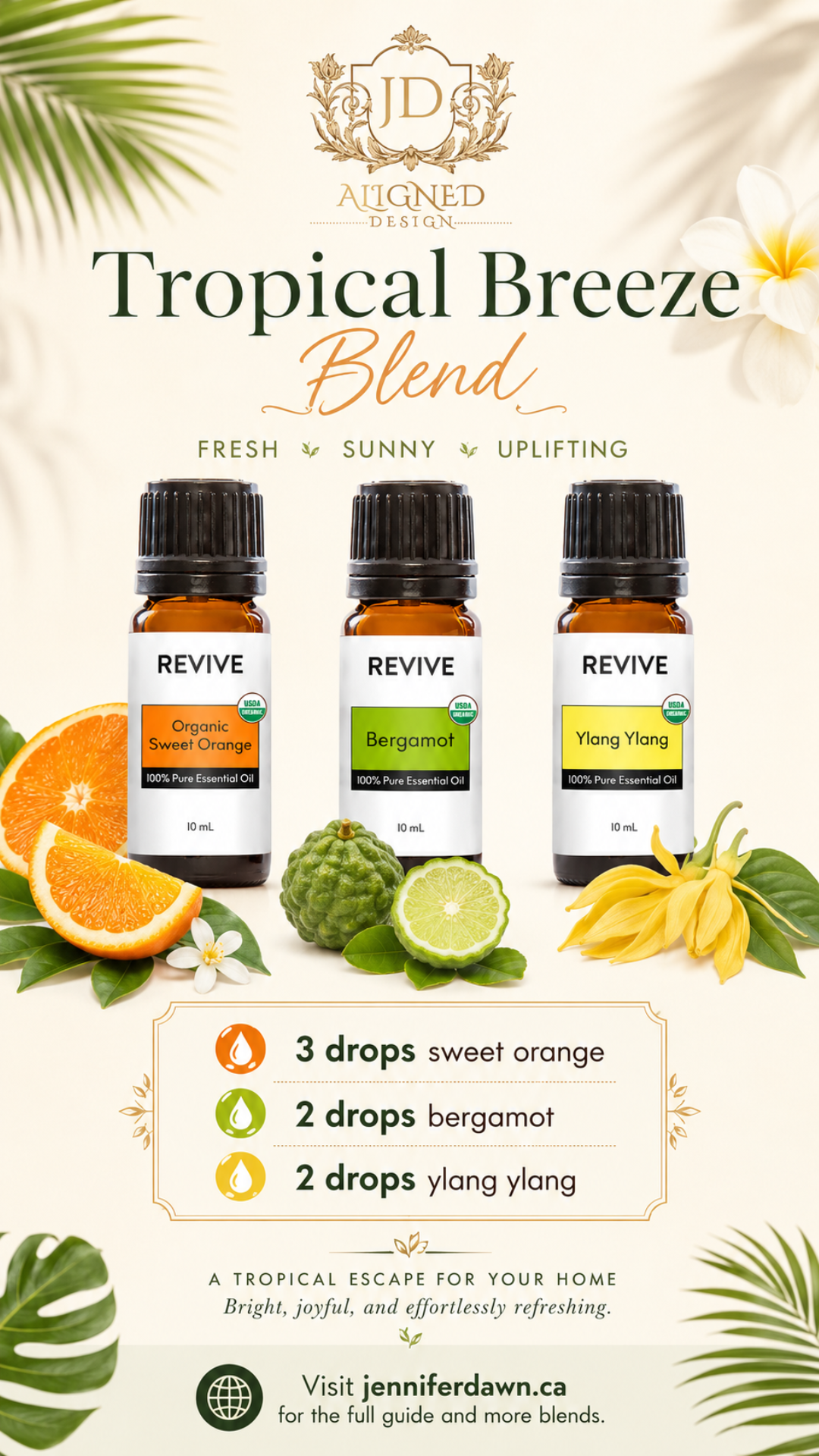
Tropical Breeze Blend
- 3 drops sweet orange
- 2 drops bergamot
- 2 drops ylang ylang
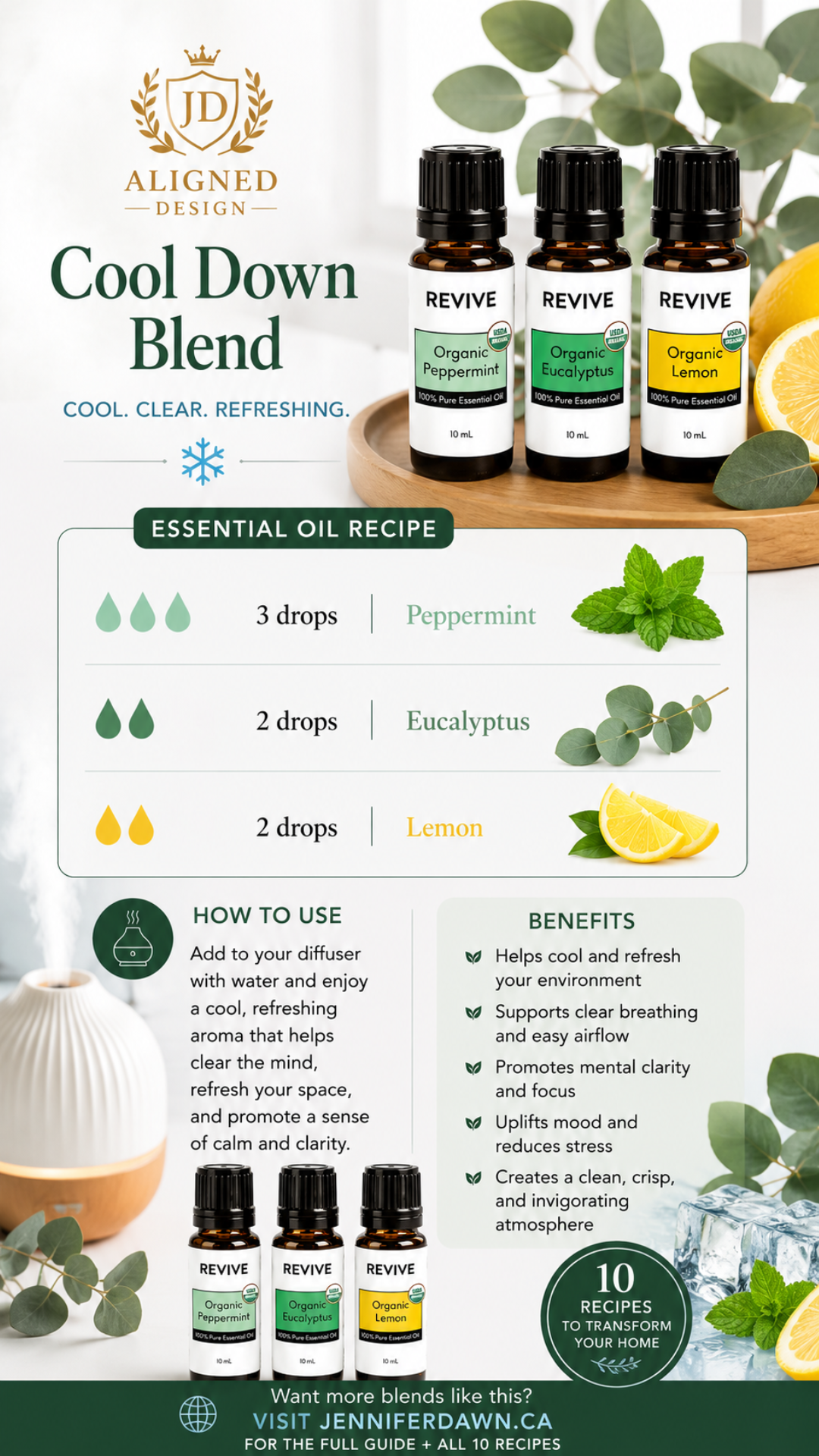
Cool Down Blend
- 3 drops peppermint
- 2 drops eucalyptus
- 2 drops lemon
Autumn Blends: Warm, Spiced, and Grounding
This is where cedarwood, clove, cinnamon bark (used with extreme care and heavy dilution), and the warmer citrus tones like sweet orange and blood orange shine.
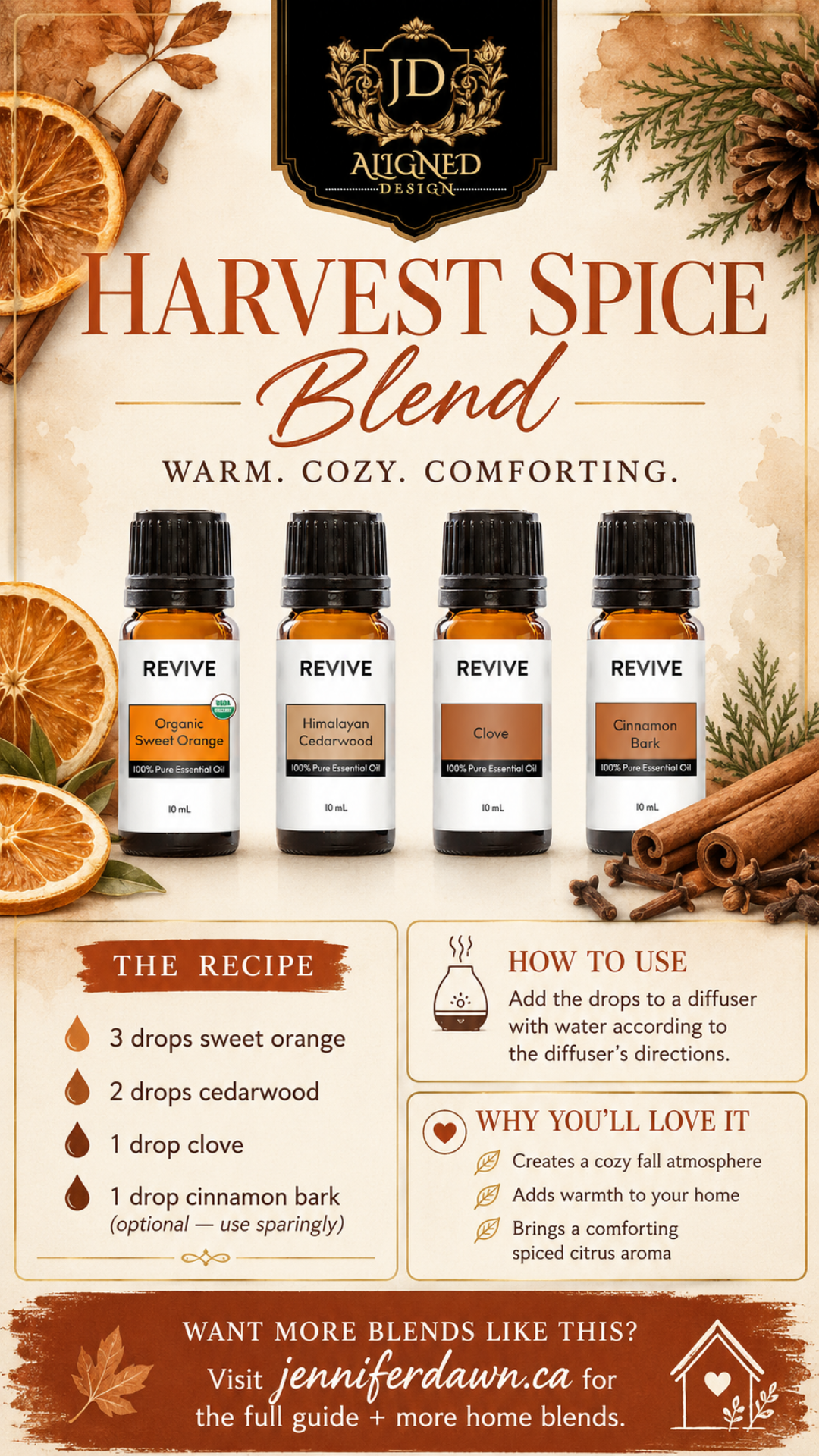
Harvest Spice Blend
- 3 drops sweet orange
- 2 drops cedarwood
- 1 drop clove
- 1 drop cinnamon bark (optional — use sparingly)
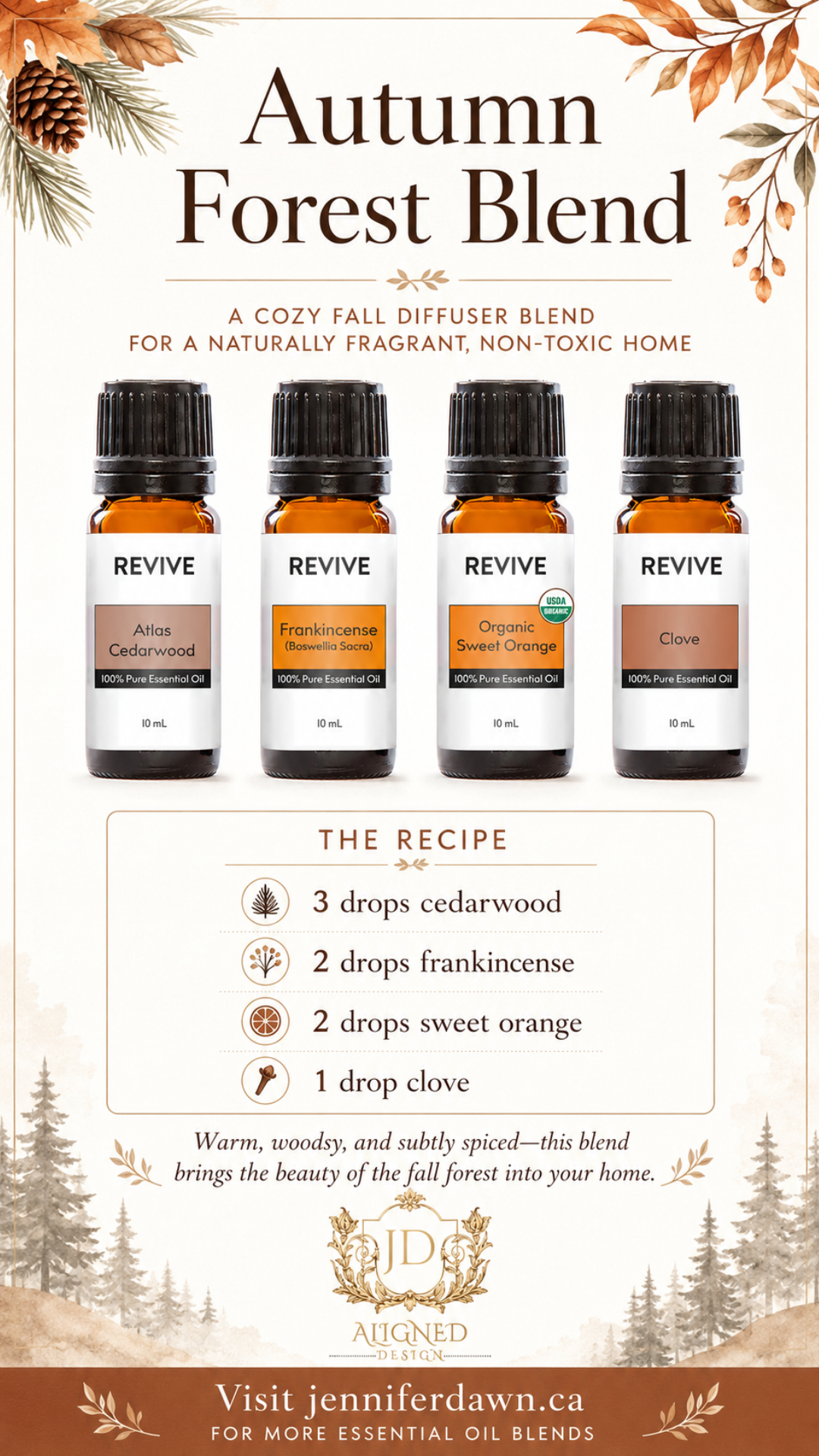
Autumn Forest Blend
- 3 drops cedarwood
- 2 drops frankincense
- 2 drops sweet orange
- 1 drop clove
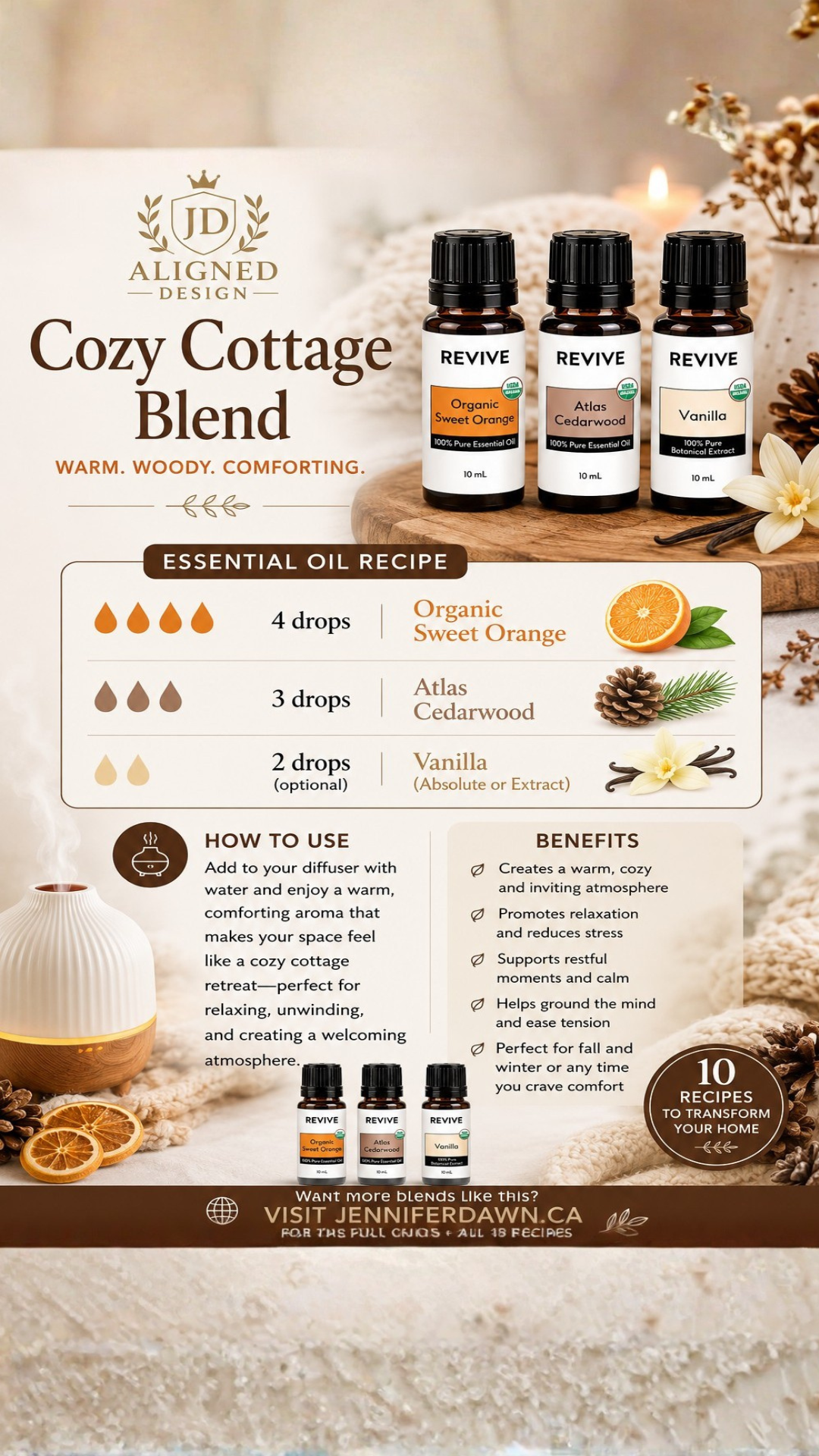
Cozy Cottage Blend
- 4 drops sweet orange
- 3 drops cedarwood
- 2 drops vanilla absolute or extract (optional)
Winter Blends: Cozy, Festive, and Sacred
Winter blends are where frankincense, myrrh, the evergreen oils (fir, pine, spruce), and spiced citrus come into their own. These are the scents of candles and fireplaces and something older than memory.
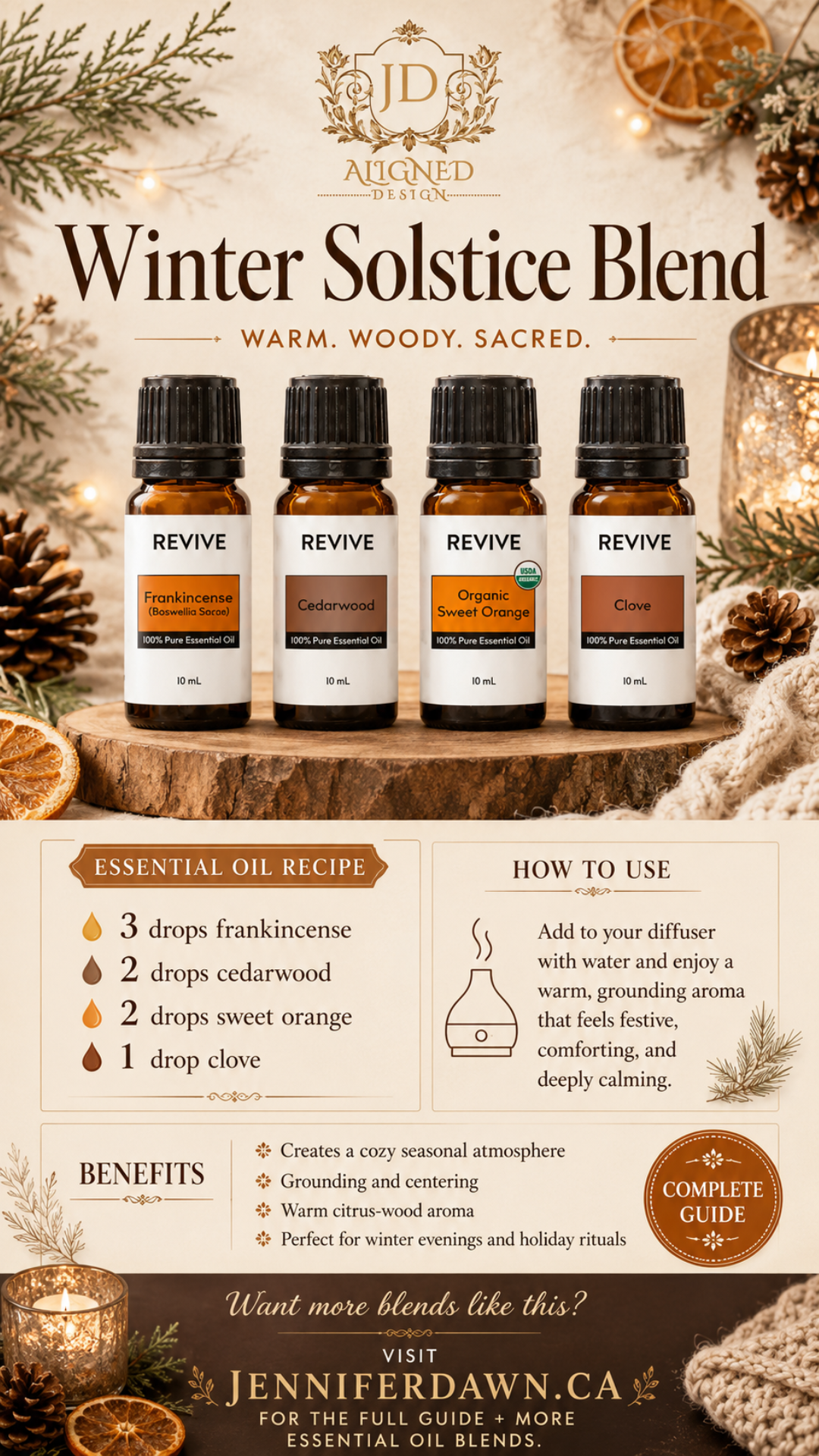
Winter Solstice Blend
- 3 drops frankincense
- 2 drops cedarwood
- 2 drops sweet orange
- 1 drop clove
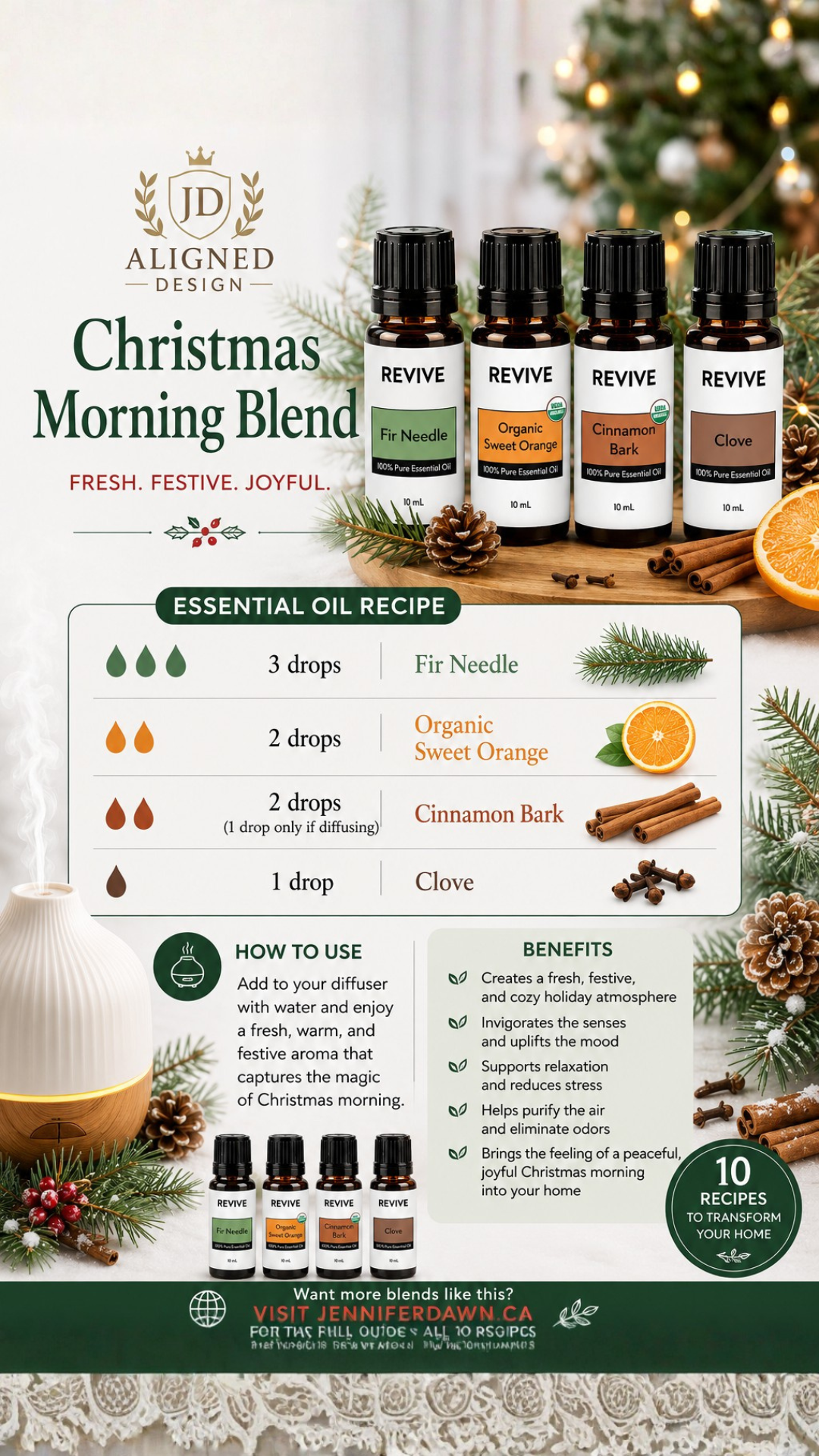
Christmas Morning Blend
- 3 drops fir needle
- 2 drops sweet orange
- 2 drops cinnamon bark (1 drop only if diffusing — it can be irritating)
- 1 drop clove
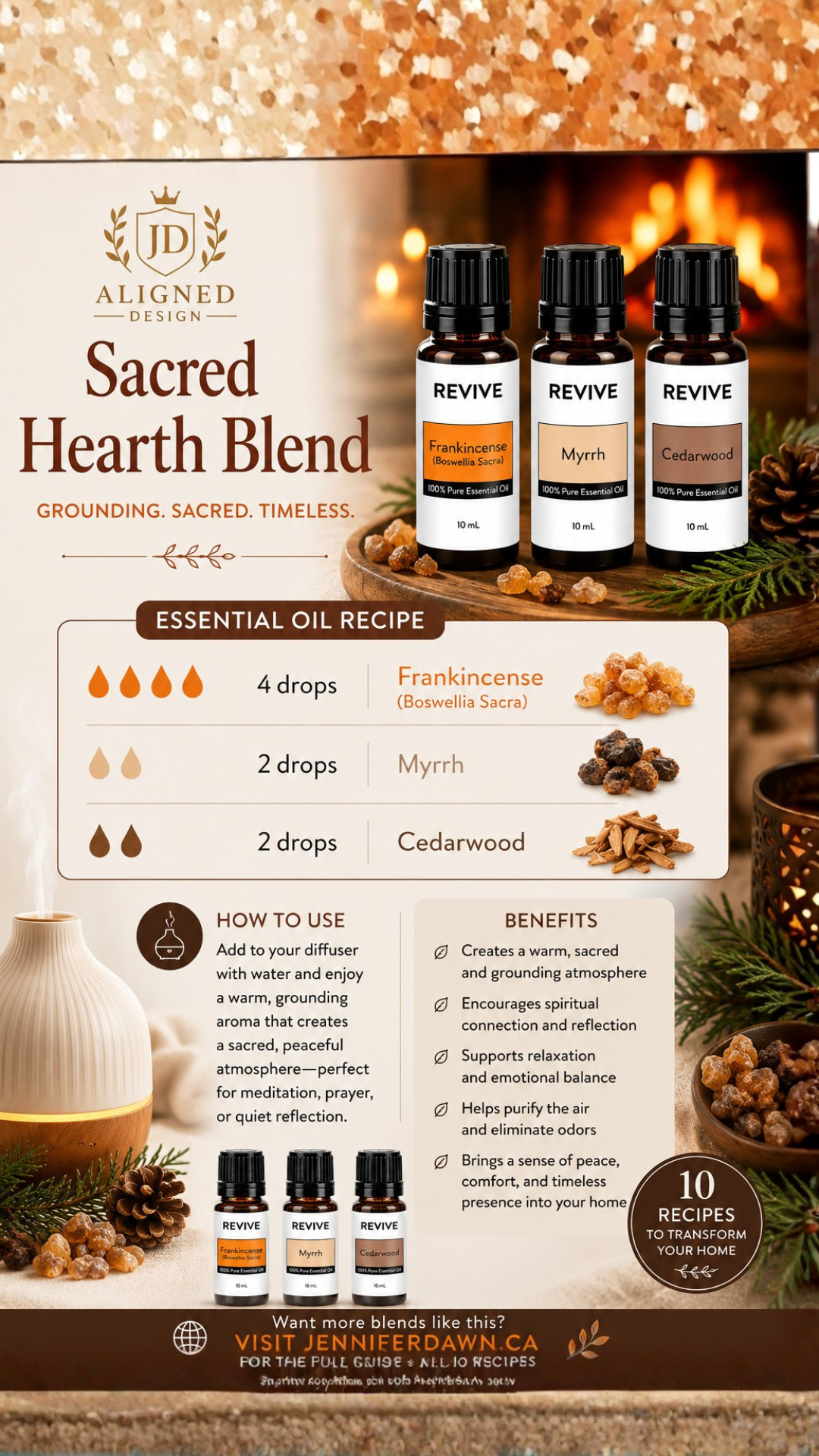
Sacred Hearth Blend
- 4 drops frankincense
- 2 drops myrrh
- 2 drops cedarwood
How to Use Essential Oil Blends Around the Home
Beyond the diffuser, there are many ways to bring essential oil blends into your daily home routines. Here is an overview — with links to detailed how-to posts where they exist.
Ultrasonic Diffusers
The most popular and versatile option for home aromatherapy. Ultrasonic diffusers use water and sound waves to disperse a fine mist of water and essential oil into the air. They do not heat the oil, which preserves its chemical integrity.
Tips for diffuser use:
- Use 3–8 drops per 100ml of water (follow your specific diffuser’s guidelines)
- Run for 30–60 minute intervals with breaks in between
- Clean your diffuser weekly with a cotton ball dipped in rubbing alcohol or a drop of lemon oil to prevent buildup and residue
- Do not leave running in rooms occupied by infants, toddlers, or cats in an unventilated space
Linen and Room Sprays
One of the most practical and immediate uses for essential oil blends in the home. A properly made linen spray can freshen bedding, soften the energy of a room, set a mood before guests arrive, or serve as a daily ritual that anchors your morning or evening routine.
The key to a spray that actually works on fabric without leaving residue is in the base: witch hazel, a solubilizer, or a small amount of high-proof vodka to help disperse the oil in water. Without a dispersant, your oil will simply float on top of the water and you will end up with uneven application and potential staining.
Head to [this complete guide to DIY linen sprays] for full recipes, base options, the best essential oil blends for pillows, bedding, and room misting, and everything you need to know about bottling, labeling, and shelf life.
DIY Cleaning Sprays
Essential oils are genuinely useful in natural cleaning formulations — not just for fragrance, but for function. Tea tree, eucalyptus, lemon, thyme, and oregano all have documented antimicrobial properties that make them relevant ingredients in non-toxic cleaning sprays.
The important caveat: essential oils alone do not replace the surfactant action of soap or the disinfecting power of commercial products on heavily contaminated surfaces. They work best as part of a broader cleaning formulation that also includes castile soap, white vinegar (on appropriate surfaces), or baking soda.
For complete DIY cleaning spray recipes organized by room — kitchen counter spray, bathroom tile and toilet cleaner, glass and mirror spray, and all-purpose floor cleaner — visit [this post on essential oil cleaning sprays].
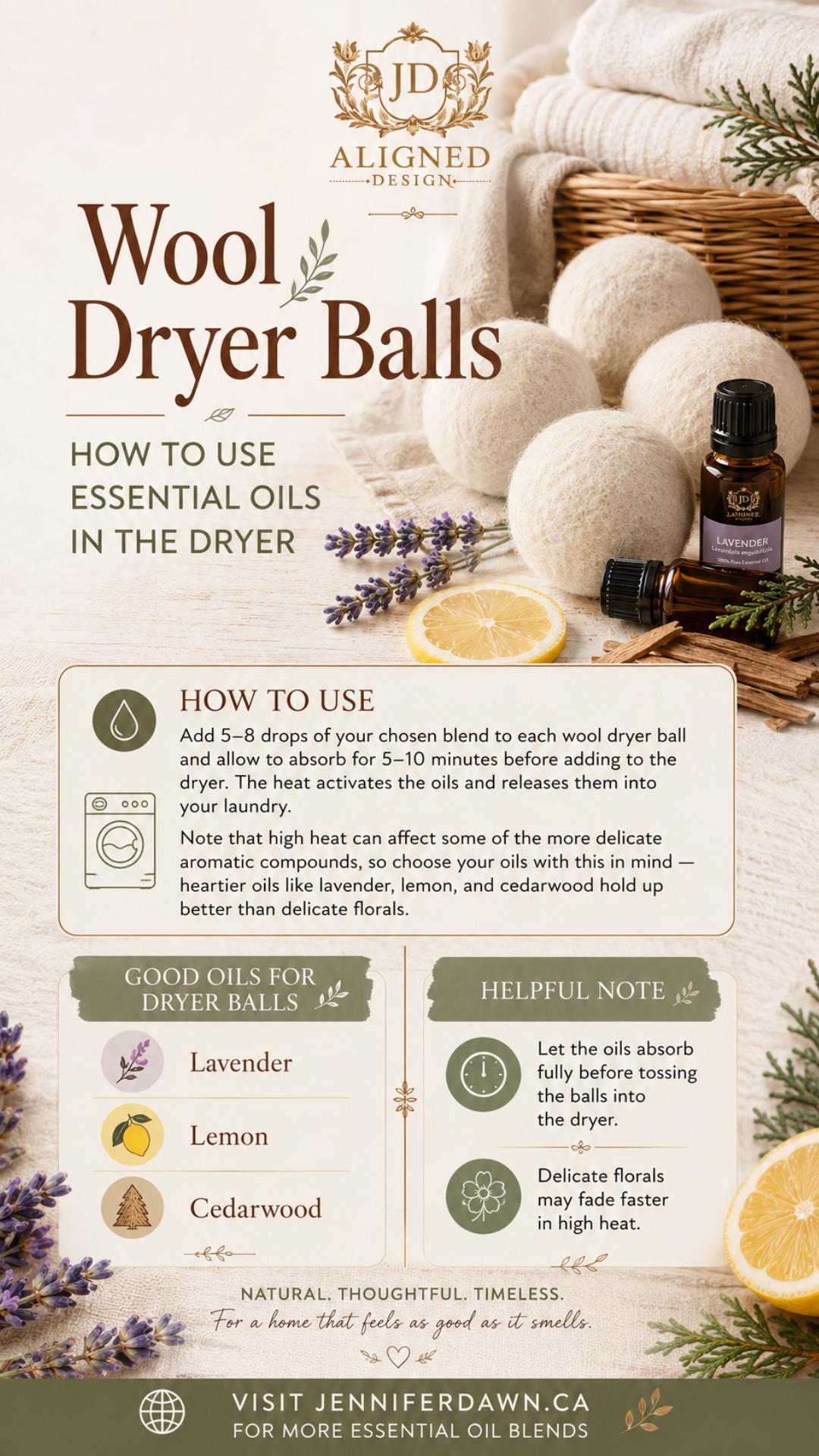
Wool Dryer Balls
Add 5–8 drops of your chosen blend to each wool dryer ball and allow to absorb for 5–10 minutes before adding to the dryer. The heat activates the oils and releases them into your laundry. Note that high heat can affect some of the more delicate aromatic compounds, so choose your oils with this in mind — heartier oils like lavender, lemon, and cedarwood hold up better than delicate florals.
Beeswax or Soy Melts
If you love the visual warmth of a wax warmer but want to avoid synthetic fragrance, homemade essential oil wax melts are a beautiful alternative. Coming soon to the blog: a full DIY guide to making essential oil wax melts with natural waxes.
Reed Diffusers
Carrier oil-based reed diffusers are a slow, subtle way to keep a room consistently scented without heat or electricity. They work best in smaller spaces like bathrooms, entryways, and bedrooms. Coming soon: a complete guide to making your own reed diffuser blends.
Sachets and Drawer Liners
Dried herbs combined with a few drops of essential oil on small fabric sachets are one of the oldest and loveliest ways to fragrance a home. Lavender-cedar sachets for drawers and closets are a classic for a reason — they smell incredible and naturally deter moths.
Essential Oil Blends for Specific Home Situations
Beyond rooms and seasons, there are specific situations in the home where essential oil blends can do real work.
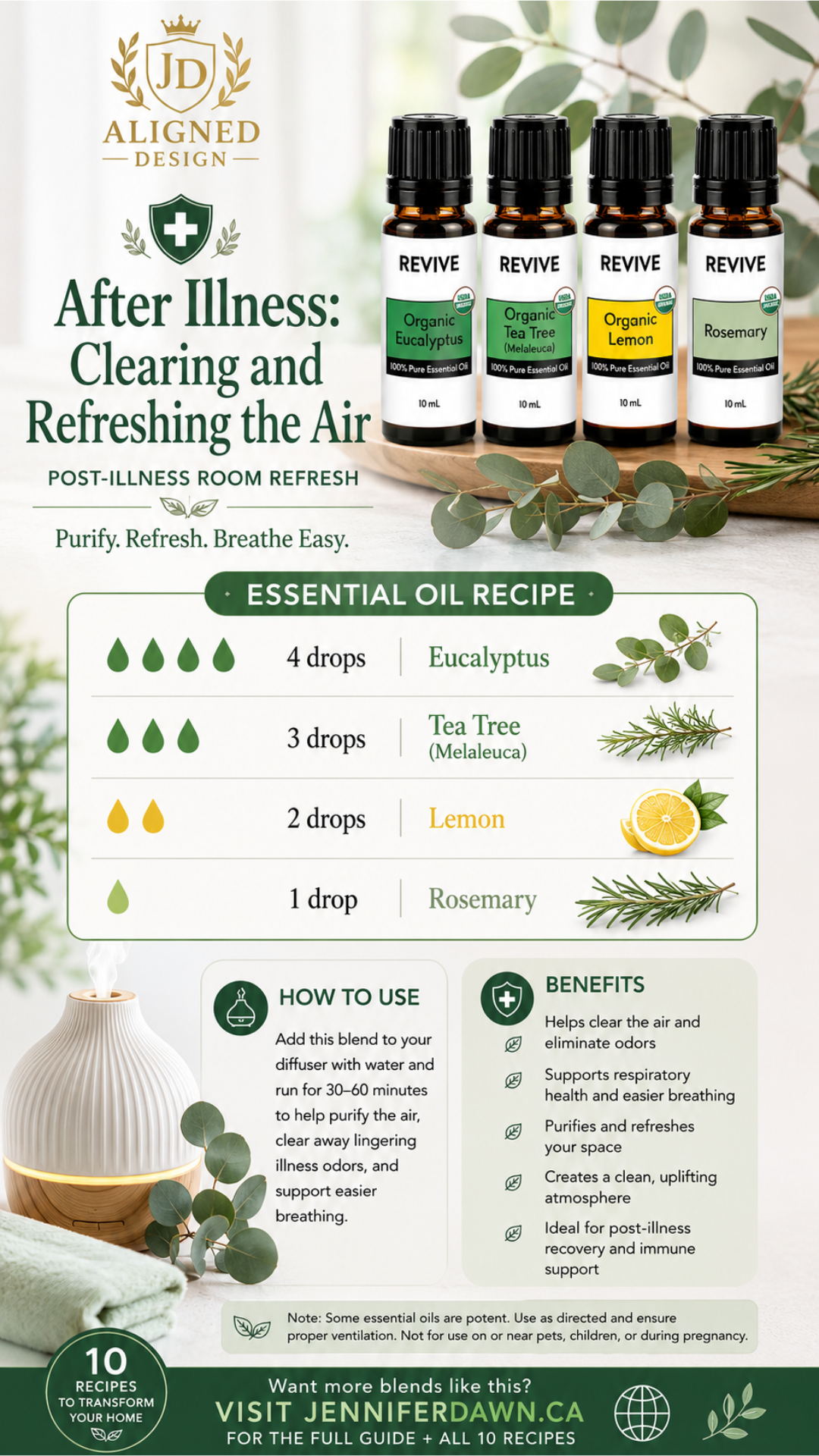
After Illness: Clearing and Refreshing the Air
Post-Illness Room Refresh
- 4 drops eucalyptus
- 3 drops tea tree
- 2 drops lemon
- 1 drop rosemary
Run this in your diffuser for 30-minute intervals throughout the day after illness has passed through your household. Open windows alongside diffuser use for maximum ventilation..
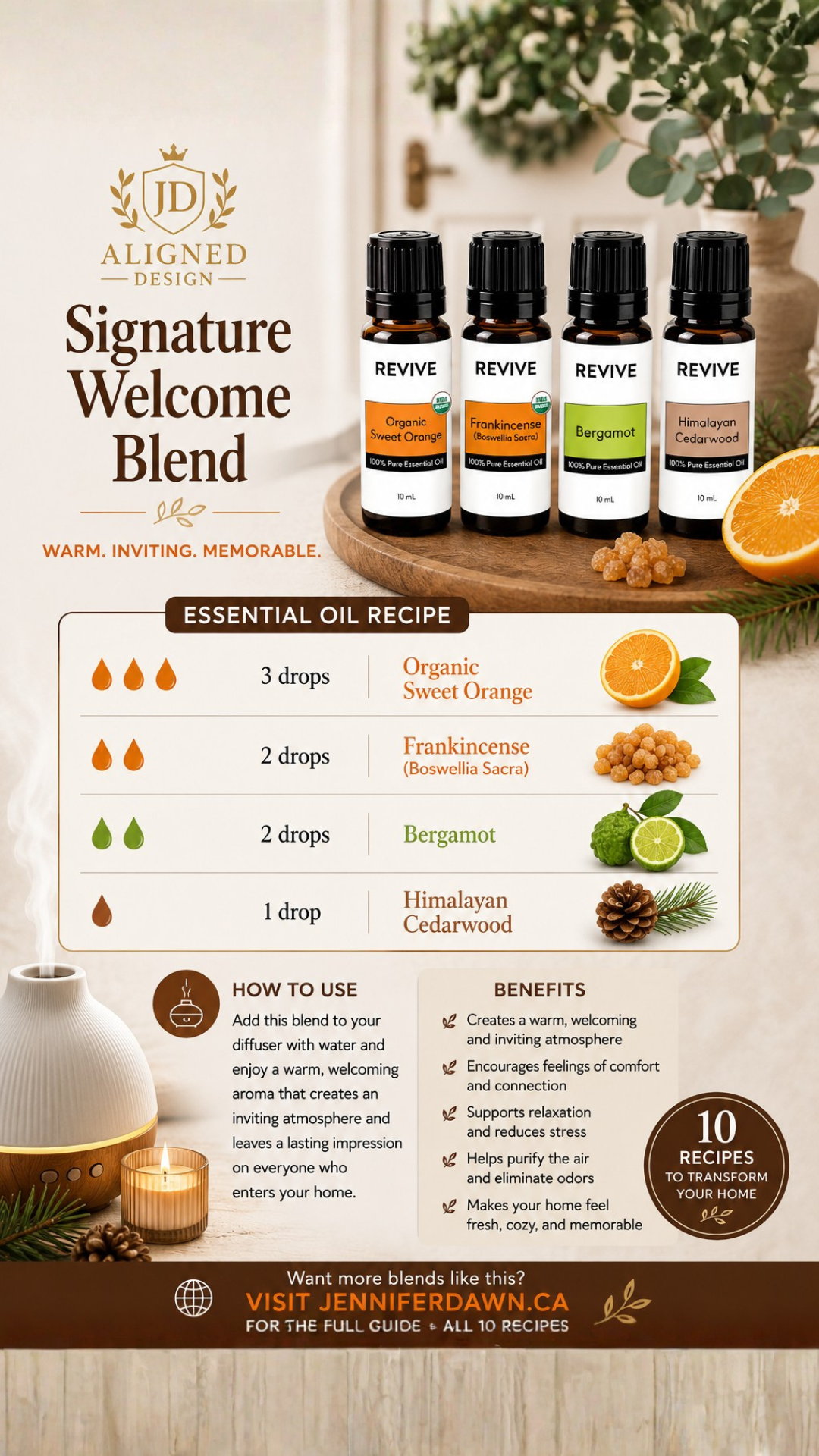
Before Guests Arrive: Welcoming and Impressive
Signature Welcome Blend
- 3 drops sweet orange
- 2 drops frankincense
- 2 drops bergamot
- 1 drop cedarwood
Diffuse for 30 minutes before guests arrive, then turn off. Your home will hold the warmth of the blend without overwhelming anyone at the door.
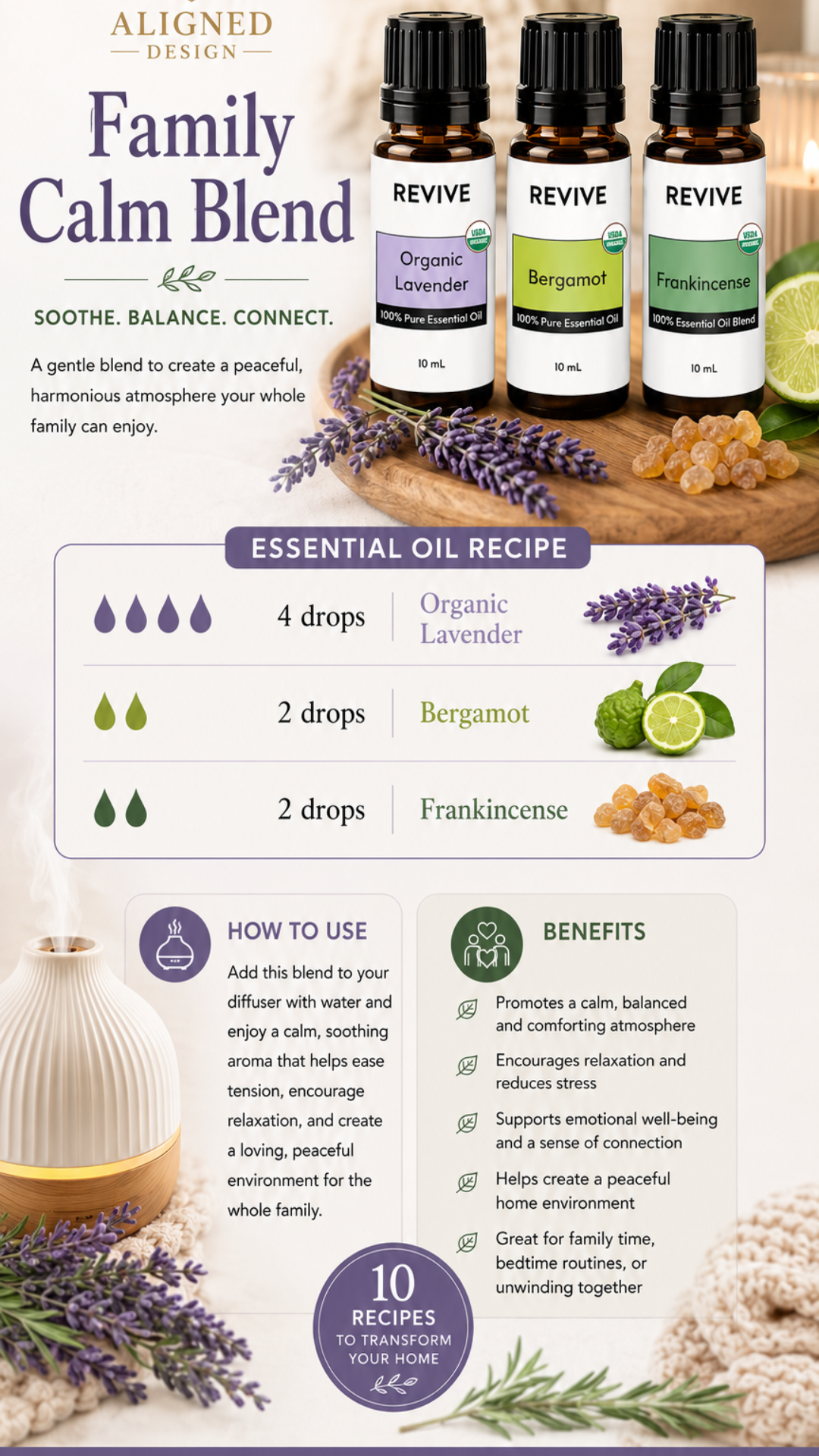
Stress and Overwhelm: Calming the Household
Family Calm Blend
- 4 drops lavender
- 2 drops bergamot
- 2 drops frankincense
This is the blend to reach for on difficult days, before difficult conversations, or any time the energy in your home needs resetting. Run it in the main living area while you step away for 10 minutes with a cup of tea.
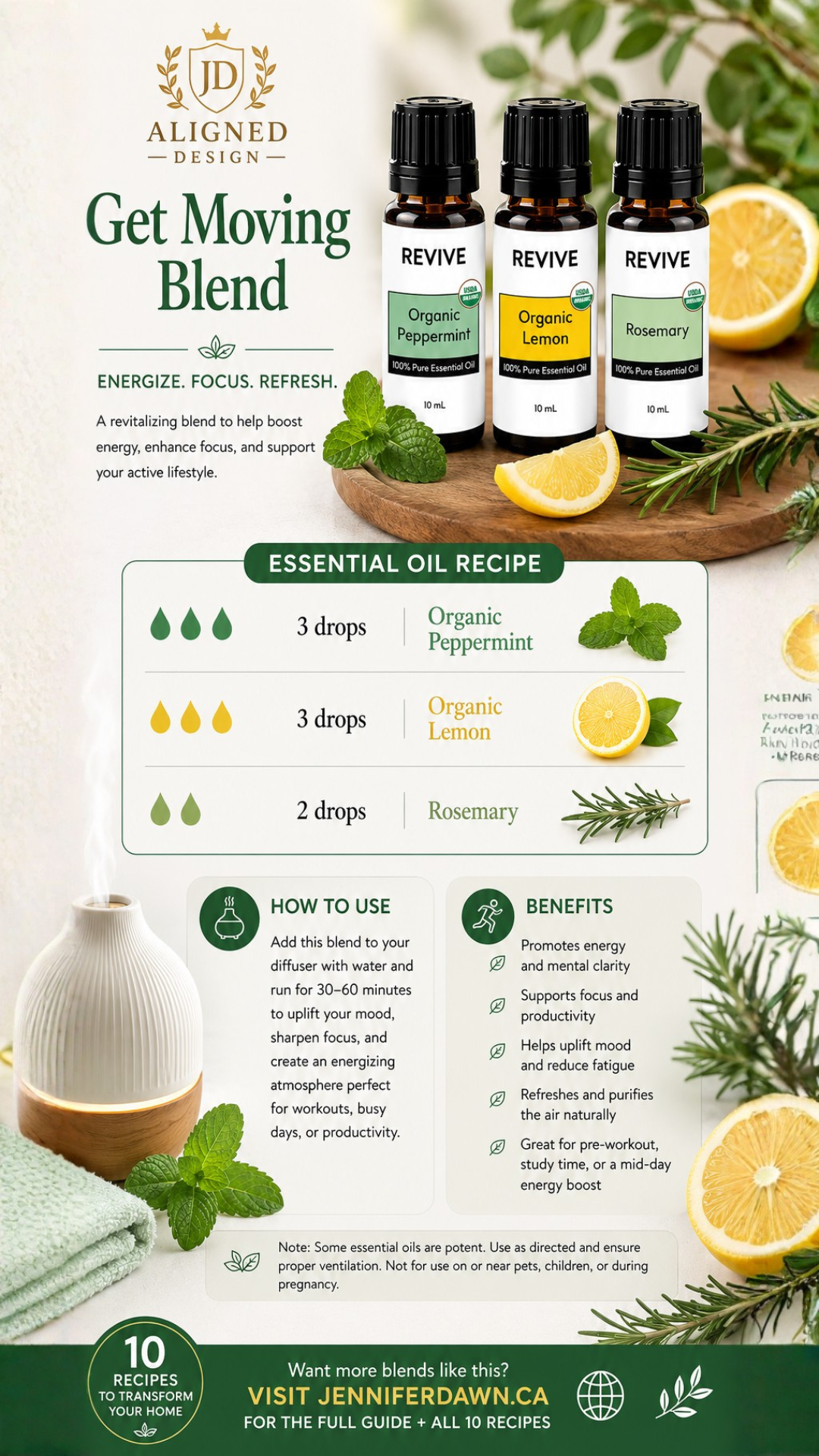
Energy and Motivation: Moving Through the Stuck
Get Moving Blend
- 3 drops peppermint
- 3 drops lemon
- 2 drops rosemary
Run this in your home office or kitchen while you work through your task list. It is remarkably effective.
New Home or New Season: Energetic Reset
Many spiritually inclined homemakers have a practice of intentionally cleansing and resetting the energy of their space at seasonal transitions, after difficult periods, or when moving into a new home. Whether you approach this as ritual or simply as intentional atmosphere-setting, essential oils can be a central part of that practice.
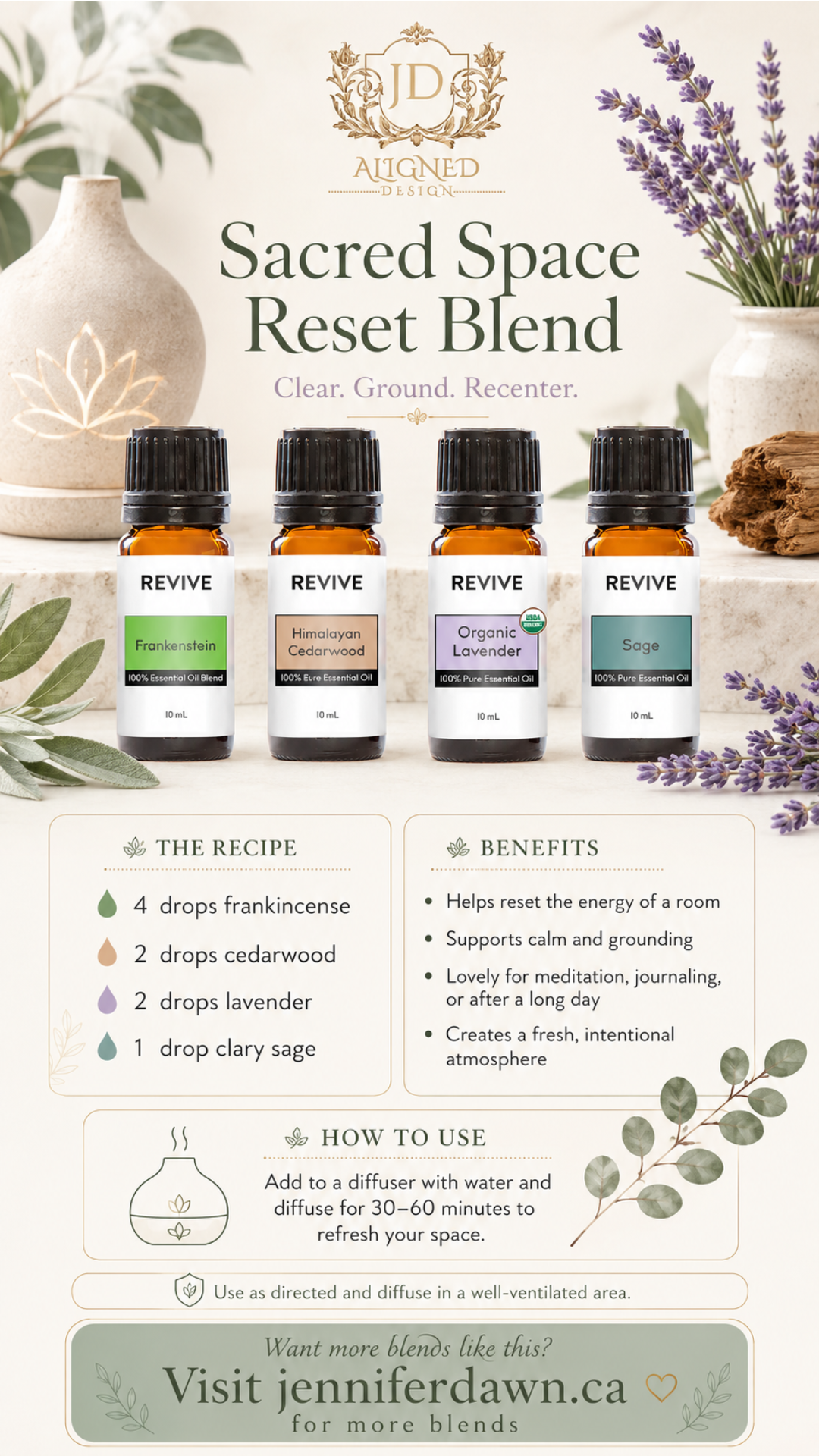
Sacred Space Reset Blend
- 4 drops frankincense
- 2 drops cedarwood
- 2 drops lavender
- 1 drop clary sage
Diffuse this as you clean and move through your space intentionally. Combine with burning dried herbs (palo santo, cedar, rosemary) in well-ventilated spaces if that resonates with your practice.
Building Your Home Blending Practice: Tips and Tools
The Equipment You Actually Need
You do not need much to start. Here is the realistic minimum:
- A quality ultrasonic diffuser
- A set of 10ml dark amber or cobalt glass bottles for storing blends
- Pipette droppers or graduated droppers for precision
- A small notebook or digital doc for recording your recipes
- Basic labels
As you expand: 2oz and 4oz dark glass spray bottles for linen and room sprays, a small kitchen scale if you move into measuring by weight, and a selection of carrier oils if you begin making skin-safe diluted blends.
Recording Your Recipes
This sounds tedious and it is also genuinely important. Essential oils are expensive and blending is a creative process — if you land on something extraordinary, you want to be able to reproduce it. Keep a simple log with date, oils used, number of drops, intended use, and brief notes on the scent profile and how it performed.
Storing Your Oils and Blends
Essential oils degrade with heat, light, and air. Store them:
- In dark glass bottles (amber, cobalt, or violet)
- In a cool, dark location (a drawer or cabinet away from the stove or sunny windows)
- With lids tightly sealed
- Away from children and pets
Citrus oils have the shortest shelf life — typically 1–2 years. Most other oils last 2–3 years when stored properly. Carrier-oil based blends have a shorter shelf life than pure essential oil blends because the carrier oil can go rancid.
Trusting Your Nose
Ultimately, blending essential oils is a sensory practice. The recipes in this guide are starting points — some will resonate with you immediately and some will need adjustment. Your nose is the final authority. If something smells off to you, it is off, regardless of what any guide says.
Start simple. Two or three oils blended well will almost always outperform five or six oils blended without intention. Master the pairings that work for you and build from there.